Retiring in the Philippines after years of professional work in the country is a natural next step for many foreign nationals who have grown attached to its culture, people, and lifestyle. For 9G work visa holders, a structured transition from employment-based status to a retirement-based Special Resident Retiree’s Visa (SRRV) is essential to avoid gaps in legal stay, protect investments, and secure long-term residency.
Understanding Retirement Options for Long-Term Foreign Workers
Foreign professionals who have held a 9G Pre-Arranged Employment Visa often reach a point where they no longer wish to remain tied to an employer but still want to keep living in the Philippines. In this context, retiring in the Philippines usually means shifting from a work-dependent immigration status to a retirement or resident status that gives more freedom, fewer work-related obligations, and the option to stay indefinitely.
For most former 9G holders, the SRRV administered by the Philippine Retirement Authority (PRA) is the primary retirement route that allows long-term residence with multiple entry privileges and various investment and tax benefits. Some may also qualify for immigrant options such as 13(a) or 13(g), but the SRRV is specifically designed for foreign retirees and former Filipinos who want to make the Philippines their base during retirement.
From 9G Work Visa to Retirement Mindset
Before moving from a 9G work visa to a retirement status like SRRV, foreign nationals must first shift their mindset from employment-centered planning to lifestyle and asset-focused planning. While 9G status is built around an employer’s sponsorship, job role, and regulatory compliance with DOLE and the Bureau of Immigration (BI), retirement planning focuses on savings, pension income, preferred location, medical access, and long-term housing plans in the Philippines.
This shift also means understanding how your exit from 9G status affects your right to remain in the country, your ability to work or earn income, and your obligations to government agencies such as the BI, the Bureau of Internal Revenue (BIR), and the PRA. Many retirees choose to carefully plan their retirement timeline 6–12 months before employment ends, so that there is no period where they are in the country without a valid stay status.
Overview of the 9G Work Visa and Why You Cannot “Retire” on It
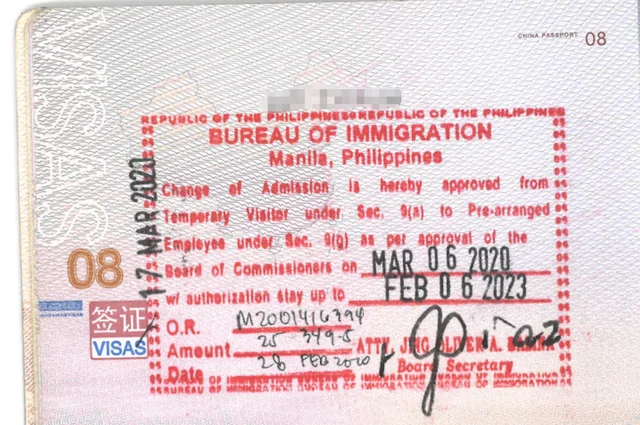
A 9G Pre-Arranged Employment Visa allows foreign nationals to legally work in the Philippines for a specific employer, normally for the duration of their employment contract as approved by the BI. The visa is employer-sponsored, meaning it depends on a valid job, Alien Employment Permit (AEP), and compliance with DOLE and BI regulations.
Because the 9G visa is tied to active employment, it is not a retirement visa and cannot be used once the employment relationship ends or the contract is terminated. When a foreign national resigns, retires from employment, or the employer-employee relationship ceases for any reason, the employer typically notifies the BI and may process downgrading or cancellation of the visa, requiring the foreign national either to change status (for example, to tourist or SRRV) or to depart the country.
Why the SRRV Is the Main Retirement Visa for Foreign Workers
The Special Resident Retiree’s Visa (SRRV) is a special non-immigrant visa that allows qualified foreign nationals and former Filipino citizens to retire and reside in the Philippines with indefinite stay privileges. The program is managed by the PRA and is separate from regular employment or temporary visitor visas under the Philippine Immigration Act.
For those interested in retiring in the Philippines, the SRRV is attractive because it offers: multiple-entry privileges, the ability to reside in the country as long as SRRV conditions are met, the option to include qualified dependents, and, for certain categories, the ability to convert the required time deposit into approved investments such as a condominium or long-term lease. In addition, many pensions or annuities remitted to the Philippines are treated favorably from a tax perspective, which can be a significant benefit for retirees.
Key SRRV Categories Relevant to Former 9G Holders
Foreign nationals transitioning from a 9G work visa to retirement usually consider SRRV categories that match their age, pension status, and financial profile. Several of the most relevant SRRV schemes include:
- SRRV Classic: A flexible option for retirees who may want to use their visa deposit for real estate investment, such as an eligible condominium or long-term lease.
- SRRV Courtesy/Expanded Courtesy: Options for certain former Filipino citizens or foreign nationals with specific backgrounds (such as former members of foreign military forces allied with the Philippines) that usually require a lower deposit.
- Pension-based variants within SRRV Classic: These allow retirees with a guaranteed lifetime pension to place a lower time deposit, combined with proof of minimum monthly pension income.
Each category has its own eligibility rules, minimum age, required time deposit, and whether the deposit can be converted into an investment, so choosing the correct category is an essential step when planning your transition.
Updated Deposit and Pension Requirements for SRRV Applicants
For retirees who want to make their stay in the Philippines permanent or long-term, the SRRV program requires a qualifying time deposit in a PRA-accredited bank, with exact amounts depending on age and whether the retiree has a lifetime pension. Common benchmarks include:
- Retirees aged 50 and above without a qualifying pension typically need a higher time deposit, often in the range of USD 20,000 or more, depending on the SRRV category and most recent PRA guidelines.
- Retirees aged 50 and above with a lifetime pension may qualify with a smaller time deposit (for example, SRRV Classic may allow a lower deposit when combined with a monthly pension of at least USD 800 for single applicants or USD 1,000 for those with a spouse or dependents).
- Younger retirees (under 50 under older rules) have historically been subject to higher deposit requirements, and the PRA has announced that, under updated rules, minimum ages and deposit amounts may be adjusted, with some changes implemented from 2025 onward.
Because PRA rules and deposit thresholds can be adjusted over time, retirees planning to transition from 9G status should always confirm the current minimum deposit and pension thresholds before moving funds or committing to a timeline.
Essential Steps Before Exiting 9G Status
Planning your exit from 9G status is important when retiring in the Philippines, especially if you intend to remain in the country continuously while shifting to SRRV. Key preparatory steps often include:
- Confirming your final date of employment and coordinating with your employer on visa downgrading, cancellation, or non-renewal, so you know when your 9G status will cease.
- Regularizing tax and employment records, including final payroll, BIR reporting, and any outstanding obligations, since some retirees also arrange for tax clearances or proper documentation before changing status.
- Ensuring your passport has sufficient validity (commonly at least six months) and that your BI records (such as ACR I-Card and previous extensions) are in order before beginning a retirement visa application.
In many cases, retirees first downgrade to a temporary visitor status (9(a) tourist) if there is a gap between 9G cancellation and the SRRV application window, but the exact strategy depends on timing and PRA and BI processing queues.
SRRV Eligibility Criteria for Long-Term Foreign Residents
To qualify for an SRRV, a foreign national or former Filipino citizen must meet PRA’s eligibility criteria regarding age, background, and financial capacity. The core elements generally include:
- Minimum age, which historically started at 35 years old for certain categories, but has been subject to changes and refinements under more recent PRA guidelines.
- Clean criminal record and appropriate police clearances from the applicant’s country of nationality or long-term residence, as well as from Philippine authorities where applicable.
- Compliance with deposit and pension requirements for the chosen SRRV category, including maintaining the deposit in a PRA-accredited bank and, in some categories, not converting it to investment unless permitted.
Former 9G holders often have an advantage in that they are already familiar with Philippine processes, may have existing bank accounts and local contacts, and may have lived in the country long enough to be comfortable with local healthcare, housing, and lifestyle considerations.
Documentation and Application Flow for SRRV
The SRRV application process involves coordination with the PRA and, in some steps, with Philippine embassies, consulates, or local BI offices, depending on where the application is filed and the applicant’s current status. While exact documentation can vary by category and policy updates, typical requirements include:
- Valid passport and completed PRA application forms, often with recent photographs and personal data sheets.
- Proof of a qualifying time deposit in a PRA-accredited bank, with certifications or bank documents clearly stating the deposited amount and any restrictions.
- Proof of pension where applicable (such as pension statements, annuity certifications, or government pension letters) that confirm lifetime or long-term monthly income at the required level.
- Medical examination or health clearances, and police clearances from the applicant’s home country and, when required, from Philippine authorities, often authenticated or apostilled depending on where issued.
Once the PRA evaluates and approves the application, the retiree is granted SRRV status, usually accompanied by an identification card and documentation confirming their rights and obligations under the program.
Life After 9G: Rights and Benefits Under SRRV
Obtaining an SRRV changes the retiree’s status from employment-linked to retirement-linked, with specific rights and benefits that support long-term residence. SRRV holders typically enjoy:
- Indefinite stay in the Philippines as long as PRA requirements are maintained, including deposit and reporting obligations, with no need for regular tourist extensions.
- Multiple-entry privileges, allowing retirees to travel freely in and out of the Philippines without having to apply for a visa each time they return.
- The option, in certain SRRV categories, to convert all or part of the time deposit into approved investments, such as a condominium unit or long-term lease, subject to PRA conditions and relevant property ownership rules for foreigners.
SRRV holders also often benefit from streamlined procedures for certain government transactions and may be able to bring in household goods under duty-free privileges in line with PRA and customs rules, though these benefits may be subject to caps or conditions.
Compliance Duties and Ongoing Obligations as an SRRV Retiree
Retiring in the Philippines using an SRRV visa is not a “set and forget” arrangement; retirees must continue to comply with PRA and BI rules to maintain their status. Ongoing obligations may include:
- Maintaining the required time deposit at the minimum prescribed level for the chosen SRRV category and replenishing it if it slips below the threshold due to currency fluctuations or withdrawals.
- Updating PRA with changes in personal circumstances, such as marriage, divorce, death of a spouse, addition or removal of dependents, or significant changes in pension arrangements.
- Observing, reporting, or monitoring requirements, including periodic renewals of identification cards or confirmation of continued residence, as implemented by PRA and BI.
Failure to maintain the deposit or comply with reporting rules may result in the requirement to restore the deposit, adjust the category, or, in serious cases, risk cancellation of the SRRV.
Tax and Estate Considerations for Retirees in the Philippines
While the SRRV itself is an immigration status, retirees should also consider the tax and estate planning implications of living long-term in the Philippines. PRA guidance and related commentary indicate that certain pension and annuity income remitted to the Philippines under the SRRV program may receive favorable treatment, but the treatment may depend on the nature of the pension and other tax rules in force, including any applicable tax treaties.
Retirees who own property, hold significant bank deposits, or plan to leave assets to heirs should also think ahead about Philippine estate tax rules, potential tax on asset transfers, and the interaction with their home country’s laws. Many foreign retirees find it useful to coordinate with both immigration consultants and tax or legal advisors to align their SRRV status with their broader financial and estate plans.
Practical Tips for a Smooth Transition from 9G to SRRV
For long-term foreign workers considering retiring in the Philippines through an SRRV, a structured approach can greatly reduce stress and risk during the transition. Practical tips include:
- Begin planning 6-12 months before the expected end of your employment, so that documents, deposits, and clearances are ready and you don’t face an urgent gap between 9G cancellation and SRRV approval.
- Choose the SRRV category that best fits your age, pension, and investment plans, especially if you intend to acquire a condominium or pursue a long-term lease using your SRRV deposit.
- Keep communication open with your employer, bank, and advisers, so that employment exit, visa downgrading, tax compliance, and SRRV filing are sequenced correctly and reflect accurate information.
By focusing on careful planning and compliance, many former 9G visa holders successfully transition into a stable, retirement-centered immigration status and enjoy a long-term life in the Philippines without the constraints of employment-based visas.
Final Thoughts
Transitioning from a 9G work visa to an SRRV represents a strategic and achievable pathway for foreign professionals committed to retiring in the Philippines, offering indefinite residency, multiple-entry privileges, and the flexibility to invest deposits into condos or long-term leases while enjoying favorable tax treatment on pensions.
This shift not only eliminates employer dependency and AEP renewals but also aligns with the country’s welcoming retirement ecosystem, complete with English-speaking communities, affordable healthcare, and tropical living—provided applicants meet PRA deposit rules, secure clearances, and time their exit properly to avoid status gaps. With careful planning around age-specific categories (Classic, Courtesy, or pension-based), retirees can sustain their Philippine lifestyle seamlessly into their golden years.
How Professional Assistance Helps When Retiring in the Philippines
The transition from 9G work status to an SRRV retirement visa involves multiple agencies, financial thresholds, and documentation requirements that can be challenging to manage on your own. Professional assistance can support you in:
- Evaluating whether SRRV, an immigrant visa, or another status is most appropriate for your circumstances and long-term plans in the Philippines.
- Mapping out the sequence from 9G cancellation or expiry through any interim tourist stay up to SRRV issuance, minimizing risks of overstaying or compliance issues.
- Coordinating with PRA, BI, and PRA-accredited banks to ensure deposits, documentation, and filings meet current rules and reflect the latest policy updates.
For foreign nationals and former Filipino citizens who are serious about retiring in the Philippines, working with experienced visa consultants like Work Visa Philippines can transform a complex, multi-step process into a manageable, predictable path toward long-term residency and a secure retirement lifestyle.
Contact our team of experts today:
- Contact Us Here
- Fill Out the Form Below
- Call us at +63 (02) 8540-9623