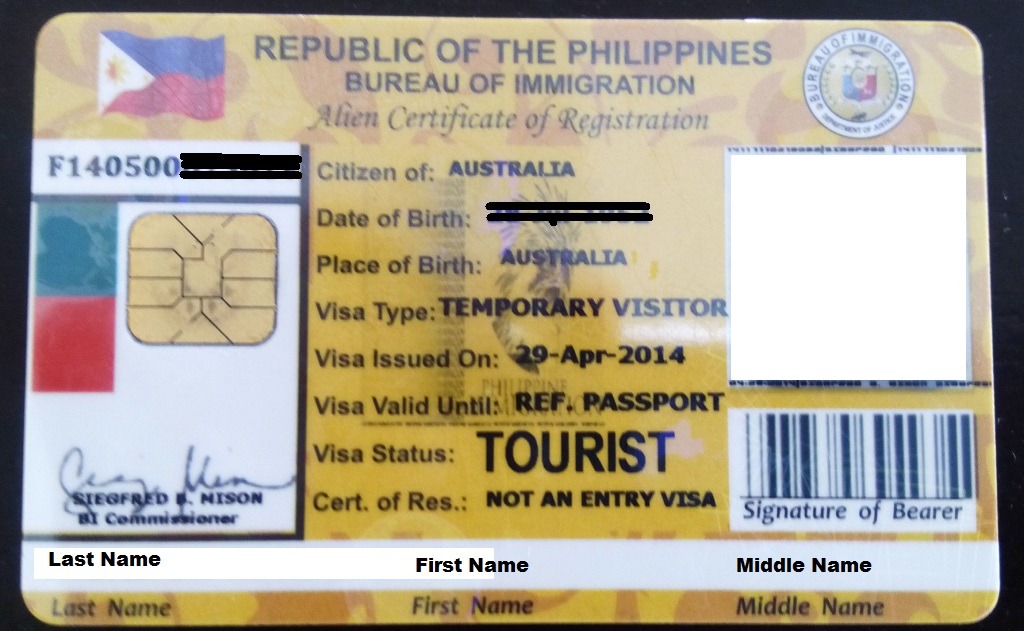
The Alien Certificate of Registration Identity Card (ACR I-Card) is the primary identification document for all registered foreign nationals residing in the Philippines, mandatory for those staying beyond 59 days on a tourist visa or holding any long-term immigrant or non-immigrant status. For foreign professionals on workvisaphilippines.com, understanding ACR-I Card requirements is essential for ensuring unhindered travel, banking access, and immigration compliance during their assignment.
What is the Purpose and Validity of the ACR I-Card?
The ACR I-Card is a microchip-based, credit card-sized identification document that serves as the official registration proof for foreign nationals in the Philippines. It contains the holder’s personal data, fingerprints, and photo, acting as a substitute for the Bureau of Immigration (BI) paper-based registration while facilitating security tracking and resident verification.
For most non-immigrants, including those on 9G work visas or 9(f) student visas, the card is valid for one year and must be renewed annually alongside the visa extension. For permanent residents (immigrants), the card is typically valid for five years. Carrying this card is a legal requirement; it is necessary for simple tasks such as opening local bank accounts, securing a Philippine driver’s license, or registering a mobile SIM card as a long-term resident.
Who Is Required to Apply for an ACR I-Card?
All foreign nationals who have been in the Philippines for more than 59 days under a Temporary Visitor’s Visa (9(a)) or those who hold a long-term visa (immigrant or non-immigrant) must register and obtain an ACR I-Card. This includes professionals on 9G work visas, students on 9(f) visas, and dependents of foreign nationals.
Exemptions are limited to foreign nationals staying less than 59 days (pure tourists) and those under special visa categories like the SRRV (Retirement Visa) or SIRV (Investor Visa), which issue their own specialized identification cards through the PRA or BOI. If you are transitioning from a 9G work visa to a tourist status or vice versa, your ACR I-Card status must be updated or reissued to reflect your current immigration category.
Core ACR-I Card Requirements for New Applications
For first-time applicants, particularly those moving from a tourist visa to a 9G work visa, the Bureau of Immigration requires a specific set of documents to verify identity and residency. Submitting complete and accurate paperwork is vital to avoiding processing delays or rejections.
- Completed Application Form: Use BI Form 2014-08-006 (Revised), filled out clearly in block letters.
- Passport Documents: Photocopy of the passport bio-page and the page showing the latest admission and a valid visa.
- Photographs: Three to four recent 2×2 passport-sized photos with a white background.
- Proof of Address: A notarized lease contract, utility bill, or a certificate of residence from the barangay or building management.
- Visa Approval: Original and photocopy of the Bureau of Immigration’s order granting the visa (e.g., the 9G approval order).
In many cases, the ACR I-Card application for work visas is filed concurrently with the visa petition, ensuring the card is ready shortly after the visa is stamped in the passport.
Step-by-Step Application Process for First-Time Applicants
Applying for your initial ACR I-Card involves a multi-stage flow that includes data encoding and biometric capture at the Bureau of Immigration. While the process can be handled at the BI Main Office in Intramuros, many regional offices in Cebu, Davao, or Makati are also authorized to process these transactions.
- Document Submission: Present your checklist and application form at the appropriate BI counter for initial evaluation and data entry.
- Order of Payment (OPS): Once approved for processing, the officer will issue an OPS detailing the applicable fees.
- Payment of Fees: Pay the required amount at the BI cashier; always secure and keep the original Official Receipt (OR).
- Biometrics and Image Capture: Proceed to the biometrics station for fingerprint scanning, digital signature, and on-site photography.
- Card Issuance: After internal verification and printing, present your claim stub and identification to receive your new ACR I-Card.
For work visa holders, the timeline for card release usually aligns with the final implementation of the 9G visa, which can take several weeks after the initial biometrics capture.
ACR I-Card Requirements for Renewal and Re-registration
Foreign nationals must be proactive about renewing their ACR I-Card before it expires to avoid immigration penalties and potential issues with international travel. Renewal is typically required when the card reaches its one-year or five-year expiration date, or upon a “change of status” (e.g., from student to worker).
- Renewal Checklist: Submit the existing ACR I-Card, a photocopy of the passport bio-page, and the current visa, along with a completed renewal application form.
- Re-registration at 14: Children who reach the age of 14 must undergo a mandatory re-registration process to update their biometrics and personal records.
- Card Validity: Ensure your renewal application is filed at least 30 days before the card’s expiry to allow for printing and processing times.
If your card expires while you are outside the Philippines, you may face difficulties at the airport upon re-entry; it is recommended to renew the card before any planned overseas travel.
Fees, Processing Times, and Payment Methods for ACR-I Cards
The costs associated with the ACR I-Card are standardized by the Bureau of Immigration, though total amounts may vary if express processing or late penalties are applied. For most 2026 applications, the fees are divided into a US Dollar component and a Philippine Peso component.
- Standard Issuance Fee: USD 50.00 for the card itself, usually payable in Philippine Peso based on the current BI exchange rate.
- Express Lane Fee: PHP 500.00 for faster processing and printing.
- Replacement Fees: If a card is lost or damaged, the fee remains the same, but you must also submit a notarized Affidavit of Loss and a police report.
Processing times generally range from one to three weeks for first-time applicants at the main office, while renewals can often be completed in a shorter timeframe if no status changes are involved. Payments are accepted in cash or via manager’s check at the BI cashier; always ensure you have the exact amount based on the day’s exchange rate.
The Annual Report (AR) Requirement for Card Holders
Holding an ACR I-Card carries the mandatory obligation to participate in the Annual Report (AR) every year between January 1 and March 1. This process confirms that the foreign national is still residing in the country and that their registered address and contact information remain current.
- Reporting Window: The report must be made in person (or via an authorized representative for certain age groups) within the first 60 days of the calendar year.
- Requirements for AR: Present your original ACR I-Card, a valid passport, and the confirmation number from the BI’s online registration portal.
- AR Fees: The standard annual report fee is PHP 300.00, plus a PHP 10.00 legal research fee.
Failure to complete the Annual Report can lead to fines of PHP 200.00 per month of delay, and prolonged non-compliance may lead to the cancellation of your visa or card.
Handling Lost, Damaged, or Stolen ACR I-Cards
If your ACR I-Card is lost, stolen, or damaged beyond use, you must immediately apply for a replacement to avoid being “out of status” during an immigration check. A lost card can also prevent you from securing an Exit Clearance Certificate (ECC) should you need to leave the country suddenly.
- Immediate Action: Execute a notarized Affidavit of Loss describing the circumstances of the loss.
- Police Report: Obtain a police report from the station with jurisdiction over the area where the loss occurred.
- Application for Replacement: Submit these documents along with a new application form and the standard USD 50 replacement fee at the BI Main Office.
The Bureau of Immigration typically treats replacements as new applications, meaning you will need to undergo biometrics capture again to ensure the security of the new card.
Common Mistakes in ACR-I Card Applications
Many foreign nationals encounter delays in their ACR I-Card processing due to minor administrative errors or a lack of preparation before visiting the Bureau of Immigration. Avoiding these pitfalls is key to a smooth 2026 application experience.
- Incorrect Photos: Submitting photos with a colored background or wearing glasses/hats, which are rejected by the digital scanning system.
- Incomplete Forms: Leaving fields blank (especially the Philippine address or contact number) or using non-standard ink colors.
- Late Notifications: Failing to inform the BI within 30 days of a change in residential address, which can lead to fines during your next card renewal or annual report.
- Missed Annual Report: Assuming the annual report is not required if the card was just issued in December, the AR is required every year, regardless of the card’s issuance date.
Preparing your document kit and verifying all details against your passport bio-page can save hours of queuing time at the BI offices.
Strategies for Efficient ACR-I Card Compliance
For professionals and investors on workvisaphilippines.com, maintaining ACR-I Card compliance should be integrated into your yearly administrative calendar. Since the card is the “anchor” of your legal residency, keeping it current is a top priority.
- Sync with Visa Expiry: Always apply for card renewal simultaneously with your visa extension to avoid having a valid visa but an expired card.
- Digital Records: Keep a high-quality scan of both sides of your ACR I-Card and your official receipts on your phone or cloud storage.
- Early Annual Reporting: Complete your Annual Report in early January via the BI e-services portal to avoid the heavy crowds that form toward the March 1 deadline.
Following these strategies ensures you are always ready for unexpected immigration checks or last-minute business travel requirements.
Special Considerations for 9G Work Visa Holders
9G work visa holders have specific obligations related to their ACR I-Card, particularly when changing employers or ending their assignment in the Philippines. Because your card is tied to your specific employer, any change in employment requires a “downgrading” or “transfer” process that impacts your card’s validity.
- Employer Transfers: If you switch companies, your current 9G visa and its corresponding ACR I-Card must be downgraded to tourist status before a new 9G application (and card) can be filed by the new employer.
- Termination Clearance: Upon leaving your job, you must surrender your ACR I-Card as part of the visa downgrading process; the BI will then issue a temporary 9(a) status or an exit clearance.
- Annual Report and Employer: Ensure your employer is correctly listed on your BI records; discrepancies found during the AR can lead to compliance audits.
These steps are critical for maintaining a clean immigration record and ensuring you can return to the Philippines for future assignments without being flagged for “unresolved” status changes.
Final Thoughts
The ACR I-Card is the cornerstone of legal residency for foreign nationals in the Philippines, serving as a mandatory ID for those staying over 59 days or holding work, student, or resident visas. Maintaining compliance requires meeting strict ACR-I Card requirements—including providing notarized proof of address, biometric capture, and payment of the USD 50 fee—alongside fulfilling the critical Annual Report (AR) duty every January to March. Failure to renew cards before expiry or report address changes can lead to fines, travel delays at airports, or complications during visa downgrading.
Streamline the ACR-I Card Process
Work Visa Philippines streamlines the ACR-I Card process for 9G professionals, investors, and their families by managing initial applications, annual renewals, and lost card replacements with zero-stress execution. We ensure your AR compliance is handled early, your documents are correctly apostilled, and your card status stays synchronized with your visa validity.
Don’t let immigration paperwork distract you from your work—let the experts handle your ACR-I Card requirements. Contact our team today:
- Contact Us Here
- Fill Out the Form Below
- Call us at +63 (02) 8540-9623