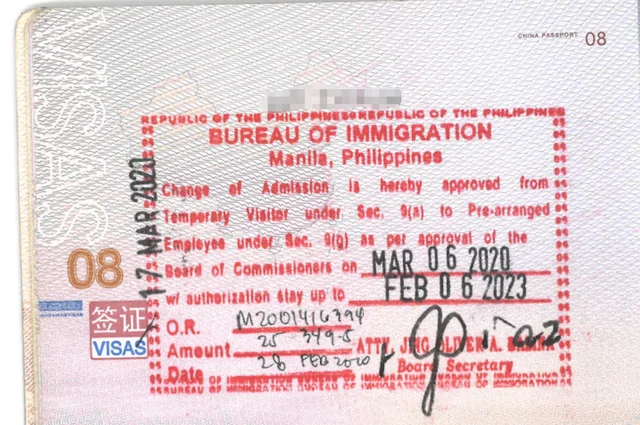
The BI Clearance Certification is an official document issued by the Bureau of Immigration (BI) that confirms a foreign national is not on any derogatory records, such as the blacklist, watchlist, or deportation lists. Commonly required for visa applications, permanent departures, downgrades, or certain immigration transactions, the BI clearance certification serves as proof of a “clean immigration record” and is a prerequisite for many legal and administrative processes in the Philippines.
For expatriates, corporate HR, and immigration practitioners, understanding when and how to obtain a BI clearance certification is essential to avoid delays in visa issuance, employment changes, or exit clearances.
When Is a BI Clearance Certification Required?
The BI Clearance Certification is not a universal requirement but is mandated in specific immigration and legal contexts. Common triggers include:
- Visa applications and renewals: Required for 9(g) work visas, SIRV investor visas, SRRV retiree visas, and certain 9(a) extensions to confirm no prior violations.
- Permanent or long‑stay departures: Foreign nationals staying six months or more must obtain an Emigration Clearance Certificate (ECC), which incorporates or requires a BI clearance as part of the process.
- Visa downgrades or status changes: When converting from a work visa (9(g)) to tourist (9(a)) or other statuses, BI clearance verifies no pending cases or obligations.
- Inclusion of dependents: Spouses or children joining a principal visa‑holder need BI clearance to ensure clean records before approval.
- Employment or corporate changes: Required for AEP renewals, corporate directorships, or SEC filings involving foreign nationals with prior Philippine stays.
Applicants with no prior BI record (e.g., first‑time short‑stay tourists under 59 days) typically do not need clearance, but anyone with an ACR I‑Card or extended stay history should proactively obtain it.
Who Needs a BI Clearance Certification?
All registered foreign nationals who have resided in the Philippines under any visa category for more than 59 days or who hold an ACR I‑Card are potential candidates for BI clearance certification.
- Long-stay visitors and workers: Holders of 9(g), 9(a) extensions, SIRV, SRRV, or economic‑zone visas need clearance for departures, renewals, or status changes.
- Dependents and family members: Spouses and children included under principal visas require individual clearances.
- Former overstayers or violators: Individuals who have settled fines or resolved cases need clearance to “close the book” on their record.
- Corporate executives and investors: Foreign directors, shareholders, or managers applying for new visas or SEC approvals often need BI clearance to prove good standing.
Even visa‑free short‑stay visitors who later extend or convert status may need clearance if their stay exceeds thresholds or if BI flags prior records.
Step-by-Step Process for BI Clearance Certification
Obtaining a BI clearance certification follows a standardized workflow at the BI Verification and Certification Unit (VCU) in Intramuros or via authorized channels.
- Secure the application form: Download the BI Form 2014‑13‑002 (“Request for BI Clearance Certificate”) from the BI website or obtain it at the VCU counter.
- Prepare supporting documents: Submit a photocopy of the passport bio‑page (or valid ID), ACR I‑Card (if applicable), and any Special Power of Attorney (SPA) if filed by a representative.
- Submit the application: Present the filled form and attachments at the VCU receiving window; BI staff verifies against derogatory databases.
- Pay the fees: Upon approval, receive an Order of Payment Slip (OPS) for the PHP 500 certificate fee + PHP 10 legal research fee + PHP 500 express fee (total PHP 1,010).
- Claim the certification: Return on the appointed date (often same‑day for express) with the claim stub to receive the original BI Clearance Certificate and receipts.
Processing takes one day for express applications; standard processing may take longer. Remote or online options exist for certain applicants via e‑Services or embassy coordination.
Required Documents for BI Clearance Certification
The BI requires a minimal but precise document set to issue the clearance certification efficiently.
- Primary ID: Passport photocopy (bio‑page and latest arrival/visa page); ACR I‑Card photocopy if held.
- Application form: BI Form 2014‑13‑002, duly accomplished and signed by the applicant or authorized representative.
- Authorization (if by proxy): Special Power of Attorney (SPA) notarized by a Philippine consular officer abroad, plus representative’s BI accreditation ID or valid ID.
- Payment proof: Official Receipt (OR) from prior payments if settling fines or fees.
- Additional clearances (case‑specific): NICA clearance, BIR tax clearance, or court orders if resolving specific holds.
Applicants with no derogatory record receive clearance immediately; those with issues must resolve them first (e.g., pay overstay fines, lift HDOs).
Fees and Processing Time for BI Clearance
BI clearance certification fees are standardized and non‑refundable, even if the application is denied due to derogatory records.
| Fee Description | Amount (PHP) |
| Certificate Fee | 500.00 |
| Legal Research Fee | 10.00 |
| Express Lane Fee | 500.00 |
| Total | 1,010.00 |
Processing time:
- Express: Same day or within 24 hours.
- Regular: 3-5 working days.
Fees must be paid at the BI cashier upon receipt of the OPS; digital payments via e‑Services may be available for remote applicants.
Common Reasons for BI Clearance Denial
A BI clearance certification denial occurs when the applicant appears on derogatory lists or has unresolved obligations.
- Overstay fines unpaid: Accumulated fines must be settled before clearance issuance.
- Hold Departure Orders (HDOs): Court‑issued HDOs for pending cases (e.g., civil, criminal, tax) block clearance until lifted.
- Blacklist or watchlist status: Due to deportation, illegal work, or security risks; requires a formal petition for lifting.
- Incomplete documentation: Missing passport copies or authorization for representatives.
Denied applicants receive a written explanation and can refile after resolving issues, often with legal assistance.
Final Thoughts
The BI clearance certification is a vital document confirming a foreign national’s clean immigration record, required for visas, departures, downgrades, and corporate filings. With a simple process—form submission, PHP 1,010 fees, and one‑day express turnaround—it prevents delays in critical immigration steps. Resolve overstays, HDOs, or derogatory flags promptly to secure clearance.
Get Expert Assistance
Work Visa Philippines manages BI clearance certification filings, audits records, and resolves issues for seamless compliance.
Need a BI clearance certification? Reach out to our team of specialists to schedule a consultation:
- Contact Us Here
- Fill Out the Form Below
- Call us at +63 (02) 8540-9623