The question of whether one can legally perform freelance work on a tourist visa in the Philippines is a frequent concern for digital nomads and remote professionals who are drawn to the country’s tropical lifestyle and affordable cost of living. Historically, the Philippine Immigration Act has strictly prohibited any form of gainful employment or business activity under a 9(a) Temporary Visitor’s Visa, which is designed solely for leisure, health, or family visits. However, with the official launch of the Philippines Digital Nomad Visa (DNV) in late 2025 and 2026, foreign freelancers now have a structured, legal pathway to live and work in the country without risking deportation or blacklisting.
The Traditional Prohibition: Why Freelancing on a 9(a) Is Illegal
For decades, the Bureau of Immigration (BI) has maintained a clear boundary: a tourist visa does not grant the right to work, regardless of whether the employer or client is located inside or outside the Philippines. Foreign nationals who perform freelance work on a tourist visa are technically in violation of their stay conditions because they are engaging in “gainful activity” that has not been authorized by a work permit or a specialized visa.
In 2026, the BI continues to monitor high-traffic expat hubs for illegal workers, and those found freelancing on a 9(a) visa can face summary arrest, detention at the BI Warden Facility, and permanent blacklisting. While many travelers historically “worked under the radar,” the increased digitalization of immigration records and stricter enforcement of labor laws make this a high-risk strategy that could lead to an abrupt end to one’s stay in the Philippines.
Understanding the New Philippines Digital Nomad Visa (DNV)
To address the growing trend of remote work and provide a safe legal framework for foreign professionals, the Philippine government introduced the Digital Nomad Visa (DNV) in 2025, which became fully operational in 2026. This visa category is specifically designed for foreign remote workers, freelancers, and business owners who earn their income from sources outside the Philippines.
The DNV is a significant upgrade over the standard tourist visa because it explicitly permits the use of digital technology to perform work for foreign clients while residing in the Philippines. It allows for an initial stay of one year, with the possibility of renewing for a second year, providing the stability and legal protection that a tourist visa cannot offer. For freelancers, this means they no longer have to rely on repeated 59-day extensions and the constant fear of being flagged for working illegally.
Key Eligibility Requirements for the Digital Nomad Visa
The 2026 requirements for the Digital Nomad Visa are designed to attract self-sufficient professionals who contribute to the local economy without taking jobs away from the Filipino workforce. Applicants must meet several criteria to prove their status as legitimate remote workers.
- Minimum Age: Applicants must be at least 18 years old.
- Proof of Remote Work: You must provide active contracts, employment letters, or client agreements showing that you work using digital technology for entities outside the Philippines.
- Income Threshold: While guidelines can vary, applicants generally need to show a monthly income of at least USD 2,000 to USD 3,000 generated from foreign sources.
- Clean Criminal Record: An apostilled or authenticated police clearance from your home country or country of long-term residence is mandatory.
- Health Insurance: You must hold a valid health insurance policy that covers you for the entire duration of your stay in the Philippines.
Additionally, applicants must not be employed by any Philippine-registered company and must not pose a threat to national security.
Comparing Tourist Visas vs. Digital Nomad Visas for Freelancers
Choosing between a standard tourist visa and the new DNV depends on the length of your intended stay and your appetite for regulatory risk. While a tourist visa is easier to obtain initially, the DNV provides long-term peace of mind for active freelancers.
| Feature | 9(a) Tourist Visa | Digital Nomad Visa (DNV) |
| Work Legality | Strictly Illegal | Fully Legal (Foreign Clients) |
| Stay Duration | 30/59 days (extensions up to 3 yrs) | 1 Year (Renewable) |
| Reporting | Frequent extensions (every 1-2 mo) | Annual reporting |
| Income Proof | Not required for most | Mandatory USD 2k-3k/month |
| Clearances | Not required for entry | Mandatory Police Clearance |
For those planning to stay in the Philippines for more than six months while actively freelancing, the DNV is the only compliant option that protects your ability to return to the country in the future.
Penalties for Working Illegally on a Tourist Visa in 2026
The Bureau of Immigration has issued updated guidelines in 2026 regarding the “illegal employment of foreigners,” which covers both traditional office work and unauthorized freelance work on tourist visa status. The consequences of being caught are severe and immediate.
- Summary Deportation: Under Section 29(a)(15) of the Immigration Act, foreign nationals working without a permit are subject to immediate removal from the country.
- Detention: Violators are often detained at the BI Warden Facility in Bicutan while awaiting deportation proceedings, which can take weeks or months.
- Heavy Fines: BI imposes administrative fines that typically range from PHP 50,000 to PHP 500,000 depending on the nature and duration of the violation.
- Permanent Blacklisting: Being blacklisted means you are barred from ever re-entering the Philippines, a record that can also affect your visa applications to other countries.
These penalties also apply to “digital nomads” who are reported by neighbors or local competitors for running unauthorized businesses from their rental properties.
The Role of the Alien Employment Permit (AEP) vs. DNV
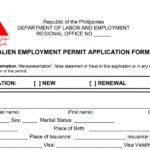
A common question for freelancers is whether they need an Alien Employment Permit (AEP) from the Department of Labor and Employment (DOLE) if they are working for foreign clients. Traditionally, the AEP is required for anyone engaged in “gainful employment” within the Philippines.
However, the 2026 Digital Nomad Visa rules provide an exemption: DNV holders do not need a traditional AEP because they are not competing with the local labor market and their income is not derived from Philippine sources. If a freelancer decides to take on a local Philippine client or joins a Philippine-registered company, they must immediately transition out of the DNV and apply for a 9G work visa and a standard AEP. The DNV is strictly for those whose professional and financial footprint remains outside the country.
Step-by-Step Application Process for the Digital Nomad Visa
Applying for a DNV can be done through Philippine Embassies or Consulates abroad or through a “change of status” application if you are already in the Philippines on a tourist visa. The 2026 process has been streamlined to encourage tech-savvy applicants.
- Gather Documents: Secure your remote work contracts, bank statements for the last six months, and your apostilled police clearance.
- Online Registration: Register through the BI’s dedicated DNV portal to upload your documents and secure an appointment.
- Payment of Fees: Pay the application and processing fees, which typically range from USD 200 to USD 500 (approx. PHP 11,000 to PHP 28,000).
- Interview and Biometrics: Attend your scheduled appointment at the BI for data encoding and biometrics capture.
- Visa Issuance: Once approved—usually within 30 days—your DNV will be stamped in your passport, and you will be issued a specialized DNV ID card.
This process regularizes your stay and ensures you have a valid ID card that is recognized by local banks and authorities.
Tax Implications for Foreign Freelancers and Digital Nomads
One of the most attractive features of the 2026 Digital Nomad Visa program is its clarity regarding taxation for remote workers. Under current Philippine tax rules, foreign nationals on a DNV are generally not taxed on their foreign-sourced income, provided they are not performing services for a Philippine-based entity.
However, if a freelancer stays in the Philippines for more than 180 days in a calendar year, they are classified as a “resident alien” for immigration purposes, but their tax liability remains limited to income earned from within the Philippines. It is essential for freelancers to maintain records of their income sources to prove to the Bureau of Internal Revenue (BIR) that their earnings are exclusively from abroad should they ever be audited during a visa renewal.
Common Pitfalls: Why Freelancers Get Flagged by Immigration
Even with the availability of the DNV, many freelancers continue to use tourist visas and inadvertently trigger immigration flags. Understanding these pitfalls can help you avoid a “derogatory record” in the BI database.
- Running Local Businesses: Attempting to sell goods or services locally (e.g., through FB Marketplace or a local cafe) without a business permit.
- Unpaid Annual Reports: DNV holders must still participate in the BI Annual Report (AR) every January–March, just like 9G and ACR I-Card holders.
- Incorrect Bank Remittances: Failing to show that your income is actually entering the Philippines through recognized financial channels can raise red flags during DNV renewals.
- Inconsistent Stay History: Having multiple “Visa Runs” or back-to-back tourist extensions while being unable to show sufficient funds for leisure can lead to questioning at the airport.
Transitioning to the DNV eliminates these risks by providing a legitimate reason for your long-term presence in the country.
Strategies for a Safe and Legal Freelance Stay in 2026
For those serious about making the Philippines their remote work base, the best strategy is one of total compliance and early planning. 2026 is the year of the “compliant nomad,” and those who follow the rules enjoy the best the country has to offer.
- Transition Early: If you are currently on a tourist visa, start your DNV application at least 60 days before your current extension expires.
- Keep Contracts Updated: Ensure your freelance contracts are current and clearly state that the work is performed remotely for a foreign entity.
- Maintain Health Insurance: Do not let your policy lapse, as the BI may check your insurance status during your Annual Report or visa renewal.
- Network Locally: Join digital nomad communities in Siargao, Boracay, or Makati to stay informed about local regulatory changes and events.
Compliance not only protects your stay but also helps build a positive reputation for the digital nomad community in the eyes of the Philippine government.
Conclusion and Call to Action
The legality of freelance work on a tourist visa in the Philippines is clear: it is strictly prohibited under the 9(a) status and can lead to immediate deportation, heavy fines, and a permanent blacklist order. However, the 2026 landscape offers a revolutionary solution through the Philippines Digital Nomad Visa (DNV), which grants a legal, renewable one-year stay for foreign remote workers earning at least USD 2,000–3,000 per month from foreign sources. By transitioning to a DNV, freelancers gain indefinite travel privileges, tax-free status on foreign income, and the stability of a recognized residence ID—all while staying 100% compliant with Bureau of Immigration and DOLE regulations.
How Work Visa Philippines Supports Freelancers and Digital Nomads
Navigating the transition from a tourist status to a legal remote work status requires a deep understanding of the Bureau of Immigration’s 2026 e-services and manual filing procedures. Work Visa Philippines provides the expert guidance needed to secure your DNV with zero stress.
- Eligibility Assessment: We review your income, contracts, and clearances to ensure you meet the DNV thresholds before you pay any fees.
- Document Preparation: Our team manages the apostille process for your police clearances and ensures your remote work proof is in the exact format required by the BI.
- Application Management: We handle the online portal filings, appointment scheduling, and fee payments, monitoring your application until the DNV is issued.
- Compliance Monitoring: We track your Annual Report deadlines and renewal windows, so you never have to worry about overstaying or fines.
By partnering with Work Visa Philippines, freelancers on workvisaphilippines.com can focus on their global clients while we manage the intricate details of their legal stay in paradise.
Don’t risk your life in the Philippines on an illegal tourist status—secure your future with a Digital Nomad Visa. Contact Work Visa Philippines for a DNV eligibility check today:
- Contact Us Here
- Fill Out the Form Below
- Call us at +63 (02) 8540-9623