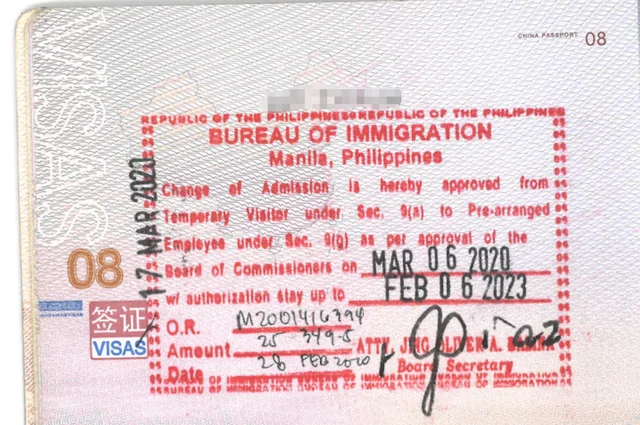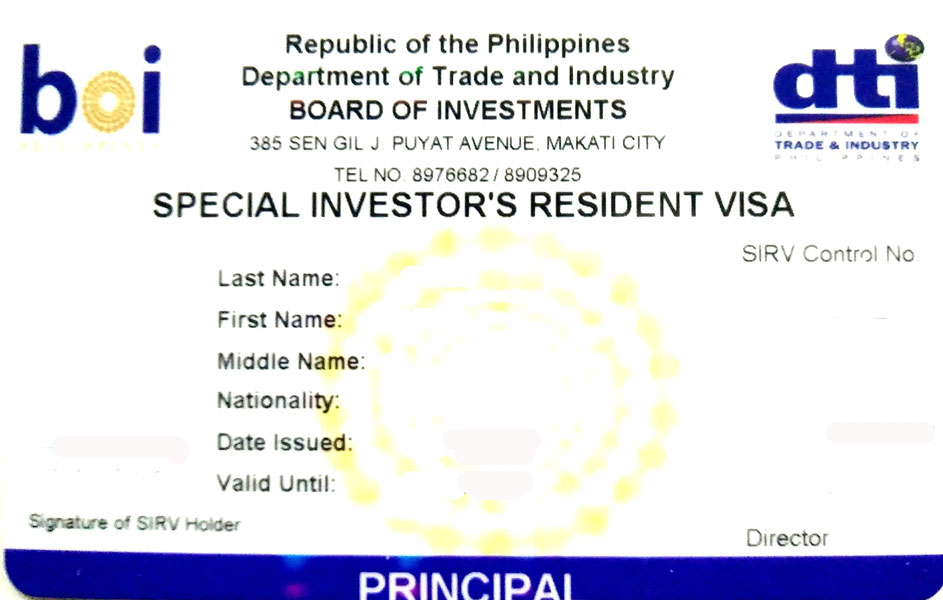
The Special Investor’s Resident Visa (SIRV) offers foreign nationals indefinite, multiple-entry residency in the Philippines in exchange for investing at least US$75,000 in eligible enterprises or publicly listed securities, administered by the Board of Investments (BOI) and implemented by the Bureau of Immigration (BI).
This Philippine investor visa suits business owners, portfolio investors, or those seeking a long-term base without employment sponsorship, granting ACR I-Card privileges, no work restrictions (though tied to investment maintenance), and family inclusion under derivative visas. Unlike employment visas, SIRV validity persists as long as the investment remains compliant, making it ideal for 2026 amid stable economic incentives.
SIRV Eligibility and Basic Requirements
Before launching a SIRV application, confirm you meet the foundational criteria: age 21+, no criminal convictions involving moral turpitude, no serious contagious diseases or mental institutionalization history, and the capacity to remit/invest US$75,000+ in qualifying Philippine assets. The program targets investors contributing to the economy via Book V of the Omnibus Investments Code (EO 226), excluding real estate speculation alone.
Core requirements overview:
- Minimum inward remittance: US$75,000 (or equivalent) via accredited banks (Land Bank of the Philippines/LBP or Development Bank of the Philippines/DBP).
- Eligible investments: Equity in BOI-approved projects, publicly listed PSE stocks, or other priority activities per Investment Priorities Plan (IPP).
- Personal fitness: Clean Interpol/NBI clearance, medical certificate.
- No dual citizenship issues; Philippine citizens ineligible.
Family (spouse/children <21) eligible as derivatives post-principal approval.
Step 1: Pre-Application Planning and Documentation Gathering
SIRV success hinges on meticulous preparation: assess eligibility, select investments, and compile the necessary documents to avoid rejections or delays. Engage consultants early for tailored advice on fund sourcing and Philippine vehicles.
Essential pre-steps:
- Verify disqualifiers (criminal/medical history).
- Choose investment: PSE stocks (fastest), BOI enterprises, or IPP activities.
- Gather: Passport (6+ months valid), birth cert (apostilled), 2×2 photos, police clearance (home country/Interpol, 6 months valid), medical exam (BI-accredited).
- Plan remittance: Source-of-funds proof (bank statements).
Budget 2-4 weeks; visit the Philippine embassy/consulate for initial consultation.
Step 2: Remit Funds to Accredited Depository Bank
Secure the cornerstone: Remit US$75,000+ to the LBP or DBP account opened in your name (in-person preferred). Bank issues certification confirming receipt, reported to BOI—triggering probationary process.
Process details:
- Open a peso/foreign currency account (requires a passport and visa).
- Wire funds (SWIFT); retain telex confirmations.
- Obtain Bank Certification of Inward Remittance (within 12 months pre-filing).
- If short, top-up to the full amount.
Takes 1-2 weeks; retain for BOI/BI.
Step 3: Submit Application to the Philippine Embassy or BOI
File via the nearest Philippine Embassy/Consulate abroad or directly with BOI Manila (post-remittance). Embassy route yields probationary 6-month multiple-entry visa for Philippines entry to complete.
Embassy/BOI submission:
- BOI Form SIRV-001A/FA Form No. 2 (accomplished).
- Bank remittance certificate, passport, photos, clearances, and medical.
- DFA prior approval (if embassy).
- Fees: BI P10,110+.
BOI evaluates (2-4 weeks); endorses to BI/DFA for probationary visa.
Step 4: Enter Philippines and Secure Probationary SIRV
Upon embassy visa or direct entry, report to BI for probationary SIRV implementation (6 months, multiple-entry). Present BOI endorsement, remittance proof, and documents for visa stamp and initial ACR registration.
At BI:
- Submit a petition for implementation.
- Biometrics and interview if needed.
- Receive a probationary visa stamp.
- ACR I-Card provisional (USD 50).
Timeline: 1-2 weeks post-arrival.
Step 5: Convert Funds to Qualifying Investment
Within a probationary period (often 60-180 days), convert remitted funds to a permanent eligible investment, submitting proof to BOI for indefinite SIRV conversion. Stocks are easiest; enterprises require SEC/BOI registration.
Conversion options:
- PSE listed stocks: Open brokerage, buy, obtain certs (fastest, 1-2 weeks).
- BOI enterprises: Equity in approved projects.
- Submit: Share certificates and broker statements to BOI.
BOI verifies (2-4 weeks) and notifies BI for upgrade.
Step 6: Final BI Approval, ACR I-Card, and Registration
BOI confirmation triggers BI for indefinite SIRV: Full visa implementation, permanent ACR I-Card issuance (microchip ID card). Complete registration formalities.
Final steps:
- BI petition for conversion.
- Fees: ACR USD 50 + express PHP 500.
- Claim ACR I-Card (valid 1 year initially, renewable).
After, you are now an indefinite resident.
Costs, Timelines, and Processing Fees Breakdown
SIRV involves phased fees; total ~PHP 50,000-USD 150 (excl. investment).
| Stage | Fees | Timeline |
| Embassy/BOI Filing | P10,110 BI + misc | 2-4 weeks |
| Bank Remittance | Bank charges | 1 week |
| ACR I-Card | USD 50 + PHP 500 | 1-2 weeks |
| Total | ~PHP 50k + USD 75k investment | 3-6 months |
Renewals: ACR annual USD 50 + AR fees.
Ongoing Compliance and Renewal Obligations
SIRV indefinite but requires maintenance. Preserve US$75k investment value, file BOI annual reports, complete BI AR (Jan-Mar), and renew ACR yearly. Notify of changes (address, marital status) if there are.
- Investment monitoring: Annual BOI certification.
- AR: ACR/passport/OR.
- Exit: ECC if long absence.
Non-compliance risks cancellation.
Common Pitfalls and Pro Tips for SIRV Success
Many Philippine investor visa applications encounter preventable setbacks due to misunderstanding timelines, investment rules, or documentation standards, but strategic preparation and expert guidance virtually eliminate rejection risks while accelerating the 3-6 month process from remittance to indefinite residency.
Common pitfalls to avoid:
- Insufficient or improperly documented inward remittance (missing SWIFT confirmations or bank certifications).
- Investing in ineligible assets like direct residential real estate or non-IPP activities.
- Submitting expired clearances (police clearance >6 months old, medical certificate outdated).
- Missing the 60-180 day probationary period deadline for fund conversion to permanent investments.
- Failing to maintain the minimum investment value post-approval triggers BOI cancellation notices.
Pro tips for guaranteed success:
- Engage BOI-accredited immigration consultants during pre-qualification to validate investment plans.
- Choose PSE-listed stocks through reputable brokers for the fastest conversion (1-2 weeks vs. months for enterprises).
- Strictly track the 180-day conversion window with calendar reminders and weekly BOI status checks.
- Establish an annual compliance calendar covering BOI reports, BI Annual Report (Jan-Mar), and ACR renewals.
- Pre-arrange family derivative applications with apostilled marriage/birth certificates ready post-principal approval.
Including Family Members as Derivatives
Once the principal applicant secures a Philippine investor visa approval, adding immediate family members—spouse and unmarried children under 21 years old—as derivatives becomes straightforward through a dedicated Bureau of Immigration (BI) petition, allowing the entire household to enjoy the same indefinite multiple-entry residency privileges, ACR I-Card access, and compliance obligations without requiring separate qualifying investments from family members.
The derivative inclusion process follows principal approval and involves these detailed steps:
- Eligibility verification: The Principal SIRV holder confirms that the spouse (legal marriage) and dependent children qualify; stepchildren or adopted children require legal documentation proving the relationship.
- Document preparation: Gather apostilled/PSA-authenticated marriage certificate (for spouse), birth certificates (for children), plus each derivative’s valid passport (6+ months validity), 2×2 photos, NBI/police clearance from home country (6 months valid), and medical certificate from BI-accredited clinic.
- BI petition filing: Principal submits Consolidated General Application Form (CGAF), family relationship proofs, derivative clearances, and principal’s ACR I-Card/BOI endorsement copy at BI Main Office (Intramuros) or authorized satellite offices.
- Processing and fees: Derivatives undergo biometrics and a brief interview (if requested) and pay standard fees (PHP 3,000-10,000 per person + USD 50 for the ACR I-Card); processing typically takes 2-4 weeks.
- Implementation: Approved derivatives receive SIRV visa stamp matching principal validity (indefinite), full ACR I-Card issuance, and inclusion in family reporting obligations.
Key Takeaways
Securing a Philippine investor visa through the SIRV program represents a strategic pathway for foreign nationals seeking indefinite multiple-entry residency without employment sponsorship, requiring a structured sequence beginning with US$75,000 remittance to accredited banks (LBP/DBP), followed by embassy/BOI application for probationary visa, entry to the Philippines, timely conversion of funds into qualifying investments (PSE-listed stocks or BOI-approved enterprises within 60-180 days), and final BI implementation yielding permanent ACR I-Card privileges.
This investment-based residency endures as long as the principal amount maintains value and annual compliance obligations—BOI investment reports, BI Annual Report (January 1-March 1), and ACR renewals—are met consistently, offering families derivative inclusion, unrestricted re-entry rights, and a stable platform for overseeing Philippine business interests or portfolio holdings. The entire process spans 3-6 months with total processing costs approximating PHP 50,000 plus the mandatory investment, positioning SIRV as one of the most accessible residency-by-investment programs in Southeast Asia for 2026 investors.
Ready to Launch your Philippine Investor Visa Application?
Contact Work Visa Philippines today for comprehensive support covering bank remittances to LBP/DBP, BOI filing preparation, PSE investment execution, BI visa implementation, and family derivatives—all tailored to your timeline and investment preferences:
- Contact Us Here
- Fill Out the Form Below
- Call us at +63 (02) 8540-9623