For many expatriates, a professional assignment in the Philippines is the beginning of a lifelong connection to the country’s culture, lifestyle, and economic opportunities. However, the standard 9G Pre-Arranged Employment Visa is inherently temporary and entirely dependent on continuous corporate sponsorship, leaving foreign professionals vulnerable to sudden status changes if their employment ends. Transitioning from a work visa to permanent residency provides foreign nationals with true independence, uncoupling their right to reside in the Philippines from a specific employer.
Understanding the Limits of the 9G Work Visa
The 9G work visa is a non-immigrant visa designed strictly to authorize a foreign national to work for a specific Philippine entity for a defined period. While it allows for multiple entries and extended stays, it does not accrue time toward permanent residency on its own.
Once an expatriate resigns, is terminated, or a contract naturally concludes, the 9G visa loses its legal basis. The holder cannot simply remain in the country indefinitely to search for new employment or retire; they must either secure a new corporate sponsor, transition to a different visa category, or leave the Philippines. Because of these limitations, foreign nationals who have established roots in the country must proactively seek out immigrant or special resident visas to achieve long-term stability.
The Visa Downgrading Process: The Essential First Step
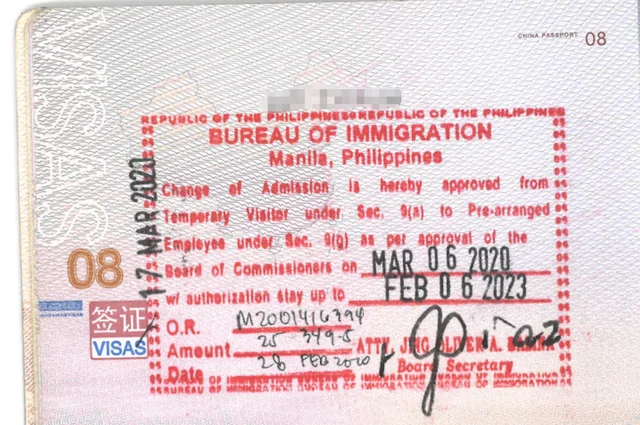
Transitioning from a work visa to permanent residency rarely happens directly; the Bureau of Immigration (BI) typically requires foreign nationals to cancel their existing work status first. This administrative procedure, known as “visa downgrading,” legally converts your 9G work visa back into a 9(a) temporary visitor (tourist) visa.
- Initiating the Request: You or your employer must submit a formal letter addressed to the BI Commissioner stating the reason for the downgrade, such as the end of employment or intent to change visa status.
- Surrendering Documents: The applicant must physically submit their original passport, visa implementation stamp, and surrender their Alien Certificate of Registration Identity Card (ACR I-Card) to the BI.
- Processing and Approval: The downgrading process typically takes 3 to 4 weeks at the BI Main Office in Intramuros; once approved, your passport is stamped with a 59-day 9(a) tourist visa.
- Settlement of Clearances: Depending on your stay duration, you may also need to secure an Emigration Clearance Certificate (ECC) to finalize the cancellation of your work status.
Maintaining a valid tourist status post-downgrade is critical, as any overstaying penalties can delay or derail your subsequent application for permanent residency.
Pathway 1: The 13(a) Non-Quota Immigrant Visa by Marriage
For foreign nationals legally married to a Filipino citizen, the Section 13(a) Non-Quota Immigrant Visa offers the most direct and secure transition from a work visa to permanent residency. This spousal visa grants true permanent resident status, eliminating the need for recurring visa extensions or financial deposits.
The application is a two-step process initiated by the Filipino spouse acting as the petitioner. Initially, the BI grants a 13(a) probationary visa for one year. Prior to its expiration, the couple must apply to convert this probationary status into a permanent one, proving the marriage remains genuine and intact. Requirements include a Philippine Statistics Authority (PSA) authenticated marriage certificate, joint affidavits, BI and NBI clearances, and a medical examination. Because the 13(a) has no minimum age or hefty bank deposit requirement, it is highly sought after by integrated expatriates.
Pathway 2: The Special Resident Retiree’s Visa (SRRV)
If marriage to a Filipino is not applicable, the Special Resident Retiree’s Visa (SRRV) is widely considered the best alternative for long-term stay, acting as a functional equivalent to permanent residency. Administered by the Philippine Retirement Authority (PRA), the SRRV grants indefinite stay privileges in exchange for a financial deposit.
- Age and Deposit Requirements: Under current rules, applicants generally must be at least 50 years old to qualify for the SRRV Classic or Smile categories, requiring a deposit between USD 10,000 and USD 50,000 (depending on pension status).
- Expanded Courtesy Options: Foreign nationals as young as 35 may qualify if they are former military personnel or former Filipino citizens.
- Investment Conversion: SRRV Classic holders have the unique advantage of converting their requisite time deposit into active investments, such as purchasing a condominium unit or signing a long-term property lease.
- Exceptional Benefits: Holders enjoy exemptions from the BI Annual Report, travel tax (if staying less than one year), and customs duties on a one-time importation of household goods.
For highly paid 9G professionals nearing retirement, funneling their savings into an SRRV deposit ensures they can remain in the country indefinitely after their corporate assignment ends.
Pathway 3: The Special Investor’s Resident Visa (SIRV)
For younger foreign professionals and entrepreneurs who do not qualify for an SRRV but have substantial capital, the Special Investor’s Resident Visa (SIRV) provides a robust avenue from a work visa to permanent residency. Administered by the Board of Investments (BOI), this visa caters to individuals willing to inject funds directly into the Philippine economy.
The SIRV requires a minimum inward remittance of USD 75,000, which must be invested in eligible vehicles such as publicly listed companies on the Philippine Stock Exchange (PSE) or BOI-registered enterprises. As long as this investment is maintained, the investor—along with their spouse and unmarried children under 21—enjoys indefinite residency and multiple-entry privileges. This pathway is ideal for corporate executives who plan to transition from being employees on a 9G visa to becoming business owners or active equity investors in the Philippines.
Pathway 4: Section 13 Quota Immigrant Visas
Though significantly more restrictive, the Quota Immigrant Visa is an option for highly skilled or independently wealthy foreign nationals originating from countries that share a reciprocal immigration agreement with the Philippines. This true permanent resident visa is capped globally.
The Bureau of Immigration issues a maximum of 50 Quota Visas per nationality each calendar year. Applicants must prove they possess extraordinary professional skills, exceptional educational backgrounds, or significant capital that brings tangible benefits to the national interest. Because of the strict numerical limit and rigorous vetting process by the BI Commissioner, the Quota Visa is highly competitive. It is most successfully pursued by top-tier executives or prominent investors who have already established a long track record of positive economic contribution while holding a 9G work visa.
Permanent Residency and Long-Term Stay Options Compared
Selecting the correct path requires balancing your family situation, financial liquidity, and long-term career goals.
| Feature | 13(A) Immigrant Visa | SRRV (Retirement) | SIRV (Investor) |
| Primary Eligibility | Marriage to a Filipino | Age + Bank Deposit | USD $75,000 Investment |
| Minimum Age | 18 (Legal marriage age) | 50 (35 for exceptions) | 21 years old |
| Financial Requirement | Proof of financial stability | $10,000-$50,000 | $75,000 |
| Visa Duration | Permanent | Indefinite (Deposit tied) | Indefinite (Investment tied) |
| Processing Time | 4 to 6 months | 4 to 8 weeks | 8 to 12 weeks |
Working as a Permanent Resident or Long-Term Visa Holder
An important consideration when shifting from a work visa to permanent residency is how it impacts your legal right to earn income in the Philippines. The rules vary drastically between immigrant statuses and special resident programs.
- 13(a) Immigrant Visa: Holders are explicitly granted work authorization and are exempt from securing an Alien Employment Permit (AEP) from DOLE, though they must secure an AEP Exemption Certificate to formalize their status with employers.
- SRRV Holders: The SRRV does not automatically grant the right to work; retirees who choose to seek employment in the Philippines must secure an AEP from DOLE before commencing any corporate role.
- SIRV Holders: Similarly, investors holding an SIRV who wish to take on an executive or operational role within a company (even one they invested in) are still subject to DOLE’s AEP requirements to work legally.
This distinction is critical: if your goal is to continue working seamlessly in the local job market without DOLE interference, the 13(a) provides the most friction-free environment.
Core Document Preparation and Authentication
Successfully applying for any permanent residency or long-term visa requires an immaculate document kit, often necessitating coordination with your home country. The Bureau of Immigration and PRA apply strict scrutiny to foreign-sourced documents.
For 13(a), SRRV, or SIRV applications, you will universally need a police clearance from your country of origin (or country of last long-term residence) and a National Bureau of Investigation (NBI) clearance if you have been in the Philippines for over 30 days. Moreover, any document issued outside the Philippines—such as birth certificates, foreign marriage certificates, or foreign police records—must be duly Apostilled or authenticated by the Philippine Embassy in the issuing country. Additionally, all pathways mandate a comprehensive medical clearance conducted by a Bureau of Quarantine-accredited physician to ensure you pose no public health risk.
Common Pitfalls During the Transition Phase
The gap between cancelling your 9G visa and securing your new permanent status is a highly sensitive administrative period where many foreign nationals jeopardize their legal stay. Maintaining strict compliance is non-negotiable.
- Prematurely Expired Visas: Failing to initiate the downgrading process before your 9G expires leads to overstaying fines and potential derogatory records that can block your PR application.
- Missed Annual Reports: Even while processing a transition, if you hold an ACR I-Card during the January–March window, you must complete your BI Annual Report to avoid compliance holds.
- Unauthorized Travel: Departing the Philippines while a downgrading application or a 13(a) probationary visa is pending can lead to the abandonment of your application at the BI.
- Incomplete Downgrading: Assuming a resignation automatically cancels the 9G; the physical downgrading order and 9(a) stamp must be secured to reset your status legally.
Careful sequencing, ensuring your tourist visa extensions overlap perfectly with the processing timelines of your new PR application, is the only way to avoid immigration friction.
Key Takeaways
The transition from a work visa to permanent residency represents the ultimate milestone for expatriates wishing to make the Philippines their permanent home, effectively neutralizing the risks of employer dependency and recurring visa renewals. While the 9G limits your stay to the duration of an employment contract, pathways like the 13(a) Spousal Visa, the deposit-based SRRV, or the investment-driven SIRV offer indefinite, secure residency for you and your dependents. Success hinges on flawless execution: perfectly timing the mandatory downgrading of your 9G to a tourist visa, securing apostilled global clearances, and meticulously maintaining legal stay while your permanent status is processed over the standard 2 to 6-month adjudication windows.
Need Expert Assistance?
Work Visa Philippines specializes in executing this complex transition, managing everything from your initial 9G downgrading petition with the BI to the final issuance of your permanent residency or SRRV card. We coordinate your medical clearances, file your AEP exemptions, and ensure absolute compliance with all 2026 regulations so your life in the Philippines remains uninterrupted.
Ready to secure your permanent future in the Philippines? Contact Work Visa Philippines today to begin your residency transition strategy:
- Contact Us Here
- Fill Out the Form Below
- Call us at +63 (02) 8540-9623