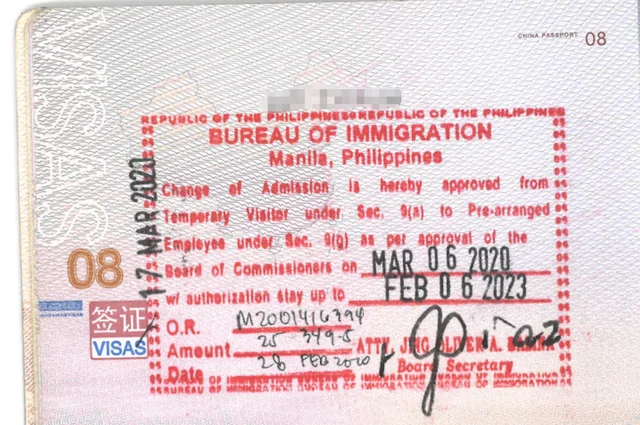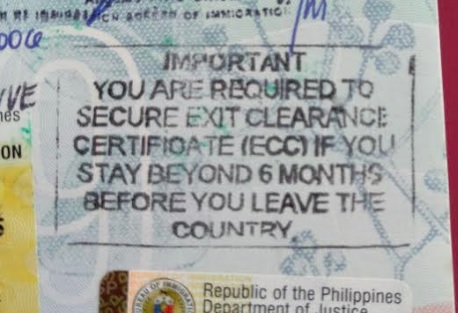
For any foreign national planning to leave the Philippines after an extended stay, the Emigration Clearance Certificate (ECC) is a mandatory exit document issued by the Bureau of Immigration (BI). The ECC acts as official proof that the departing individual has settled all immigration obligations—such as overstaying fines, Annual Report fees, and other pending dues—before exiting the country. Failure to secure an ECC can result in being stopped at the airport, being required to pay additional fees, or being denied exit until the clearance is obtained.
Who Needs an Emigration Clearance Certificate (ECC)?
The Bureau of Immigration mandates that certain categories of foreign nationals must obtain an Emigration Clearance Certificate before leaving the Philippines, typically after a stay of six (6) months or more, or when changing or downgrading their visa status. This requirement applies not only to long‑term residents but also to corporate expatriates, retirees, and investors who have been in the country for an extended period.
Specifically, the BI identifies the following groups as required ECC applicants:
- Foreign nationals who have stayed in the Philippines for more than 180 days (about six months) on a tourist or temporary visitor visa.
- Foreign nationals whose ACR I‑Card status is about to be renewed or changed, or who are changing visa status (e.g., from a 9G work visa to a different resident visa, or from a tourist visa to a retirement visa).
- Individuals who have recently regularized their status (such as overstaying or visa downgrades) and must demonstrate compliance before departure.
If you are unsure whether you fall under the ECC requirement, it is safer to apply than to risk being stopped at the airport, as the BI strictly enforces this rule at immigration checkpoints.
Understanding the Two Types of ECC: ECC-A and ECC-B
The BI issues two main types of Emigration Clearance Certificate: ECC‑A and ECC‑B, and the correct type depends on your current visa and ACR I‑Card status. Choosing the wrong category can delay your departure or cause confusion at the immigration counter.
- ECC‑A (Emigration Clearance Certificate – A): This is the standard ECC for most foreign nationals who are permanently leaving the Philippines or who are departing after a long stay, including those on a 9G work visa, a tourist visa, or any other long‑term visa. ECC‑A applicants usually apply at the BI Main Office in Manila or an authorized BI satellite office, not at the airport.
- ECC‑B (Emigration Clearance Certificate – B): This ECC is issued to departing tourists who have previously received an ACR I‑Card during their stay in the Philippines and are leaving the country temporarily (e.g., for a short trip abroad with the intention of returning). ECC‑B can be processed either at the BI Main Office or, in many cases, at designated BI counters inside major international airports such as NAIA, but BI recommends applying at least 72 hours before departure if you choose the airport route.
Both types of ECC are valid for one (1) month from the date of issuance, but they can be used only once; using the same ECC for a second departure is not allowed.
Required Documents for Applying for an ECC
Securing an ECC requires a clear, organized document kit that proves your identity, legal status, and compliance with immigration obligations. The BI will not accept incomplete or blurry copies, so preparing your documents in advance is essential.
Commonly required documents include:
- A valid passport, along with clear photocopies of the biographical page, the latest arrival stamp, and all visa pages and extension receipts.
- The Alien Certificate of Registration Identity Card (ACR I‑Card), if you hold one, and its current receipt.
- A completed BI Emigration Clearance Certificate application form (Form ECC‑01), which can be downloaded from the BI website or obtained at the BI office.
- Supporting clearances or proof of compliance if you have ever overstayed or regularly updated your status (e.g., receipts for overstay fines, AEP and 9G visa records, and Annual Report receipts).
- Recent passport‑sized photos if required by the specific BI office or BI circulars in effect in 2026.
Some BI offices may also request additional documents, such as a letter of indemnity or an employer’s confirmation letter if you are an employee on a 9G visa, so it is wise to confirm the checklist with the issuing office or your immigration consultant before your appointment.
Step-by-Step Process for Securing an ECC-A In-Person
For most long‑stay foreign nationals, securing an ECC‑A involves visiting the BI Main Office in Intramuros or an authorized BI satellite office rather than the airport. The in‑person process is structured in several clear steps.
- Gather and Prepare Documents: Collect all required documents, including your passport, ACR I‑Card, visa records, and application form, and ensure all photocopies are clear and complete.
- Submit Application at BI Office: Go to the designated BI office (usually the Main Office or an extension office that handles ECC transactions) and submit your application to the receiving window.
- Evaluation and Payment: The BI will check your records for any outstanding obligations, such as unpaid fines or overdue Annual Reports. If clear, they will issue an Order of Payment Slip (OPS) for the ECC fees.
- Pay the Fees: Pay the prescribed fees at the BI cashier. The exact amount can vary by year, but BI fees for an ECC typically fall in the range of a few thousand pesos, often including a legal research fee and an express lane option.
- Biometrics and Verification: You may be required to undergo biometric capture (fingerprinting and photo) as part of the BI verification process, especially for foreign nationals on ACR I‑Card status.
- Collect the ECC: After the BI evaluates your application, you will be given a claim stub and an appointment date to return for collection. When you return, present your claim stub and ID to receive your Emigration Clearance Certificate.
Plan to start this process at least 72 hours before your planned departure, as BI processing can take several business days, particularly during peak periods.
Applying for an ECC-B Online or at the Airport
For tourists who have previously obtained an ACR I‑Card and are departing temporarily, the BI offers the ECC‑B as a more flexible option, which can often be processed through the BI e‑Services portal or at airport counters.
Using the BI e‑Services portal, you can submit an online Emigration Clearance Certificate (ECC‑B) application by logging in, selecting the ECC service, and filling out the digital form with your personal and passport details. You will then upload scanned copies of your passport and ACR I‑Card, pay the fees online, and receive an electronic ECC (e‑ECC) via email or QR code that can be presented at the airport immigration counter.
If you prefer to apply at the airport, many major international terminals have BI counters where ECC‑B can be processed on the same day of departure, but BI strongly advises applicants to apply at least 72 hours before departure to avoid long queues or system issues on the day of travel. Airport ECCs are typically issued for a single use and must be surrendered to immigration officers as you exit the country.
Fees, Processing Time, and Express Options
The BI sets standardized fees for Emigration Clearance Certificates, and the cost can vary depending on the type of ECC, the BI office, and whether you opt for express processing. In 2026, typical ECC fees fall in the range of a few thousand pesos, including a certificate fee and a legal research fee, with an additional express lane fee if you need faster processing.
Regular processing of an ECC‑A can take several business days, often three to seven days, depending on the volume of applications and BI workloads. Express processing may reduce this to one to two days, but availability is subject to BI policy and may incur a higher fee. For ECC‑B, online applications can be approved within 24 to 48 hours under normal conditions, and airport ECC‑B may be issued on the same day if the BI office is not overloaded.
Always ask for an official receipt for your ECC payment, as this may be required for certain immigration or financial transactions in the future.
Common Mistakes That Delay ECC Issuance
Foreign nationals often encounter delays or denials in their ECC application due to simple oversights that could have been avoided with proper preparation. The most common mistakes include:
- Submitting incomplete or blurred photocopies of the passport, visa pages, or ACR I‑Card, which forces BI officers to request resubmission.
- Applying for an ECC without first settling outstanding obligations, such as overstay fines or overdue Annual Report fees, which immediately triggers a hold on the ECC evaluation.
- Choosing the wrong ECC type (ECC‑A vs. ECC‑B) or applying at the wrong BI office, leading to confusion and re‑filing.
- Waiting until the last day before departure to apply, especially for an ECC‑A that requires in‑person submission and evaluation, which risks missing the flight.
Preventing these mistakes begins with a careful review of your stay history, visa status, and BI transaction records, and by coordinating with an immigration consultant to align your ECC filing with your departure schedule.
Key Takeaways
An Emigration Clearance Certificate (ECC) is an important legal requirement for any foreign national leaving the Philippines after a long stay or changing visa status, acting as proof that you have fulfilled all immigration obligations before departure. The BI issues two main types—ECC‑A for permanent departures or long‑term residents and ECC‑B for tourists with an ACR I‑Card temporarily leaving the country—and both must be secured before you can legally exit. Failure to obtain an ECC can result in being stopped at the airport, being required to pay additional fees, or being denied departure until the clearance is obtained.
How Work Visa Philippines Manages ECC for Your Departure
Work Visa Philippines eliminates the administrative burden of securing an ECC by handling the entire process for you, from document preparation and BI filing to tracking and collection, ensuring your departure is seamless and compliant.
Don’t risk being held at the airport because of a missing ECC. Contact Work Visa Philippines today to secure your Emigration Clearance Certificate stress‑free:
- Contact Us Here
- Fill Out the Form Below
- Call us at +63 (02) 8540-9623