For employers planning to hire foreign employees in the Philippines, the legal framework is clear: foreign workers must have both an Alien Employment Permit (AEP) from the Department of Labor and Employment (DOLE) and a 9(g) Pre‑Arranged Employment Visa from the Bureau of Immigration before starting work.
Hiring foreign employees is not just a logistics or recruitment question; it is a regulatory one. The Philippines limits foreign employment to situations where the foreigner’s skill, training, or experience is not readily available among qualified Filipino workers, and those limits run through DOLE’s AEP process as well as BI’s visa and immigration rules.
The Legal Framework for Foreign Workers
Philippine labor law treats foreign employment as a controlled activity, not a general right. Any foreign national seeking admission to the Philippines for employment, and any employer who wants to engage a foreigner, must obtain an AEP from DOLE and a matching 9(g) work visa before the foreigner begins work.
The AEP is DOLE’s approval that the foreigner may be hired for a specific role, salary, and term, and that the hire will not displace a qualified Filipino worker who is available and willing at the time of application. The 9(g) is BI’s authorization that the foreign national may enter or stay in the Philippines as an employee of that Philippine‑based employer.
These two steps must be completed before the foreign employee starts rendering service, because working without an AEP is a ground for DOLE sanctions and may also affect BI status and future visa applications.
Justifying the Need to Hire a Foreigner
One of the most important parts of hiring foreign employees in the Philippines is the requirement to justify the foreign hire. Under the law, DOLE must be convinced that the foreign national’s skills or expertise are not available among local applicants at the time of application.
Employers typically satisfy this requirement through:
- Publishing the job vacancy in local outlets or job boards to show efforts to recruit Filipino candidates.
- Providing a written explanation of the specific skills, experience, or qualifications that make the foreigner the best fit.
- Demonstrating that the foreigner will not replace a Filipino worker who is already qualified for the role.
This “non‑displacement” test is not a formality; it is enforced through DOLE’s review and can slow down or reject applications if the justification is weak.
Common Permits and Visas Required
When hiring foreign employees in the Philippines, the employer must prepare and file for two main documents on the employee’s behalf.
- Alien Employment Permit (AEP): This is the primary work permit document issued by DOLE. It specifies the employer, position, salary, and term of employment, and it is checked whenever the foreign worker applies for or renews the 9(g) visa.
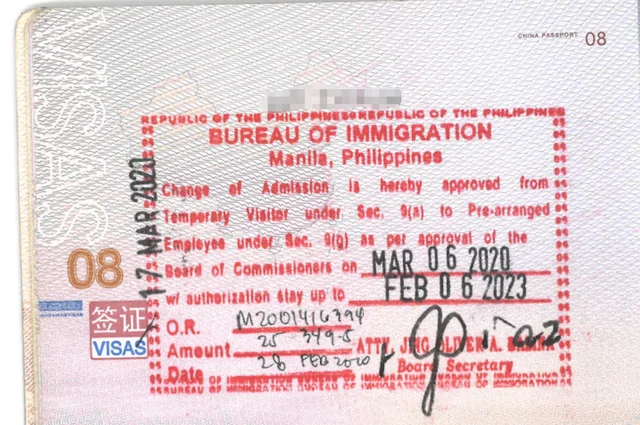
- 9(g) Pre‑Arranged Employment Visa: This is the BI‑issued work visa that allows the foreign national to legally reside and work in the Philippines under the approved employment contract.
In practice, employers also manage related steps such as passport stamps, Alien Certificate of Registration (ACR) I‑Card updates, and payroll and benefit registrations, but the AEP and 9(g) are the core legal requirements for foreign employment.
Typical Eligibility Tests
DOLE and BI apply several eligibility tests when reviewing applications to hire foreign employees in the Philippines. The employee must generally:
- Be at least 21 years old and physically able to perform the job duties.
- Hold a valid passport and, if applicable, the correct visa category for entry (often 9(a) for preparatory entry, before converting to 9(g)).
- Not have a criminal record that would bar entry or employment under Philippine law.
The employer must be a legally registered entity (e.g., corporation, branch, or sole proprietorship) with the necessary permits and tax registrations to support formal employment. This is why many companies start with local business registration before moving to foreign‑hire processing.
Updated Rules and Processing Times
Recent changes to the AEP and work‑permit system have lengthened processing timelines and strengthened compliance checks for foreign-hire cases. DOLE now requires more detailed documentation and may extend the period for AEP approval, which employers must factor into their hiring calendar.
Key updates include:
- Longer AEP processing windows, which can delay when the foreign employee can legally begin work.
- Stricter review of job ads and justification documents, including proof that the foreigner’s role is necessary and cannot be filled by a local worker.
- Higher administrative costs and more paperwork, especially for companies unfamiliar with the process.
These changes mean that employers who wait until the last minute to apply may miss their start date targets, so forward planning is essential.
Practical Steps for Employers
For a company that wants to hire foreign employees in the Philippines, the process can be broken into clear, manageable steps.
- Define the role and need. Decide whether the position truly requires foreign skills and document why no local candidate fits at the time of hiring.
- Register or confirm the company’s presence. Ensure the business is properly registered with the appropriate agency (e.g., SEC, DTI) and has the necessary permits and tax registrations.
- Run the AEP process. Prepare the AEP application, including job‑ad proofs, justification statement, corporate documents, and employee details, and submit to DOLE.
- Secure the 9(g) visa. Once the AEP is approved, file the 9(g) application with BI or the relevant embassy/consulate, depending on the foreigner’s current status.
- Prepare payroll and benefits. Register the employee with SSS, PhilHealth, Pag‑IBIG, and the BIR, and set up a compliant payroll system that includes 13th‑month pay and other required benefits.
Doing these steps in order can prevent “start‑date gaps,” where the employee is in the country but cannot legally begin work because one document is missing.
Renewal and Change-of-Employer Issues
Hiring foreign employees in the Philippines does not end when the initial AEP and 9(g) are issued. Both documents expire, and many cases also involve mid‑contract changes such as employer switches or role adjustments.
Typical renewal or change‑of‑employer steps include:
- Applying for AEP renewal or a new AEP at least one month before the current permit expires, depending on the contract term.
- Updating the 9(g) visa or endorsement when the foreign employee changes employers or when the AEP is reissued.
- Ensuring that any new role still passes the non‑displacement test and is properly documented in the updated AEP.
Skipping these steps can lead to a situation where the employee is technically out of status, even if the company continues to pay them, which exposes both the employer and the foreign national to compliance risk.
Wrapping Up
To hire foreign employees in the Philippines in a compliant way, employers must treat the AEP and 9(g) as the mandatory legal foundation, not optional add‑ons. The process is standardized but can be slow, so early planning, clear documentation, and coordination with local partners are key.
Why You Need Expert Help
The process of hiring foreign employees in the Philippines is a classic example of where HR and immigration planning must be treated as one project. Many companies focus only on the recruitment and contract, leaving the AEP and 9(g) to the last minute, only to discover that the timeline is longer than expected.
The right approach is to map the entire process backward from the target start date, build in buffer time for AEP and visa processing, and coordinate with local or specialist support that understands DOLE and BI requirements. This is the difference between a smooth, on‑time onboarding and a delayed, legally risky workaround.
Work Visa Philippines helps employers navigate the AEP and 9(g) sequence so that foreign-hire timelines match business needs and legal requirements. Contact our team today:
- Contact Us Here
- Fill Out the Form Below
- Call us at +63 (02) 8540-9623