Foreign entrepreneurs and investors increasingly view the Philippines as an attractive base for regional operations, outsourcing, and domestic market expansion. However, doing business legally requires understanding and complying with specific business requirements for foreigners covering ownership limits, registrations, capital rules, and immigration status. These rules come from the Constitution, the Foreign Investments Act, the Foreign Investment Negative List (FINL), and implementing regulations enforced by agencies like the SEC, DTI, BIR, and local governments.
Ownership Rules and Business Structures
Before registering a business, foreign nationals must understand which activities they can own 100%, where Filipino majority ownership is mandatory, and which structure best fits their plans. The 1987 Constitution and FINL restrict foreign ownership in specific sectors, while most export and many service activities are now open to full foreign equity.
Common structures include:
- Domestic corporation (Philippine company, can be up to 100% foreign-owned, subject to FINL and capital rules)
- Branch office of a foreign corporation
- Representative office (non-income earning, cost center)
- Regional Headquarters (RHQ) / Regional Operating Headquarters (ROHQ)
- Sole proprietorship (possible but heavily constrained for foreigners; most choose corporations instead)
Foreign Ownership Limits and the FINL
The Foreign Investment Negative List (FINL) identifies activities reserved for Filipinos or subject to foreign equity caps. Sectors such as mass media, small-scale mining, retail operations with capital below a specified threshold, and certain public utilities either prohibit or limit foreign ownership, while many export-oriented and BPO activities permit up to 100%.
Key points:
- If a business is more than 40% foreign-owned and serves the domestic market, the Foreign Investments Act (FIA) often requires a minimum paid-in capital of USD 200,000, reducible to USD 100,000 if the enterprise uses advanced technology or employs at least 50 Filipino workers.
- Export enterprises (≥60% export sales) may be 100% foreign-owned with fewer capital constraints; only corporate minimums (e.g., PHP 5,000 paid-up) apply.
- The Retail Trade Liberalization Act now allows full foreign ownership in retail with a minimum paid-up capital of PHP 25 million.
Businesses falling under FINL must structure ownership accordingly (e.g., 60%-Filipino / 40%-foreign) and may need special approvals for sensitive sectors.
Core Business Registration Requirements
Once eligibility and structure are confirmed, foreigners must register with the appropriate agencies. The process ensures legal personality, tax compliance, and local operations approval.
Name Verification and Reservation
- Check and reserve your business name:
- SEC for corporations and partnerships
- DTI for sole proprietorships
- Ensure the name is unique, not misleading, and complies with sector naming rules.
SEC or DTI Registration
For corporations and partnerships:
- SEC registration via eSPARC includes:
- Articles of Incorporation and By‑laws
- Treasurer’s Affidavit
- Proof of inward remittance for foreign equity (bank certificate)
- Proof of principal office address
- At least 25% of authorized capital must be subscribed, and at least 25% of that subscription must be paid up, subject to FIA and sector-specific minimums.
For sole proprietorships:
- DTI registration under RA 7042 for non‑Philippine nationals, subject to FINL and capital requirements.
Local Government Permits
After SEC/DTI registration:
- Secure Barangay Business Clearance from the barangay where the office is located.
- Obtain a Mayor’s/Business Permit from the city or municipality, including fire, sanitary, and zoning clearances.
- These permits must be renewed annually.
Tax Registration and Ongoing Compliance
All foreign-owned enterprises must register with the Bureau of Internal Revenue (BIR) and comply with national tax obligations.
Key BIR requirements:
- Obtain a BIR Certificate of Registration (Form 2303) and Taxpayer Identification Number (TIN).
- Register books of accounts (manual or computerized) and corporate records.
- Register and print official receipts and invoices or secure a permit for POS / computerized accounting systems.
- File monthly/quarterly and annual tax returns for income tax, percentage tax or VAT, and withholding taxes.
- Maintain proper accounting records and preserve documents for audit.
Failure to comply may result in penalties, surcharges, or investigation.
Employer and Labor Compliance
Foreign-owned companies employing staff in the Philippines must comply with labor and social legislation:
- Register employees and the business with:
- SSS (Social Security System)
- PhilHealth
- Pag‑IBIG Fund
- Issue compliant employment contracts and follow minimum wage, benefits, and termination procedures.
For foreign employees:
- Obtain Alien Employment Permits (AEP) from DOLE for foreign staff who will be employed in the Philippines.
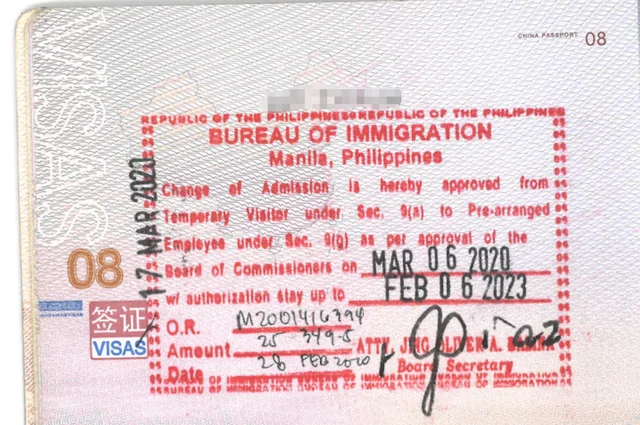
- Secure appropriate work visas, typically 9(G) Employment Visa or special visas such as PEZA / 47(A)(2), depending on the enterprise’s registrations.
Immigration and Visa Requirements for Foreign Business Owners
Foreign business owners must have a valid immigration status while forming and running a company. Some common options include:
- 9(A) business visitor visa for short trips to attend meetings and initial setup (no work).
- 9(G) Pre‑Arranged Employment Visa if they will be employed by their own Philippine corporation.
- Special Investor’s Resident Visa (SIRV) for investors meeting minimum investment thresholds.
- Other special visas (e.g., SRRV, PEZA 47(A)(2)), depending on activities and zone registrations.
Visas and AEPs are separate from company registration; both tracks must be managed in parallel for full compliance.
Documentary Requirements for Foreign Investors
Beyond core registration papers, foreigners should be prepared with:
- Valid passports and proof of lawful presence (visa/ACR‑I Card)
- Proof of inward remittance for foreign paid-in capital via Philippine banks
- Apostilled or authenticated foreign corporate documents if a foreign parent company is involved
- Board resolutions authorizing investment or branch/representative office
- Lease agreements or proof of office address
- Identification documents for directors, incorporators, and officers
Philippine embassies and the DFA may require apostilles or the authentication of foreign documents before they are accepted locally.
Additional Sector-Specific Requirements
Certain industries need extra approvals or follow stricter rules:
- Education, advertising, and defense-related activities have foreign equity caps and specific regulator clearances.
- Retail, finance, and utilities follow special capital requirements and licensing through the BSP, SEC, or other agencies.
- PEZA and BOI-registered enterprises must comply with application, reporting, and performance commitments to retain incentives.
Foreign investors must confirm whether their chosen industry falls under any special law or incentive regime and prepare accordingly.
Common Challenges and How to Address Them
Foreigners often face these recurring challenges:
- Misunderstanding ownership caps or FINL restrictions leading to flawed structures.
- Failing to meet minimum capital requirements, causing SEC denial or delayed registration.
- Underestimating timelines for permit approvals and apostille or legalization of foreign documents.
- Overlooking immigration requirements for foreign directors, incorporators, or staff.
- Gaps in tax and compliance systems, leading to BIR penalties.
Working with experienced local counsel or professional service providers significantly reduces these risks and streamlines the business setup process.
Key Takeaways
Meeting business requirements for foreigners in the Philippines involves more than just filing a few forms. It requires careful planning around ownership rules, capital thresholds, corporate registration, taxation, labor law, and immigration. When structured properly, however, the Philippines provides a favorable environment for foreign entrepreneurs and investors, including 100% ownership in many sectors, clear incentive schemes, and full repatriation of profits after tax.
Need Help Meeting Visa Requirements in the Philippines?
Work Visa Philippines collaborates closely with trusted providers to assist foreign investors and entrepreneurs in securing the necessary visa. Contact our team of experts and schedule an initial consultation:
- Contact Us Here
- Fill Out the Form Below
- Call us at +63 (02) 8540-9623