Supporting expat hires in Metro Manila and Cebu requires more than a signed job offer; employers must manage full work visa sponsorship from Alien Employment Permits (AEPs) with DOLE to 9(G) work visas with the Bureau of Immigration. Sponsorship obligations are strict, employer‑specific, and time‑sensitive, and mistakes can lead to fines, delayed start dates, or even deportation.
Understanding Work Visa Sponsorship in the Philippines
Effective work visa sponsorship means the Philippine company takes legal responsibility for petitioning the government so a foreign national can live and work in the country. Employers must prove they are legitimate, financially sound, and genuinely need foreign skills not readily available locally.
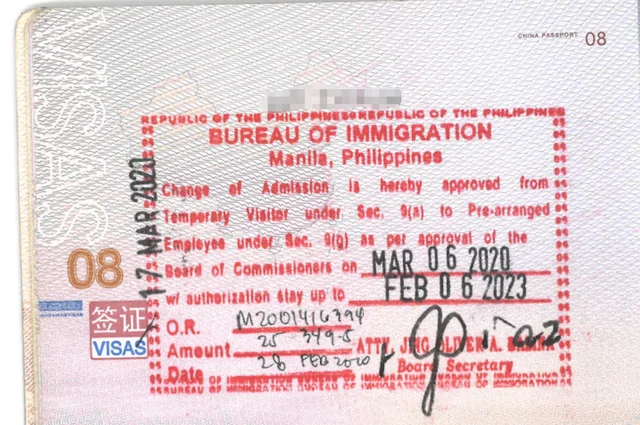
In practice, this means securing an Alien Employment Permit from the Department of Labor and Employment and then sponsoring a 9(G) Pre‑Arranged Employment Visa (or other appropriate work visa) with the Bureau of Immigration. The visa is always tied to the sponsoring employer; if the expat changes jobs, a new AEP and 9(G) must be processed.
Main Work Visa and Permit Types for Expats
Employers handling work visa sponsorship in Manila and Cebu primarily work with three core authorization tools, each serving specific durations and purposes while requiring employer sponsorship and compliance.
- Alien Employment Permit (AEP): DOLE-issued authorization for a foreign national to fill a specific role, requiring labor market tests, job postings, and often Economic Needs Tests under D.O. 248-25; valid 1-3 years tied to employment contract.
- 9(G) Pre-Arranged Employment Visa: Primary BI work visa for long-term employment (1-3 years), granted only after AEP approval; employer-specific and includes family dependents.
- Special Work Permit / Provisional Work Permits (SWP/PWP): Short-term options (3-6 months) for projects, emergencies, or bridging gaps while full AEP/9(G) processes; no labor market test required for limited durations.
These instruments form the backbone of work visa sponsorship, with AEP as the mandatory foundation for 9(G) visas and short-term permits providing flexibility for urgent or transitional needs.
Employer Eligibility and Setup Requirements
Before offering work visa sponsorship, a company must itself be fully compliant and properly registered.
The business must be legally registered with either the Securities and Exchange Commission for corporations and partnerships, or the Department of Trade and Industry for sole proprietorships, and must hold local permits, such as Mayor’s and BIR registrations, showing actual operations in Manila, Cebu, or both. Authorities may also look at the company’s financial health, with some foreign‑owned or branch entities expected to show paid‑up capital of around USD 200,000 to justify foreign hires in certain circumstances.
Employers also need to demonstrate they are genuinely operating—through contracts, audited financial statements, or payroll records—and willing to comply with DOLE’s labor market and skills‑transfer obligations when using foreign talent.
Step‑by‑Step Sponsorship Process: AEP Then 9(G) Visa
Successful work visa sponsorship follows a strict two-phase sequence where employers first secure DOLE authorization before petitioning the Bureau of Immigration, ensuring compliance at every stage.
- Secure Alien Employment Permit (AEP): Employer files with DOLE Regional Office (NCR for Manila, Region VII for Cebu) within 15 calendar days of contract signing, including job postings across newspapers/PhilJobNet/PESO, labor market test proof, and UTP plans under D.O. 248-25.
- Complete Triple Publication and Objection Period: Run 15-day ads in three mediums, monitor 30-day objection window, and address any PESO/local claims before DOLE evaluation (15 working days post-payment).
- File 9(G) Petition at BI: Submit employer letter-request, CGAF forms, certified AEP copy, employment contract, company compliance docs (SEC/BIR/Mayor’s Permit), ratio certification, and employee credentials to BI Main (Manila) or authorized Cebu office.
- Attend BI Motion Hearing and Biometrics: Employer rep and expat present evidence to Legal Division, complete Alien Registration biometrics, submit passport for stamping, and collect ACR I-Card confirming legal work status.
This structured pathway typically spans 8-12 weeks, with AEP gaining 9(G) approval and employer sponsorship binding the expat to the sponsoring role and company.
DOLE AEP Requirements and New Rules Employers Must Know
Recent updates, as outlined in DOLE Department Order No. 248, significantly impact work visa sponsorship, particularly at the AEP stage.
Employers must submit a completed AEP application form, a notarized employment contract describing duties, salary, and term, valid passport details, proof of company registration, and evidence of job advertisements and, where applicable, skills‑transfer plans. Under the new rules, applications must be filed within 15 days of contract signing, and DOLE aims to decide within 15 working days after payment, not counting publication and objection periods.
The order also formalizes the Economic Needs Test and strengthens requirements for Understudy or skills‑transfer programs, particularly in priority sectors. For HR teams in Manila and Cebu, this means more planning around timelines, job postings, and training commitments before hiring expats.
9(G) Work Visa Sponsorship: BI Requirements and Responsibilities
For a 9(G) work visa sponsorship, the employer formally petitions the Bureau of Immigration and confirms responsibility for the foreign employee’s lawful stay and conduct.
Key requirements typically include a letter of request from the sponsoring company, BI application forms, a certified copy of the AEP, a notarized employment contract, proof of the company’s registration and good standing, a notarized certification stating the number of foreign and Filipino employees, police clearances, and the expat’s valid passport and photos.
The 9(G) visa is employer‑specific and location‑specific; it allows legal work only for the sponsoring company and in the roles and sites indicated. If the expat changes employer or substantially changes role, a new AEP and 9(G) petition become necessary, and the old authorization lapses.
Special Considerations for Manila and Cebu Employers
Companies sponsoring expats in Metro Manila and Cebu must navigate the same national rules but deal with different local DOLE and BI offices, workloads, and practical conditions.
DOLE’s NCR office and BI Main in Intramuros typically handle high volumes of applications from Manila‑based multinationals and BPOs, which can affect scheduling, queues, and communication. In Cebu, expats are usually processed through regional DOLE offices and BI field or satellite offices authorized to handle work visa transactions, which can sometimes mean shorter queues but also more limited appointment slots.
Employers with operations in both locations should standardize internal policy and documentation, but remain flexible about which office takes jurisdiction based on the expat’s primary place of work and where permits were originally issued.
Timelines, Costs, and Planning for Start Dates
Realistic planning is central to successful work visa sponsorship. Employers should not expect expats to start work immediately upon signing their contracts.
AEP processing under the updated DOLE order usually takes around three to five weeks when labor market tests and publication periods are included. The 9(G) visa process often adds several more weeks at the Bureau of Immigration, especially when hearings, biometrics, and card production are considered. In total, many employers plan for two to three months from contract signing to full work authorization, sometimes using short‑term permits to bridge gaps.
Costs include AEP fees, 9(G) visa and ACR I‑Card fees, medical and police clearances, and potential publication and liaison expenses. Companies should budget for these expenses in their hiring plans and clarify which costs they cover and which the expat must shoulder.
Compliance Duties After the Visa is Granted
Work visa sponsorship does not end when a visa is stamped; it comes with ongoing legal duties for the employer.
Employers must ensure that the expat only performs the role approved in the AEP and visa, that the company continues to comply with DOLE and BI requirements, and that both AEP and visa renewals are filed on time, usually before expiry dates. They are also expected to maintain accurate records of foreign and local staff counts and, in many cases, implement and report on skills‑transfer or understudy training for Filipino employees.
If employment terminates, companies must notify DOLE and the Bureau of Immigration within prescribed periods and coordinate cancellation of the AEP and visa. Failure to do so can expose both the employer and the expat to penalties or future application complications.
Pitfalls to Avoid in Work Visa Sponsorship
Work visa sponsorship failures in Manila and Cebu often result from predictable errors that experienced employers avoid through systematic planning and compliance awareness.
- Missing the 15-Day AEP Filing Window: Signing contracts without immediate DOLE submission violates D.O. 248-25 deadlines, triggering automatic denial and requiring full reapplication.
- Incomplete Triple Publication: Failing to advertise simultaneously in newspapers, PhilJobNet, and PESO/JPO—or omitting the expat’s residence city—invalidates labor market tests.
- Vague Job Descriptions: Generic roles without specific duties, unique skills justification, or Filipino unavailability proof fail Economic Needs Tests and DOLE scrutiny.
- Late Renewals: AEP/9(G) expirations without 30- or 60-day advance filings result in illegal work status, PHP 500 daily overstay fines, and blacklisting risks.
- Role/Location Changes Without Updates: Transferring expats to new positions, departments, or Cebu/Manila sites without new AEP/9(G) petitions voids existing authorizations.
- Poor Documentation Consistency: Mismatches between contracts, company records, ratio certifications, and employee credentials trigger BI hearing rejections.
These common oversights delay start dates 3-6 months, cost PHP 50,000+ in refiling, and expose employers to DOLE fines up to PHP 500,000—preventable through dedicated immigration coordinators and standardized checklists.
Best Practices for HR and Talent Teams
To make work visa sponsorship a predictable process rather than a recurring crisis, HR and talent teams in Manila and Cebu can adopt several best practices.
These include integrating immigration screening into recruitment so that job offers to expats account for eligibility, timelines, and costs; standardizing employment contracts and job descriptions in a way that aligns with DOLE and BI expectations; and coordinating closely with finance and legal departments on capital, tax, and compliance documentation.
HR can also maintain a centralized tracker of all foreign employees, their AEP and visa expiry dates, and required reporting, and build relationships with DOLE and BI offices or reputable service providers in both Manila and Cebu. This proactive approach reduces stress, protects the business from penalties, and helps attract and retain international talent.
Final Thoughts
By understanding the legal framework, institutional requirements, and local practices in Manila and Cebu, employers can manage work visa sponsorship responsibly and efficiently. Proper planning, complete documentation, and timely compliance transform expat hiring from a regulatory risk into a strategic advantage for accessing global skills in Philippine operations.
Is Assistance Available?
Yes. Work Visa Philippines simplifies work visa sponsorship with end-to-end employer support. Schedule your consultation today and ensure compliant, on-time expat onboarding:
- Contact Us Here
- Fill Out the Form Below
- Call us at +63 (02) 8540-9623