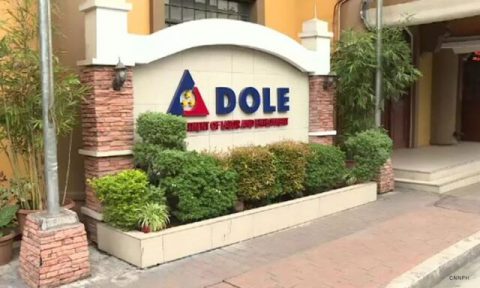
Foreign companies frequently engage foreign independent contractors in the Philippines as a cost-effective way to access skilled talent without establishing a local entity. However, Philippine labor laws apply the four-fold test to distinguish true contractors from employees, with misclassification risks leading to back pay claims, fines up to PHP 500,000 per violation, and DOLE enforcement. As of 2025, Department Order No. 174 strictly prohibits labor-only contracting, emphasizing control over work methods as the key determinant.
Understanding Independent Contractor Status
The distinction between employees and independent contractors forms the foundation for compliant hiring of foreign independent contractors in the Philippines. Philippine courts and the Department of Labor and Employment (DOLE) use the four-fold test—selection and engagement, payment of wages, power of dismissal, and power of control—to classify relationships. True independent contractors offer specialized skills on a project basis, with principals controlling only results, not methods.
This classification governs Civil Code contracts rather than the Labor Code, exempting contractors from mandatory benefits like 13th-month pay or SSS contributions. Foreign principals without local entities face no direct Labor Code obligations but must avoid arrangements resembling employment to prevent reclassification. DOLE Order 174 reinforces legitimate contracting by requiring service agreements detailing scope and deliverables.
The Four-Fold Test Explained
Philippine jurisprudence centers on the four-fold test as the primary tool for determining the status of a foreign independent contractor in the Philippines, with the control test carrying the most weight. Courts examine selection (who is hired), wages (payment method), dismissal power, and—critically—control over the means and methods of work. Fixed schedules, provided tools, or integration into core operations signal employment.
For foreign contractors, consistent project-based engagements with autonomy in execution support an independent status. The Supreme Court consistently voids contracts where principals dictate “how” work occurs, triggering employee rights retroactively. Foreign firms must document limited control to withstand DOLE scrutiny.
Requirements for Legitimate Contracting
Engaging foreign independent contractors in the Philippines demands clear service agreements outlining deliverables, timelines, and payment terms to meet DOLE standards. Contracts should specify no exclusivity, contractor provision of tools, and the right to subcontract, aligning with Civil Code B2B relations. While individuals need no DOLE registration like agencies, proof of business-like operations (e.g., BIR registration, invoices) strengthens legitimacy.
Foreign principals’ invoice-based payments via bank transfer or PayPal suffice, but BIR Form 2307 issuance may apply for expanded withholding taxes on services. No Alien Employment Permit (AEP) or work visa applies to true contractors, as they operate independently without local employment. Maintain records of autonomy to defend against the four-fold test challenges.
Step-by-Step Engagement Process
Hiring foreign independent contractors in the Philippines follows a structured process to ensure compliance and minimize reclassification risks from the outset. Begin with a needs assessment to confirm project-based necessity, then draft contracts emphasizing results-only control. Platforms like Upwork facilitate discovery but do not shield from misclassification scrutiny.
- Verify contractor independence via resume review for specialized skills and prior client diversity.
- Execute service agreement specifying scope, milestones, payment per deliverable, and a no-benefits clause.
- Onboard with tools access limited to project needs, avoiding company email or fixed hours.
- Process milestone payments with invoices and official receipts, issuing BIR 2307 if thresholds are met.
- Monitor deliverables without dictating methods; conduct results-only reviews.
- Terminate per contract terms with notice, documenting mutual agreement where possible.
- Retain records for at least three years against potential DOLE inquiries.
This sequence upholds B2B validity under Civil Code protections.
Misclassification Risks and Penalties
Misclassifying foreign independent contractors in the Philippines exposes principals to severe liabilities, including retroactive wages, benefits, and DOLE fines. The “Pascua case” exemplifies how foreign courts reclassify remote workers based on control, resulting in back pay for superannuation and penalties. DOLE imposes PHP 100,000-500,000 fines per violation under Order 174, plus moral damages.
Common triggers include fixed salaries, performance integration, or tool provision, failing the control test. Foreign entities risk permanent establishment taxes if deemed to be “doing business” through pervasive control. Class actions amplify exposure for scaled teams. Preemptive audits mitigate these cascading risks.
Tax Implications for Foreign Principals
Foreign independent contractors in the Philippines trigger specific tax obligations despite no Labor Code coverage. Payments exceeding PHP 500,000 annually incur 5-25% expanded withholding tax, reported via BIR Form 2307 for contractor crediting. No VAT applies below the PHP 3M threshold, but contractors self-remit income taxes.
Foreign principals without local presence avoid BIR registration but must withhold and remit via authorized agents or banks. Double-tax treaties prevent dual taxation, with contractors claiming credits abroad. Non-compliance invites scrutiny from the ATO/IRS, alongside BIR penalties. Annual ITR reconciliation (BIR 2316 equivalent) documents compliance.
Independent Contractor vs. Employee Comparison
Distinguishing foreign independent contractor Philippines arrangements from employment requires evaluating multiple dimensions under local and home-country laws.
| Aspect | Independent Contractor | Employee |
| Control Over Work | Results only; autonomous methods | Means, methods, and schedules |
| Payment Structure | Per project/milestone, invoiced | Fixed salary/wages |
| Tools/Equipment | Contractor provides | Employer supplies |
| Benefits Entitlements | None; self-managed | 13th month, SSS, leaves |
| Termination | Contract terms, mutual/no-fault | Just cause, notice, pay |
| Tax Handling | Contractor self-files; EWT possible | Employer withholds BIR |
| Visa/Work Permit | None required | AEP + 9(g) visa |
This table highlights why control test failures convert contractors to employees, imposing full liabilities.
Alternatives: EOR and Contractor-of-Record
When foreign independent contractor risks in the Philippines prove too high, Employer of Record (EOR) or Contractor-of-Record (COR) models transfer compliance burdens. EORs become legal employers, handling Labor Code benefits, taxes, and DOLE filings without principal entity setup. CORs manage contractor payroll and BIR docs while preserving B2B status.
These shield against four-fold reclassification, with EORs absorbing SSS/PhilHealth and 13th-month liabilities. Costs average 10-20% markup, but avoid fines exceeding PHP 1M for scaled teams. Ideal for long-term engagements, blurring contractor lines.
Key Takeaways
Navigating foreign independent contractor engagements in the Philippines demands rigorous adherence to the four-fold test, clear service contracts, and tax vigilance to avert misclassification pitfalls. While cost-effective for short-term projects, scaled or control-heavy arrangements favor EOR/COR alternatives to sidestep DOLE fines, backpay, and foreign tax exposures. Work Visa Philippines delivers tailored compliance roadmaps, ensuring legal security for global talent access in 2026.
Need Expert Assistance for Compliant Hiring?
Work Visa Philippines guides foreign principals through compliance with foreign independent contractor regulations in the Philippines, from four-fold audits to EOR integrations. Specialists draft DOLE-proof contracts, manage BIR 2307 filings, and mitigate misclassification via control assessments. For work visa needs on employee hires, seamless AEP/9(g) processing complements contractor strategies.
Contact us today for an initial consultation:
- Contact Us Here
- Fill Out the Form Below
- Call us at +63 (02) 8540-9623