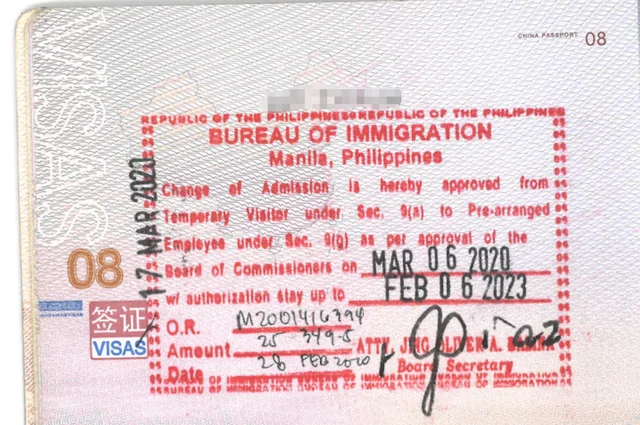
Foreign investors entering the Philippines must align their investor visas with how they plan to participate in the local market—whether as hands-on executives, project leaders in government-backed ventures, or passive capital investors seeking long-term residence. The country’s framework largely revolves around three main options: the 9(g) Pre-Arranged Employment Visa for operational executives, the 47(a)(2) Special Non-Immigrant Visa for personnel tied to government-endorsed or registered projects, and the Special Investor’s Resident Visa (SIRV) for those anchoring their stay on qualifying investments rather than employment. Choosing among these paths has direct implications for control, compliance, tax treatment, and the speed at which you can become operational.
Understanding the Main Investor-Focused Visa Paths
Foreign investors have several ways to secure lawful presence in the Philippines, but not every option fits every role. Each major visa type is built around a different kind of participation in the local economy.
At a high level, you can think of the main options as three distinct tracks:
- 9(g) Pre-Arranged Employment Visa: For executives or specialists employed by a Philippine entity in day-to-day operations.
- 47(a)(2) Special Non-Immigrant PEZA Visa: For foreign personnel working on PEZA/BOI-registered or government-backed projects.
- Special Investor’s Resident Visa (SIRV): For investors who secure residence by placing at least 75,000 USD into eligible Philippine investments.
The “right” investor visa option depends on whether your primary role is operational, project-based, or purely financial and whether you want your stay tied to an employer, a project endorsement, or an investment portfolio.
Snapshot of Key Investor-Linked Visa Options
| Visa type | Core basis | Typical user | Main authority |
| 9(g) Pre-Arranged Employment | Employment with a Philippine company | Managing directors, country managers | Bureau of Immigration (BI) |
| 47(a)(2) Special Non-Immigrant | Government-endorsed or PEZA/BOI project role | Project directors, technical experts | DOJ/BI with agency endorsements |
| SIRV (Special Investor’s Resident Visa) | Capital investment of at least 75,000 USD | Portfolio investors, holding-company owners | Board of Investments (BOI) |
9(g) Work Visa for Hands-On Investor Executives
For investors who intend to personally run a Philippine subsidiary, branch, or operating company, the 9(g) Pre-Arranged Employment Visa is often the most practical route. It is structured as a work visa but commonly used by shareholder-directors who occupy formal executive roles in their own entities.
The 9(g) visa allows:
- Legal, full-time engagement in day-to-day management activities.
- Inclusion on the company payroll and registration with the local tax system.
- Multiple entry and exit while the employment and visa remain valid.
However, it is employer-dependent: once the employment relationship ends (for example, if you resign as a director or the company closes), the visa also terminates and must be cancelled or converted.
Key Features of the 9(g) for Investors
The 9(g) path suits investors whose primary value comes from operational leadership rather than from capital contributions alone.
Important features include:
- Sponsoring entity: Must be a Philippine-registered company, branch, or representative office acting as employer.
- Alien Employment Permit (AEP): Required from the Department of Labor and Employment (DOLE) before or alongside the 9(g) petition; it confirms that the role requires foreign expertise not readily available locally.
- Role level: Usually granted to executives, managers, or specialists with clearly defined positions and compensation.
- Validity: Commonly issued in line with the employment contract, and can be extended while the role continues.
For an investor setting up a local entity, the usual sequence is: incorporate the company, secure corporate registrations, then apply for the AEP and 9(g) work visa as a company executive.
47(a)(2) PEZA Visa for Project-Based Investor Engagement
Some investors participate in Philippine projects that carry specific government or investment-promotion support, rather than simply owning a regular commercial company. For these, the 47(a)(2) Special Non-Immigrant Visa is a flexible alternative to standard work visas.
This visa is grounded in Section 47(a)(2) of the Philippine Immigration Act, which lets the government admit certain foreign nationals as non-immigrants for defined purposes and periods under special conditions. It is commonly used for:
- Executives, supervisors, specialists, and consultants working for PEZA- or BOI-registered enterprises.
- Personnel employed in enterprises with agreements or contracts with government agencies or government-owned and controlled corporations (GOCCs).
- Foreign staff in specific projects or sectors designated under special laws and incentives regimes.
For investors backing these kinds of ventures, the 47(a)(2) provides a way to remain in the Philippines and manage or oversee project activities while benefiting from the special non-immigrant regime.
Why 47(a)(2) PEZA Visa Matters for Certain Investors
From an investor visa perspective, 47(a)(2) is particularly relevant where your investment is tied to export zones, freeports, or priority industries.
Notable characteristics include:
- Project or registration linkage: The visa is tied to a PEZA/BOI registration, a freeport authority, or a government contract, rather than a standard commercial employer alone.
- Position scope: Typically limited to executive, supervisory, technical, or advisory roles connected to the endorsed project.
- Validity: Usually valid for the project duration or for a defined term (often one year, renewable) and may be shorter than general residence options.
- AEP requirement: In some cases, holders still need an Alien Employment Permit unless specifically exempted by directive or project agreement.
For an investor leading a PEZA-registered manufacturing plant or a BOI-endorsed priority project, 47(a)(2) can align immigration status closely with the project’s incentives and regulatory environment.
SIRV: Residence Through Capital Investment
The Special Investor’s Resident Visa (SIRV) is the clearest example of a dedicated investor visa program in the Philippines, offering a long-term stay in return for a qualifying investment. Unlike 9(g) and 47(a)(2), which are rooted in employment or projects, SIRV is built around capital contribution and provides residence as long as the investment is maintained.
Under the SIRV program:
- A foreign national must invest at least USD 75,000 in eligible Philippine enterprises or listed companies.
- The investment must be channeled through accredited depository banks such as the Development Bank of the Philippines (DBP) or the Land Bank of the Philippines.
- The visa remains valid as long as the qualifying investment is preserved according to Board of Investments (BOI) guidelines.
This model is particularly attractive for investors who wish to live in the Philippines as residents overseeing assets or holdings, without tying their status to a specific employer.
Core Requirements and Eligible Investments for SIRV
To qualify for SIRV, applicants must meet both personal and financial conditions.
Key elements include:
- Minimum investment: At least 75,000 USD remitted and deposited in an accredited Philippine bank (commonly in a peso time deposit initially).
- Age requirement: Applicants must generally be at least 21 years old.
- Good standing: No conviction for crimes involving moral turpitude, no contagious or dangerous diseases, and no history of institutionalization for serious mental disorders.
- Investment conversion: Within a specified period (typically up to 180 days from the issuance of the probationary visa), the deposited funds must be converted into qualifying investments and reported to the BOI.
Eligible investments typically include:
- Shares in publicly listed Philippine companies.
- Equity in enterprises engaged in priority activities under the Investment Priorities Plan (IPP).
- Participation in certain services or manufacturing enterprises approved by the BOI.
SIRV does not usually cover direct investment in residential real estate alone, so investors should review BOI guidelines carefully when structuring their portfolios.
Choosing the Right Investor Visa for Your Role
Selecting among these investor visas is less about paperwork convenience and more about matching your intended role and level of involvement in the Philippines. The choice will also guide how you structure your company or investments and how you approach tax and regulatory planning.
A practical way to decide:
- Choose 9(g) if your priority is to act as an executive or specialist embedded in the local company’s day-to-day operations, drawing a salary and actively managing the business.
- Choose 47(a)(2) if your investment centers on PEZA/BOI-registered or government-linked projects where your role is framed as project leadership or technical support under a special regime.
- Choose SIRV if your main objective is long-term residence based on capital investment, with flexibility to oversee holdings and board-level roles rather than daily operational work.
Investors sometimes combine paths over time—for example, entering on a work-based visa to establish operations and later adding or shifting to an investment-based residence route as their capital position grows.
Integrating Investor Visa Planning into Market Entry
For foreign investors, an immigration strategy should be built into the earliest stages of Philippine market entry rather than treated as an afterthought. The visa you aim for influences corporate form, registrations, and even partner selection.
Practical integration steps include:
- Deciding early whether your primary contribution will be capital, management, or project execution, and aligning your investor visa choice accordingly.
- Structuring your Philippine entity or project (standard corporation, PEZA-registered enterprise, BOI-registered project, or portfolio investments) to match visa requirements and benefits.
- Coordinating visa planning with tax and regulatory advice so that your status, your company’s registrations, and your investment structure support each other over the long term.
Firms like workvisaphilippines.com can assist with mapping your investor profile to the most appropriate visa track, preparing documentation for 9(g), 47(a)(2), or SIRV, and coordinating with partner professionals on corporate setup and BOI/PEZA matters.
Final Thoughts
Foreign investors can strategically leverage investor visas like the 9(g) work visa for operational leadership, 47(a)(2) PEZA visa for government-endorsed projects, or SIRV for capital-based residence to align their Philippine market entry with their intended role and level of engagement. Each pathway offers distinct advantages—employment certainty through 9(g), project flexibility via 47(a)(2), and long-term stability with SIRV’s US$75,000 investment threshold—while requiring careful integration with corporate setup, BOI/PEZA registrations, and compliance planning. The optimal choice depends on whether your focus is hands-on management, specialized project execution, or portfolio oversight, ensuring both lawful presence and business efficiency from day one.
Ready to Secure the Right Investor Visas for your Philippine Expansion?
Contact Work Visa Philippines today for personalized guidance on 9(g), 47(a)(2), or SIRV applications, complete documentation support, and seamless coordination with BOI, PEZA, and Bureau of Immigration requirements:
- Contact Us Here
- Fill Out the Form Below
- Call us at +63 (02) 8540-9623