Foreign nationals and employers navigating immigration services in the Philippines in 2026 must coordinate Bureau of Immigration (BI) procedures, Department of Labor and Employment (DOLE) work permits, and, in some cases, Board of Investments (BOI) or other agency requirements, depending on whether the purpose is work, investment, retirement, or family-based residence. Because Philippine immigration rules involve multiple visa categories—such as 9(g) work visas, investor visas like SIRV, special retirement/residency options, and long-stay tourist or dependent arrangements—many individuals and companies rely on professional visa and immigration service providers to assess the right route, prepare documents, and interact with BI and DOLE on their behalf.
Understanding Immigration Services in the Philippines
Immigration services in the Philippines cover a spectrum of assistance—from basic tourist extensions to complex work, investor, or residency visa strategies—delivered by visa consultancies, law firms, HR/PEO providers, and specialized business consultancies. These providers act as guides and facilitators between clients and government bodies such as the BI, DOLE, BOI, the Philippine Retirement Authority (PRA), and, at times, PEZA or other investment agencies.
Typical objectives of immigration services in the Philippines include:
- Determining the most appropriate visa category for a client’s purpose (employment, business, investment, retirement, family, or long-term stay).
- Preparing, reviewing, and organizing documentary requirements according to BI, DOLE, or BOI checklists to reduce rejection risks.
- Filing applications and liaising with government offices, including follow-ups, scheduling, and responding to additional document requests.
- Providing continuing compliance support, such as managing ACR I‑Card renewals, annual reports, or investor/retiree reporting obligations.
For foreigners and companies unfamiliar with local processes or unable to regularly visit BI or DOLE offices, professional assistance often saves time and reduces costly mistakes.
Core Services for Work Visas and Employment Permits
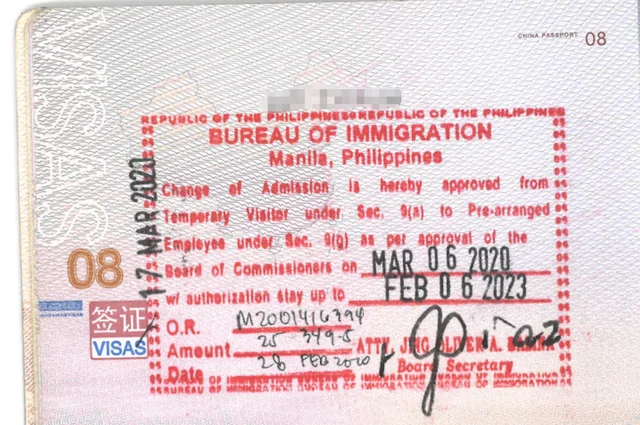
One of the most in-demand areas within immigration services in the Philippines is handling employment-related visas and permits for expatriate staff, particularly the 9(g) Pre‑Arranged Employment Visa and the associated Alien Employment Permit (AEP). BI administers the visa itself, while DOLE issues the AEP to confirm that a foreign hire is justified for a specific position.
Service providers typically assist with:
- Work visa assessment: Determining whether a 9(g) work visa, 47(a)(2) special non‑immigrant visa, or other category best fits a foreign hire’s role and employer structure (e.g., PEZA/BOI‑registered entities).
- AEP processing with DOLE: Preparing applications, helping employers comply with labor market and documentation requirements, and tracking approval for initial and renewal permits.
- 9(g) conversion and issuance: Assisting with conversion from tourist status to 9(g) for in‑country hires or direct issuance for those entering specifically for employment, including hearings, biometrics, and ACR I‑Card registration.
- Provisional Work Permits (PWP): Applying for PWP to allow a foreign national to start working while the 9(g) petition is still pending, when applicable.
- Visa extension and renewal: Managing timely renewals of 9(g) visas aligned with the validity of the AEP and employment contracts, using BI’s procedures and biometrics reuse rules.
Some firms also integrate immigration support with HR or “employer of record” solutions, handling payroll, compliance, and work authorization as a bundled service for foreign employers without local entities.
Investor, Retirement, and Long-Term Residency Support
Beyond employment, many immigration services providers focus on long‑term residence options tied to investment, retirement, or special economic contributions. These programs involve additional agencies, such as BOI or PRA, and often require more complex documentation and financial proof.
Common categories handled include:
- SIRV (Special Investor’s Resident Visa): For foreign nationals investing at least 75,000 USD into qualifying Philippine enterprises or listed companies, with service providers assisting in bank coordination, investment proofs, BOI filings, and BI endorsements.
- SRRV (Special Resident Retiree’s Visa): For retirees meeting age and deposit requirements via the PRA, where consultants help prepare financial documents, medical clearances, and PRA registration.
- Special Visa for Employment Generation (SVEG): For foreign nationals generating at least ten local jobs in a legitimate business, requiring legal structuring and proof of employment metrics.
- Other special visas and residency options: Such as visas for digital nomads, where available, or investor‑linked options within freeport or ecozone frameworks.
Service providers often add value through:
- Detailed financial and investment structuring advice to fit SIRV or similar criteria.
- Coordination with BOI or PRA one‑stop centers to reduce client visits.
- Ongoing reporting support, such as BOI or PRA annual reports and visa maintenance obligations.
Compliance, ACR I-Cards, and Annual Reporting Assistance
A critical but sometimes overlooked aspect of immigration services in the Philippines is post‑approval compliance: ensuring that foreign nationals maintain valid registration and avoid penalties or travel restrictions. Many providers, therefore, offer ongoing administrative support, not just initial visa processing.
Key compliance services include:
- ACR I‑Card issuance and updates: Guiding clients through BI’s registration process when they stay beyond 59 days or hold long‑term visas, including biometrics and renewals, as required for most non‑temporary visitors.
- Annual Report preparation and filing: Helping registered aliens complete BI’s mandatory Annual Report—typically between January 1 and March 1 each year—either in person or via BI’s virtual channels, ensuring they bring their ACR I‑Card, valid passport, and previous year’s official receipt.
- Travel clearances and exit documentation: Assisting with Emigration Clearance Certificates (ECC) and related requirements for long‑term visa holders planning to depart the Philippines for extended periods.
- Monitoring visa validity and reminders: Providing tracking and reminder services to avoid accidental overstays or lapses in work authorization.
Having a dedicated service provider manage these recurring tasks is especially useful for expatriates with frequent travel and for companies managing multiple foreign employees.
How Professional Consultants and Law Firms Support Employers
For corporate clients, especially those new to the Philippine market, immigration services are often integrated into broader HR and market‑entry support. Law firms, immigration consultancies, and PEO/HR providers combine legal, regulatory, and administrative assistance.
Typical employer‑focused immigration support includes:
- Visa strategy for foreign hires: Advising on whether a candidate should enter under a tourist visa and convert, or apply directly for a 9(g), 47(a)(2), or investor‑type visa.
- Policy compliance and risk mitigation: Ensuring that hiring practices for expats comply with DOLE and BI rules, including AEP requirements, quota/ratio policies, and documentation standards.
- Process outsourcing: Taking over document collection, application filing, and status follow‑ups, reducing internal HR workload and avoiding missteps.
- Employer of Record (EOR)/PEO services: For companies without local entities, some providers can sponsor work permits and employ expatriates on the client’s behalf while handling payroll and tax compliance.
This support helps organizations scale their Philippine operations quickly while staying compliant with evolving immigration regulations.
Choosing the Right Immigration Service Provider
With many firms offering immigration services in the Philippines, selecting a reliable partner is critical to avoid delays, rejections, or regulatory risk. Key evaluation criteria focus on expertise, transparency, and alignment with your specific needs (individual vs. corporate, work vs. investment vs. retirement).
Important factors to consider:
- Experience and specialization: Look for providers with clear experience in the specific visa type you need (9(g), SIRV, SRRV, family visas, etc.) and a track record of successful applications.
- Legal backing or accreditation: Many reputable firms are paired with law offices or employ immigration lawyers and accredited BI/DOLE representatives, which is particularly important for complex or borderline cases.
- Process clarity and communication: Good providers can explain each step, required documents, realistic timelines, and total fees (including government charges) before starting.
- Scope of services: Check if they handle only initial applications or also renewals, annual reports, ACR I‑Card issues, and strategic planning for future visa changes.
- Client support channels: Established firms usually offer email, phone, and sometimes video consultations to accommodate overseas clients and different time zones.
For employers, it is often best to select a provider that can support both immigration and HR compliance; for individuals, a firm with strong customer support and clear guidance is key.
Example Service Areas
While each company’s scope varies, a full‑service provider like Work Visa Philippines would typically position itself around the core pillars of immigration services in the Philippines, with a strong focus on employment, investment, and long‑stay compliance support. Such a provider can act as a one‑stop shop for foreign professionals, investors, and employers.
Typical service areas could include:
- Work visas and permits: 9(g) work visas, AEPs, PWPs, and conversions from tourist to working status.
- Investor and residency visas: SIRV applications, coordination with BOI, and guidance on long‑term residence options.
- Compliance services: ACR I‑Card assistance, BI Annual Report filings, ECC support, and monitoring of renewals.
- Corporate immigration support: Visa strategies for new market entries, HR advisory, and coordination with DOLE and BI for multi‑hire projects.
By consolidating these services, Work Visa Philippines can help clients avoid fragmented processes and keep all immigration‑related obligations under structured, professional management.
Final Thoughts
Immigration services in the Philippines span visa selection, document preparation, government filing, and ongoing compliance for work, investor, retirement, and family‑based pathways, involving agencies like BI, DOLE, BOI, and PRA, depending on the case.
Choosing an experienced, well‑structured service provider reduces processing time, minimizes rejections, and helps both foreign nationals and employers maintain lawful, long‑term presence in the country without unnecessary risk or stress.
Expert Immigration Services in the Philippines
If you need tailored support with immigration services in the Philippines—from 9(g) work visas and AEPs to SIRV investor residency, ACR I‑Cards, and annual reports—Work Visa Philippines can guide you through every step. Visit workvisaphilippines.com or contact our team to schedule a personalized consultation and map out the safest, most efficient route for your move or expansion to the Philippines:
- Contact Us Here
- Fill Out the Form Below
- Call us at +63 (02) 8540-9623