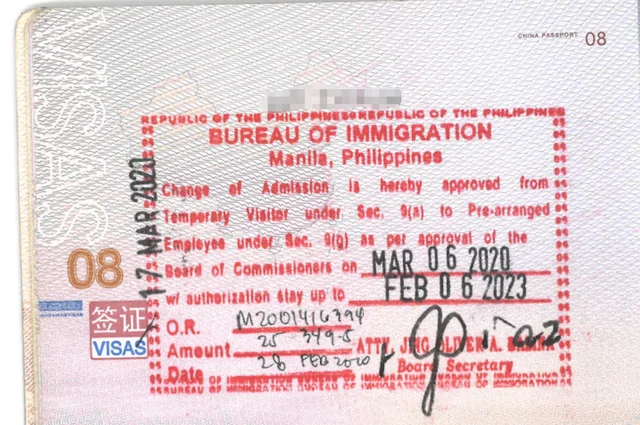
Rejections of work visas or permits in the Philippines, particularly the 9(g) Pre-Arranged Employment Visa from the Bureau of Immigration (BI) or Alien Employment Permits (AEPs) from the Department of Labor and Employment (DOLE), arise from a spectrum of technical deficiencies such as incomplete documentation packages, inadequate labor market testing under Department Order No. 248, failures in the Economic Needs Test (ENT) demonstrating local skill availability, non-compliance with Understudy Training Program (UTP) mandates for larger enterprises, or substantive ineligibility concerns including prior immigration violations or inadmissibility grounds.
Work visa rejection remedies commence with Motion for Reconsideration (MR) filings—typically PHP 1,010 fees and 3-4 week processing if entertained, though BI’s recent suspensions favor refiling over appeals—escalating to BI Commissioner or DOLE Secretary reviews, and ultimately judicial certiorari before the Court of Appeals under Rule 65 for grave abuse of discretion, with refiling after corrections proving most efficient (70% success vs. 20-30% MR rates).
Identifying Common Causes of Work Visa Rejections
Work visa denials from BI or DOLE articulate explicit rationales in formal orders—ranging from procedural lapses to merits-based disqualifications—serving as the foundational roadmap for targeted remedies; failure to dissect these grounds meticulously perpetuates cycles of rejection. Under DOLE DO 248 and BI Operations Orders, prevalent triggers include insufficient PhilJobNet/PESO labor market test (LMT) publications spanning 30 days, deficient ENT justifications evidencing abundant local talent, absent UTP training plans for mandated employers, lapsed employer credentials (SEC GIS >6 months, mayor’s permit expired), incomplete AEP newspaper clippings, or applicant inadmissibility (overstay history, criminal records).
BI 9(g)-specific pitfalls:
- Discrepancies between the AEP position title/duties and the employment contract.
- Employer financial instability (negative net worth, insufficient capitalization).
- Visa overstays or prior denials are undisclosed.
DOLE AEP common failures:
- Foreign: Filipino ratio breaches (>1:5).
- No understudy nomination/progress reports.
Catalog grounds verbatim for MR specificity.
Step 1: Immediately Analyze the Rejection Order and Timelines
Upon receipt of BI denial order or DOLE Notice of Disapproval, meticulously parse articulated grounds, cited regulations (e.g., DO 248 Section X for AEP), and appeal deadlines—BI MR 15-30 days from notice receipt (suspended periods mandate refiling), DOLE 10 working days post-resolution—while requesting certified true copies if originals are absent to anchor subsequent pleadings. Classification as technical (curable docs) vs. substantive (policy/merits) dictates MR viability vs. refiling priority.
Immediate actions:
- Digitize/log order date/grounds.
- Verify deadlines (email BI/DOLE for receipt confirmation).
- Consult an accredited lawyer on Day 1 for merits assessment.
Missed windows forfeit remedies.
Step 2: Compile Supplemental Evidence and Draft Motion for Reconsideration
Construct robust MR addressing each enumerated ground with curative affidavits, rectified documents, and legal arguments demonstrating reversible error—technical appeals succeed 25-30% via supplements like extended LMT proofs or UTP plans; substantively rarer. There is a PHP 1,010 filing fee if entertained.
MR anatomy:
- Captioned “Motion for Reconsideration” to BI Commissioner (9(g))/DOLE RO Secretary (AEP).
- Statement of facts/recapitulation distinguishing original submission.
- Errors of law/fact with citations (Ops Orders/DO 248).
- New/omitted evidence (job postings, understudy certs).
- Prayer for reversal/reopening.
Notarize and provide three copies.
Step 3: Lodge Motion for Reconsideration at Issuing Office
File MR personally, registered mail, or courier at the denying venue—BI Intramuros Visa Extension/Petition Section or DOLE Regional Office—obtaining stamped conformed copy/docket number as proof. BI processing takes 3-4 weeks (suspended mandates resolution denial for escalation); DOLE hearings are possible within 10 days.
- Track via OAPS/email weekly.
- Supplemental submissions if requested.
- Prepare a parallel refile if suspension.
Persistence is key.
Step 4: Pursue Administrative Escalation Post-MR Denial
MR denial unleashes higher appeals: BI to Commissioner (15-day petition review), DOLE to Secretary (10-day notice post-MR). PHP 5k fees and processing typically takes 1-3 months.
- Petition memorandum reiterating MR arguments + new facts.
- No second MR; hearing discretionary.
Step 5: Judicial Recourse via Certiorari or Mandamus
Administrative remedies exhausted: File Court of Appeals Rule 65 Petition for Certiorari (60 days final denial, grave abuse) or Mandamus (unreasonable delay). PHP 50k+ lawyer fees, process takes 6-12 months, and 10% success.
Grounds: Caprice, bias, and due process denial.
Refiling Strategy as Primary Alternative
BI policy prioritizes refiling over MR (faster 70% success): Cure grounds fully, new app + explanatory letter referencing prior denial.
- Fresh LMT/UTP.
- Updated documents.
- Parallel to appeal.
This is optimal for technicals.
Costs, Timelines, and Realistic Success Metrics
Work visa rejection resolution ranges from PHP 5k-100k and typically takes 1-12 months. MR: 20%; refile: 70%.
| Remedy | Cost PHP | Timeline | Success % |
| MR | 1,010 | 3-4 weeks | 25 |
| Commissioner/Secretary | 5k | 1-3 mo | 15 |
| CA Certiorari | 50k+ | 6-12 mo | 10 |
| Refile | Full app | Original | 70 |
Ensure that you have enough budget for a lawyer.
Common Mistakes and Pro Tips for Success
Work visa rejection appeals and escalations consistently falter due to procedural missteps, inadequate evidentiary supplementation, failure to adhere to compressed agency-specific deadlines, or persistence with fundamentally flawed applications rather than strategic pivots, but disciplined execution of root cause analysis coupled with targeted corrective measures transforms routine denials into successful reversals while preempting litigation through administrative efficiency.
Common mistakes to avoid:
- Filing Motion for Reconsideration beyond the strict 15-30 day BI or 10-day DOLE notice periods, forfeiting all administrative remedies.
- Resubmitting identical defective documentation packages without curative affidavits, extended LMT proofs, or revised UTP training plans.
- Ignoring substantive denial grounds like ENT failures or ratio breaches while fixating on technical formatting issues.
- Pursuing second MRs or parallel appeals absent explicit agency authorization, triggering procedural dismissal.
- Engaging non-accredited representatives for Court of Appeals certiorari, compromising Rule 65 petition sophistication.
Pro tips for guaranteed success:
- Conduct comprehensive rejection order analysis within 24 hours of receipt, cataloging every cited ground with regulatory cross-references.
- Draft MRs exclusively with supplemental evidence addressing each enumerated deficiency, avoiding argumentative repetition of original submissions.
- Authorize BI/DOLE-accredited immigration counsel to prepare/escalate pleadings, ensuring Operations Order/DO 248 compliance.
- Execute parallel refiling for technical denials while MR pends, capitalizing on BI’s documented 70% refiling success preference.
- Maintain digital audit trails of all LMT publications, UTP progress logs, and corporate credential renewals for instantaneous evidentiary production.
Prevention Strategies for Future Applications
Work visa rejection represents not merely an administrative setback but a strategic signal demanding comprehensive process redesign, where proactive safeguards implemented during initial AEP/9(g) preparation eliminate 90% of recurring denial patterns through rigorous pre-filing audits, automated compliance calendars, and institutionalized employer-employee coordination protocols that preempt DOLE/BI scrutiny points before applications ever reach agency desks.
Prevention strategies to implement:
- Conduct mandatory 30-day pre-application document audits mirroring BI/DOLE checklists, verifying GIS currency (<6 months), mayor’s permit validity, and apostilled foreign credentials.
- Execute labor market testing 45 days minimum prior to AEP filing, publishing comprehensive vacancy announcements across PhilJobNet, PESO offices, and three major newspapers with detailed position specifications.
- Develop Understudy Training Program frameworks from Day 1 for applicable enterprises (>50 employees), complete with nominated Filipino trainees, 12-month curricula, quarterly progress templates, and PHP 50,000-200,000 budget allocations.
- Establish employer-employee WhatsApp coordination groups for real-time document exchange, incorporating automated reminders for corporate renewals (SEC GIS, BIR 2303) 60 days pre-expiry.
- Engage BI/DOLE-accredited immigration consultants for mock DOLE interviews and BI hearing simulations, stress-testing ENT justifications against worst-case local availability challenges.
Key Takeaways
Work visa rejection remediation encompasses Motion for Reconsideration filings (PHP 1,010 fees, 3-4 week processing yielding 25% success rates notwithstanding BI suspensions favoring refiling), administrative escalations to BI Commissioner or DOLE Secretary (15- to 30-day petitions with 15% reversal rates), judicial certiorari before the Court of Appeals under Rule 65 (60-day filing for grave abuse with 10% success over 6-12 months), and strategic refiling with curative documentation representing the optimal 70% success pathway—each demanding precise adherence to agency-specific deadlines, evidentiary supplementation addressing enumerated deficiencies like LMT/ENT failures or UTP non-compliance, and professional orchestration to restore legal work authorization while mitigating overstay penalties (PHP 500/day) and deportation risks.
Is Assistance Available?
Yes. Work Visa Philippines overturns work visa rejection and assists with MR/petitions, evidence, and refiling.
For a free consultation, contact our team of specialists:
- Contact Us Here
- Fill Out the Form Below
- Call us at +63 (02) 8540-9623