Missing a deadline can result in a visa overstay, which may cause serious problems for both the foreign employee and the employer. Foreign workers in the Philippines must make sure their visas remain valid while they live and work in the country. They should check their visa expiration dates, apply for extensions on time, and follow the rules of their approved stay.
A visa overstay happens when a foreign national stays in the Philippines longer than allowed by the BI without an approved extension or another valid immigration status. Possible consequences include unpaid immigration fees, fines, an order to leave the country, deportation proceedings, detention, or a ban on returning to the Philippines.
For foreign employees, the problem can be more serious if the expired document is a 9(g) Pre-Arranged Employment Visa or another work-related visa. A valid job contract does not automatically extend a person’s immigration status or give permission to continue working.
What Is a Visa Overstay in the Philippines?
A visa overstay happens when a foreign national remains in the Philippines beyond the last day they are allowed to stay. The allowed stay is based on the period given by immigration authorities, including any approved extension or change of visa status.
It is also important to know that a visa’s validity and the allowed period of stay are not always the same. An entry visa may be valid for several months, but the foreign national may only be allowed to stay in the Philippines for a shorter period after entering the country.
For example, a foreign national may enter the Philippines and receive permission to stay for 30 days. If the person remains after those 30 days without an approved extension, the person may be overstaying.
Foreign employees should check the following documents and records:
- The latest arrival stamp or electronic arrival record.
- The approved period of stay.
- Any visa extension or renewal approval.
- The current visa and ACR I-Card, if applicable.
- Any BI order affecting the person’s immigration status.
An expired passport or ACR I-Card should not be used alone to determine whether a person has overstayed. The employee must check the actual immigration record and the latest approval from BI.
Why Do Foreign Employees Overstay Their Visas?
Many overstays happen because foreign nationals misunderstand their expiration dates or delay their applications. Employers may also contribute to the problem when they fail to monitor the immigration documents of their foreign workers.
Some common reasons include:
1. Forgetting the Visa Expiration Date
Foreign employees may focus on their employment contract and overlook the expiration date of their visa. However, having a valid employment contract does not automatically extend a 9(g) visa.
2. Applying for Renewal Too Late
Some employees wait until their visa is almost expired before preparing the renewal documents. Missing company records, incomplete forms, or other problems can cause delays in the application.
3. Assuming a Pending Application Extends Their Stay
Submitting an application or booking an appointment does not always mean that the employee’s stay has been extended. The foreign national should confirm whether the application has been approved and whether it covers the period in question.
4. Changes in Employment
A foreign employee may resign, lose a job, or transfer to another company. These changes can affect the person’s work permit and immigration status.
The employee and employer should check whether a visa downgrade, transfer, or new application is needed. They should not assume that the existing 9(g) visa remains valid for a different employer.
5. Personal or Medical Problems
Illness, family emergencies, travel issues, or other unexpected events may stop a foreign national from filing an extension on time. If this happens, they should keep documents that explain the situation and present them to the BI when asking for consideration. However, these reasons do not automatically excuse an overstay.
What Are the Legal Consequences of a Visa Overstay?
The consequences depend on the length of the overstay, the type of visa, the person’s immigration history, and any other violations. A short overstay does not always lead to deportation, but it should still be addressed as soon as possible.
1. Immigration Fees and Fines
A foreign national who overstays may be required to pay the fees for updating or extending the stay, along with applicable fines and other charges.
BI’s published schedules include an overstay fine of ₱500 per month for certain temporary visitor transactions. However, this is not the total cost of every overstay case. Other charges may apply depending on the person’s status and immigration record. Fees could reach as high as ₱4,000 per month in some long overstay situations.
The final amount must be assessed by BI. It may include:
- Unpaid extension or updating fees.
- Applicable overstay fines.
- Motion for reconsideration fees, when required.
- Certification and legal research fees.
- Registration or ACR I-Card charges, when applicable.
- Other immigration charges and clearance fees.
Foreign nationals should request an official assessment before paying. They should not rely on unofficial online calculators or assume that paying one fine automatically fixes their immigration status.
2. Order to Leave the Philippines
A foreign national with a longer overstay may be allowed to update their immigration record but may also receive an Order to Leave (OTL).
Under Immigration Memorandum Circular No. 2023-010, certain temporary visitors who overstayed for more than 12 months, or who overstayed for 12 months or less but exceeded the maximum allowable tourist stay, may be allowed to update their status with an order to leave within 15 calendar days.
The Commissioner has discretion to consider certain circumstances, including Filipino family ties, medical conditions, old age, minority, and humanitarian reasons. The order and possible blacklist action depend on the case.
An employee should never ignore an OTL. Failure to follow the order may lead to further immigration action.
3. Deportation Proceedings
Overstaying is a ground for deportation under Section 37(a)(7) of Commonwealth Act No. 613, or the Philippine Immigration Act of 1940, as amended.
BI may begin deportation proceedings against a foreign national who remains in the country in violation of the conditions or limits of admission.
Deportation is an immigration process, not simply a fine for staying too long. The foreign national should review the specific grounds stated in the notice or order and seek legal help when needed.
4. Detention and Blacklisting
In some cases, BI may arrest and detain an overstaying foreign national while immigration proceedings are pending.
BI may also place the person’s name on its blacklist. A Blacklist Order can prevent the foreign national from entering the Philippines again until the order is lifted.
Blacklisting is not automatic in every short-overstay case. However, foreign nationals should not assume that leaving the country or paying the assessed fees will automatically remove an existing blacklist record.
5. Problems With Future Visa Applications
An overstay may affect future immigration applications. BI may review the person’s past immigration record when considering a new visa, extension, or request to return to the Philippines.
The employee may need to explain the overstay and provide proof that the issue has been resolved. If a blacklist order exists, it may need to be addressed separately.
What Should You Do If You Have Overstayed Your Visa?
A foreign national should act quickly after discovering an overstay. Waiting longer may increase the fees and make the case more difficult to resolve.
The correct steps depend on the visa category and the length of the overstay. The following actions can help an employee prepare.
Step 1: Check Your Immigration Records
Start by checking the latest authorized stay shown in your passport, extension documents, and BI records.
Step 2: Gather the Required Documents
Prepare documents that show your immigration history and explain why you overstayed.
These may include:
- Your original passport and copies of the important pages.
- Your latest arrival stamp or arrival record.
- Copies of your previous visas and approved extensions.
- Your ACR I-Card, if you have one.
- Your employment contract and company documents, if you hold a work visa.
- A written explanation of why you overstayed.
- Medical or family records, if they help explain your situation.
- Copies of previous BI applications and official receipts.
BI may request additional documents depending on the case.
Step 3: Contact the Bureau of Immigration
The foreign national should approach the appropriate BI office to ask about the correct process for updating the immigration record.
Some cases may be handled through an application to update or extend the authorized stay. Longer overstays or cases involving an adverse record may require review and approval by higher BI officials.
The applicant should follow the instructions for the specific visa category. Tourist visa procedures should not automatically be applied to a 9(g) visa holder or another nonimmigrant visa holder.
Step 4: Pay the Official Assessment
BI will determine the applicable fees and fines. The foreigner should request an official Order of Payment Slip or authorized payment instruction.
Keep all official receipts. These documents may be needed to prove that the assessed amounts were paid.
Payment alone does not guarantee that the foreign national can remain in the Philippines. The person must still obtain the required approval or follow the order issued by BI.
Step 5: Follow the Decision or Order
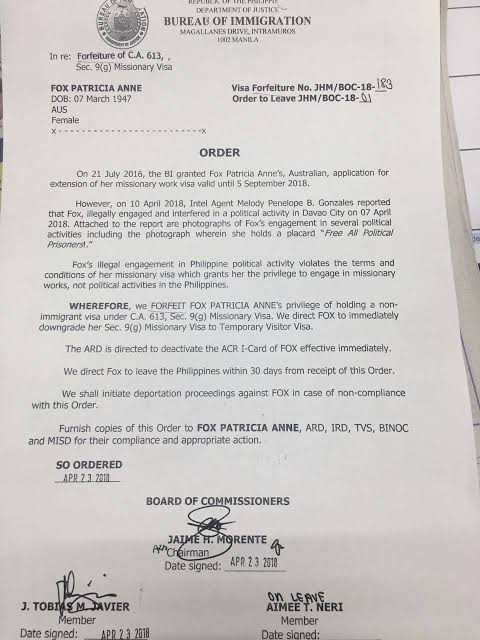
After reviewing the application, BI may allow the foreign national to update or extend the stay, issue an Order to Leave, or take other action under the applicable rules.
If the person receives an order to leave or a blacklist notice, they should review the document immediately and follow the stated instructions. Legal advice may be necessary, especially if the person wants to challenge the decision.
Can a Foreign Employee Appeal an Order to Leave or Blacklist?
A foreign national may have a legal remedy if they believe an immigration order is incorrect or if important facts were not considered. However, the available remedy and deadline depend on the order and the applicable BI rules.
Under Section 14 of Immigration Memorandum Circular No. 2023-010, an applicant may file a verified Motion for Reconsideration of an Order to Leave or blacklist inclusion within three working days from receiving a copy of the order. The motion must be filed with the office where the original application was filed and must include supporting documents and the required fees.
The motion should clearly explain why the order should be reconsidered. Supporting evidence may include:
- Proof of Filipino family ties.
- Medical records or proof of a serious health condition.
- Documents showing humanitarian circumstances.
- Proof of payment of immigration arrears.
- Copies of the applicant’s immigration records.
- Other evidence relevant to the grounds for reconsideration.
This deadline applies to the orders covered by that circular. It is not a universal appeal period for every immigration decision. The foreign national should have the actual order reviewed immediately and should not assume that filing a motion automatically stops its implementation.
What Happens if a 9(g) Visa Holder Overstays?
A 9(g) visa holder must follow the conditions of the approved employment visa. If the visa expires and the employee remains in the Philippines without an approved extension or another valid status, the person may face immigration consequences.
The employee should not continue working based only on an expired 9(g) visa or a pending renewal application. A valid employment contract does not replace immigration approval.
The employer should also review whether the employee’s AEP remains valid and whether any new labor authorization is required.
If the employment has ended, the company and employee should check whether visa downgrading or another immigration process is needed. BI has a formal downgrading process for foreign nationals who need to change from an immigration visa to temporary visitor status.
The employee should confirm the correct procedure with BI before assuming that a downgrade or new visa application has been completed.
Key Takeaways
A visa overstay in the Philippines can lead to various issues such as fines, immigration arrears, an Order to Leave, deportation proceedings, detention, or blacklisting. The result depends on the person’s visa type, length of overstay, immigration history, and other facts.
Foreign employees should check their authorized stay and act as soon as they discover an expired visa. They should contact BI, prepare the required documents, pay only the official assessment, and follow the decision issued by the immigration authorities.
Is Assistance Available?
Resolving a visa overstay can be difficult, especially when the case involves an expired work visa, unpaid immigration fees, or an Order to Leave. Foreign employees may need help understanding their options and preparing the documents required by BI.
Work Visa Philippines assists foreign nationals and Philippine employers with work visa applications, renewals, visa downgrading, and immigration compliance. If you have overstayed or are unsure about your current immigration status, seek proper guidance before making travel or employment decisions. Contact us for expert help:
- Contact Us Here
- Fill Out the Form Below
- Call us at +63 (02) 8540-9623