The Philippines introduced a legal framework for a Digital Nomad Visa (DNV) in April 2025, creating a potential immigration pathway for foreign nationals who want to live temporarily in the country while working remotely for employers or clients located outside the Philippines. Executive Order No. 86 authorizes the Department of Foreign Affairs (DFA) to issue DNVs to qualifying non-immigrant foreigners.
For foreign remote workers, the DNV is different from a traditional Philippine work visa. A 9(g) visa is designed for foreign nationals taking up employment in the Philippines, while the DNV is intended for people whose work remains connected to employers or clients outside the country. The distinction is important because a DNV holder must not be employed in the Philippines.
At the same time, anyone considering the DNV should understand its current status before making relocation plans. The legal framework exists, but the publicly available government materials do not yet provide a comprehensive DNV application system comparable to established Philippine visa categories. This means applicants should verify the current procedure directly with the appropriate Philippine Foreign Service Post before relying on information published by third parties.
What Is the Philippine DNV?
The DNV was created to provide an immigration framework specifically for foreign nationals who want to stay temporarily in the Philippines while continuing to work remotely for overseas employers or clients.
Executive Order No. 86 defines the DNV as a special non-immigrant visa for foreigners who desire to enter or stay in the Philippines temporarily for remote work using digital technologies. Their clients or employers must be situated outside the Philippines.
This makes the DNV fundamentally different from an ordinary Philippine employment visa.
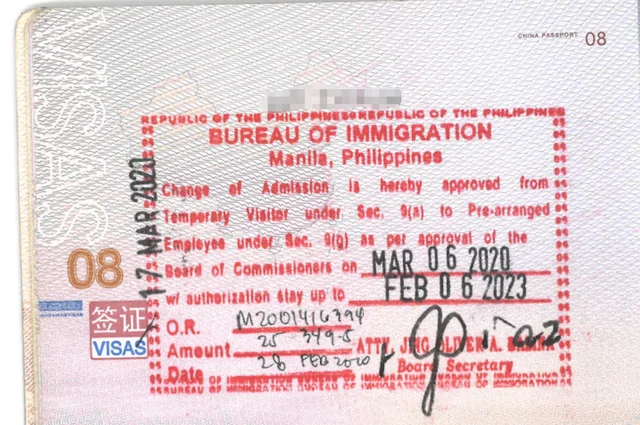
A foreign professional employed by a Philippine company would generally look at an appropriate employment authorization, such as the 9(g) Pre-arranged Employment Visa, rather than treating the DNV as a substitute. The Bureau of Immigration describes the 9(g) as a visa for foreign nationals proceeding to the Philippines to engage in a lawful occupation for wages, salary, or other compensation.
The DNV, by contrast, is intended for remote workers whose economic relationship remains outside the Philippines.
Who Is the DNV Intended For?
The DNV is aimed at foreign nationals whose work can be performed remotely and whose income comes from outside the Philippines. This makes the visa potentially relevant to international employees, independent professionals, freelancers, consultants, and other remote workers, provided their circumstances satisfy the requirements established under EO 86 and any applicable implementing rules.
The basic conditions under the Executive Order include:
- The applicant must be at least 18 years old.
- The applicant must demonstrate remote work using digital technology.
- The applicant must demonstrate sufficient income generated outside the Philippines.
- The applicant must show that they have no criminal record.
- The applicant must have health insurance valid for the period of the DNV.
- The applicant must be a national of a country that offers DNVs to Filipinos and where the Philippines maintains a Foreign Service Post.
- The applicant must not pose a threat to the internal or external security of the Philippines.
- The applicant must not be employed in the Philippines.
These conditions are important because they define the basic purpose of the DNV. It is not a general-purpose residence visa for foreigners who simply want to live in the Philippines.
The DNV Is Not a Philippine Employment Visa
Understanding this distinction is one of the most important parts of planning a Philippine stay as a foreign remote worker.
A foreign national working remotely for a company based overseas is in a different position from a foreign national hired by a Philippine employer.
Under EO 86, the DNV is specifically tied to overseas employers or clients, and DNV holders must not be employed in the Philippines.
For example, a software developer employed by a company in Germany who performs all work remotely while temporarily living in Manila may potentially fit the concept of a DNV applicant, subject to all applicable requirements.
The situation is different if that developer accepts a position with a Philippine technology company. At that point, the individual is no longer simply working remotely for an overseas employer. Philippine employment and immigration requirements become relevant.
The same distinction applies to freelancers.
A freelancer who provides services to clients outside the Philippines may potentially fall within the DNV framework. However, the DNV should not be understood as permission to accept local employment or to work with Philippine-based clients when doing so would conflict with the visa’s conditions.
What Are the DNV Requirements?
The requirements begin with the conditions established in EO 86, but applicants should distinguish between requirements expressly stated in the Executive Order and additional documentary requirements that may be established through implementation procedures.
The Executive Order expressly requires proof of remote work, sufficient foreign-generated income, a clean criminal record, valid health insurance, a qualifying nationality, and compliance with Philippine security requirements. It also requires that the applicant not be employed in the Philippines.
This means a prospective applicant should be prepared to establish several things.
Proof of Remote Employment or Overseas Clients
The applicant should be able to demonstrate that the work is genuinely remote and connected to an employer or clients outside the Philippines.
Depending on the final application procedures, relevant evidence could include employment documentation, service contracts, or other records establishing the overseas working relationship. Applicants should confirm the exact documents accepted by the responsible Philippine Foreign Service Post before submitting them.
Proof of Foreign-Generated Income
EO 86 requires proof of sufficient income generated outside the Philippines.
Importantly, the Executive Order itself does not state a universal dollar amount in its published text.
Applicants should therefore be cautious about websites claiming that a specific annual income figure is an official DNV requirement unless that figure can be traced to a current Philippine government issuance.
Criminal Record Documentation
The Executive Order requires proof of no criminal record.
Foreign-issued police or criminal-record documents may be subject to authentication, apostille, translation, or other documentary requirements depending on the issuing country and the instructions of the relevant Philippine Foreign Service Post.
Health Insurance
Applicants must have health insurance valid for the period of the DNV.
EO 86 does not establish a universal minimum insurance coverage amount in the text of the Order. Applicants should therefore verify the required policy specifications with the Philippine Foreign Service Post handling the application rather than relying on a third-party insurance figure.
The Reciprocity Requirement Matters
The nationality requirement is one of the DNV’s distinctive features.
EO 86 provides that the applicant must be a national of a country that offers DNVs to Filipinos and where the Philippines has a Foreign Service Post.
This creates a reciprocity condition. Not every foreign national automatically qualifies simply because they work remotely.
For someone considering the DNV, nationality should therefore be checked before investing time and money in the application process.
The applicant should confirm that their country falls within the applicable reciprocity framework and that the relevant Philippine Foreign Service Post can process the visa.
Where Is the DNV Application Filed?
The Executive Order authorizes the DFA to issue DNVs, and the DFA’s Philippine Foreign Service Posts are therefore central to the application framework. EO 86 also directs the DFA to create a database of DNV holders for monitoring purposes.
However, applicants should not assume that the digital nomad visa can be processed through the same system used for every other Philippine visa.
The Bureau of Immigration’s publicly listed visa services currently include established categories such as the 9(a) Temporary Visitor Visa, 9(g) Pre-arranged Employment Visa, 9(f) Student Visa, and other immigration categories. The BI’s current public visa listings do not provide a comparable dedicated DNV service page with a standard checklist and fee schedule.
For this reason, prospective DNV applicants should contact the relevant Philippine embassy or consulate and verify:
- Whether DNV applications are currently being accepted
- Which Foreign Service Post has jurisdiction
- The current application form
- The documentary checklist
- Applicable fees
- Authentication or apostille requirements
- Processing procedures
- Any additional requirements imposed under the current implementing guidance
This is particularly important because online articles may continue to repeat information published shortly after EO 86 was issued.
How Long Is the DNV Valid?
EO 86 establishes the DNV as a temporary visa and provides for a maximum validity of one year, renewable for another year under the applicable conditions.
This is significant for remote workers who want a longer-term Philippine base without becoming Philippine employees.
A DNV is therefore fundamentally different from entering the Philippines for a short tourism visit and repeatedly extending temporary visitor status. It was created specifically as a framework for foreign nationals who want to temporarily reside in the Philippines while maintaining qualifying remote work arrangements abroad.
However, renewal should not be assumed to be automatic.
The holder must continue meeting the applicable conditions. EO 86 specifically states that DNV holders must maintain compliance with the requirements during the validity of their DNVs.
If the holder’s employment, clients, income source, insurance, nationality, or other relevant facts change, the person should verify whether those changes affect their eligibility.
Can a DNV Holder Work for a Philippine Company?
The answer under EO 86 is no.
One of the express conditions is that the DNV holder must not be employed in the Philippines.
This restriction is essential for employers and remote workers to understand.
A foreign national cannot simply enter under the DNV and then accept a Philippine employment contract because the new job would fall outside the purpose and conditions of the visa.
A Philippine company that wants to hire the individual should instead determine which Philippine employment authorization applies.
For many ordinary employer-employee arrangements, this can involve the Alien Employment Permit and an appropriate immigration status, potentially including the 9(g) visa depending on the circumstances. The Bureau of Immigration’s 9(g) framework specifically covers foreign nationals proceeding to the Philippines to engage in lawful employment for wages, salary, or other compensation.
DNV vs. 9G Visa: Which Framework Applies?
The difference between these two immigration routes can be summarized by looking at where the employment relationship is located.
| DNV | 9G Visa |
| Designed for qualifying remote workers | Designed for pre-arranged employment in the Philippines |
| Employer or clients must be outside the Philippines | Employment is connected to a Philippine employer |
| DNV holders cannot be employed in the Philippines | Intended for lawful Philippine employment |
| Issuance framework is under DFA authority | 9(g) is administered through the Bureau of Immigration |
| Based on EO 86 | Based on the Philippine Immigration Act and BI procedures |
The choice should be based on the foreign national’s actual working arrangement rather than on which visa appears simpler.
For example, a foreign employee who remains employed by a company in the United Kingdom while working remotely from the Philippines is fundamentally different from a foreign executive hired by a Philippine corporation.
The first arrangement may fall within the DNV concept. The second requires an appropriate Philippine employment authorization.
What About Taxes?
Tax issues require separate consideration from immigration status.
Obtaining a DNV does not mean that a foreign national can automatically assume that all income earned while physically working in the Philippines is exempt from Philippine taxation.
The DNV’s purpose is immigration-related: it establishes a framework for qualifying foreign remote workers to temporarily stay in the Philippines. Tax residence and the source of income are governed by Philippine tax rules and, where applicable, tax treaties.
This distinction is important because a foreign worker may have an overseas employer while physically performing services from the Philippines.
The location of the employer alone does not answer every Philippine tax question.
Before relocating for an extended period, a DNV holder should obtain tax advice based on:
- The individual’s nationality and tax residence
- The individual’s physical presence in the Philippines
- The nature of the employment or freelance arrangement
- Where services are performed
- The source of income
- Any applicable tax treaty
- The individual’s continuing obligations in their home country
Tax treatment should therefore not be inferred from the existence of a DNV.
What Should Foreign Remote Workers Prepare Before Applying?
Preparation is particularly important while the DNV framework continues to develop.
A prospective applicant should organize evidence showing that their work is genuinely international and remote.
Useful preparation may include:
- A valid passport
- Employment contracts with overseas employers
- Client or service agreements, where applicable
- Recent evidence of foreign-source income
- Criminal-record documentation
- Valid health insurance covering the applicable DNV period
- Evidence explaining the nature of the applicant’s remote work
- Documents establishing nationality and identity
- Any documents required by the relevant Philippine Foreign Service Post
The applicant should also keep original documents and properly authenticated or apostilled copies where required.
Most importantly, applicants should confirm the current checklist with the responsible Philippine embassy or consulate before submitting anything.
Why DNV Applicants Should Avoid Outdated Online Checklists
Visa information can become outdated quickly, particularly when a visa category is newly introduced.
The Philippines has an established immigration system with numerous visa categories, and the Bureau of Immigration continues to update its services, forms, procedures, and electronic systems.
For this reason, applicants should distinguish between:
- What EO 86 legally establishes
- What the DFA has implemented
- What the relevant Philippine Foreign Service Post currently accepts
- What documents does the office currently require
That distinction can prevent an applicant from preparing an application around a checklist that is no longer current or was never officially adopted.
What Happens If Your Work Situation Changes?
DNV holders should reassess their immigration status before making a major change to their work arrangement.
For example, a DNV holder might initially work for an overseas company but later receive an offer from a Philippine employer. That change can affect the person’s eligibility because EO 86 requires DNV holders not to be employed in the Philippines.
The correct approach is not to start the Philippine job first and resolve the visa later.
Instead, the foreign national and prospective Philippine employer should determine the appropriate employment permit and visa before the employment begins.
Similarly, a freelancer who begins taking on Philippine-based clients should review whether the activity remains compatible with the conditions of the DNV.
Immigration status should match the actual activity being performed in the Philippines.
Final Thoughts
The Philippine DNV provides a legal framework for qualifying foreign remote workers who want to temporarily live in the country while continuing to work for employers or clients outside the Philippines. Executive Order No. 86 establishes the core conditions, including remote work, foreign-generated income, health insurance, a clean criminal record, a qualifying nationality, and the prohibition against Philippine employment.
The DNV is therefore not simply another version of the 9G work visa. Its purpose is different. The 9G framework addresses foreign employment in the Philippines, while the DNV is intended for remote work connected to employers or clients outside the country.
For anyone considering the DNV in 2026, however, the most important practical point is to verify the current implementation status before making travel or relocation decisions. The existence of EO 86 does not mean that every online DNV checklist, fee, income threshold, or application procedure is officially established.
Applicants should obtain current instructions from the appropriate Philippine Foreign Service Post and ensure that their actual work arrangement complies with the conditions of the visa.
Are You Considering a DNV or Philippine Work Visa?
Work Visa Philippines can help foreign nationals understand which Philippine immigration option fits their intended work arrangement.
If you are working remotely for an overseas company, considering a move to the Philippines, or planning to accept employment from a Philippine business, our team can help you assess the applicable visa and work authorization requirements.
We can guide you through the documentation, government requirements, and compliance considerations so you can choose the appropriate immigration route based on your actual circumstances.
Contact our team today to discuss your digital nomad visa, 9G visa, or other Philippine work visa requirements:
- Contact Us Here
- Fill Out the Form Below
- Call us at +63 (02) 8540-9623