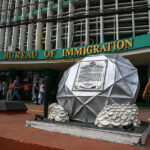
Hiring foreign nationals in the Philippines demands more than a strong CV and a signed offer; employers must secure both valid work permits and work visas before an expat can legally start. The core of this system is the Alien Employment Permit (AEP) issued by DOLE, combined with an employment visa such as the 9(G) Pre‑Arranged Employment Visa granted by the Bureau of Immigration. Together, these authorizations define compliant work permits for expats and assign clear responsibility to the sponsoring employer.
Work Permits for Expats vs. Work Visas
Before hiring foreign employees, employers must understand that work permits for expats and work visas are two distinct but interdependent approvals. An expat needs both the permit to work and the visa to stay in the country for employment purposes.
The work permit, formally called the Alien Employment Permit, is issued by the Department of Labor and Employment and authorizes a foreign national to hold a specific job with a specific employer in the Philippines. It is position‑ and employer‑specific; changing employers or positions usually requires a new AEP.
The work visa, most commonly the 9(G) visa, is issued by the Bureau of Immigration and allows the expat to enter, reside, and engage in that authorized employment for a defined period. In practice, the AEP is secured first and then used as a key requirement for the employment visa.
Why Expats Need Both AEP and Employment Visa
The Philippine system treats work permits for expats as a labor authorization and work visas as immigration clearance, and both are required to be fully legal.
The AEP ensures that the job offered to a foreign national complies with labor rules, including employer legitimacy, role specificity, and, when applicable, skills‑transfer commitments. It is the DOLE’s way of regulating foreign participation in the local labor market. The work visa, on the other hand, allows a foreign national to cross the border, remain in the country, and perform the services that the AEP permits; the Bureau of Immigration uses it to control entry and stay for employment purposes.
Without an AEP, a foreign employee cannot obtain a proper work visa; without a work visa, the employee cannot lawfully enter or stay in the country for employment, even if an AEP has been issued. Employers are responsible for ensuring that both approvals are in place before work begins.
The AEP: Core Work Permit for Expats
The Alien Employment Permit is the primary instrument among work permits for expats, and almost all foreign employees engaged in local employment must obtain one unless an exemption applies.
The AEP is issued by the DOLE Regional or Field Office that has jurisdiction over the expat’s place of work. It confirms that a foreign national is allowed to occupy a particular position with a specified employer. It is typically valid for one year and may be extended for up to three years if the employment contract or engagement documents provide for a longer duration.
Even when foreign nationals have other forms of authorization or special status, the law treats the AEP as just one of several requirements; diplomats and some consultants may be exempted, but most standard hires are not.
AEP Requirements and Application Process
Employers handling work permits for expats must prepare both company and employee documentation before filing for an Alien Employment Permit, since DOLE uses these records to confirm that the job, the employer, and the foreign national all meet regulatory standards. The application is lodged with the DOLE Regional or Field Office that has jurisdiction over the expat’s actual place of work, and it should be completed before any employment visa is processed.
- Photocopy of the expat’s passport, including the visa page or, where applicable, a certificate of recognition for refugees or stateless persons.
- Original notarized appointment or employment contract clearly stating duties, responsibilities, annual salary, and benefits.
- Proof of lawful business operation, such as a Mayor’s Permit, or, for ecozone companies, certification from PEZA or the relevant economic zone authority, or the appropriate construction license or DO 18‑A registration for construction firms.
- Copy of the employer’s understudy or training program that explains how knowledge and skills will be transferred from the foreign national to Filipino workers over the course of the engagement.
- Additional authorizations when required by law, such as a Special Temporary Permit from the Professional Regulation Commission for regulated professions, or an Authority to Employ an Alien from the Department of Justice for work in nationalized or partially nationalized industries.
Once these requirements are assembled and filed, DOLE evaluates the application, may conduct or verify publication and labor‑market safeguards, and then issues an AEP that becomes the cornerstone of the expat’s legal work status and the basis for the subsequent employment visa.
Pre‑Arranged Employment Visa (9G) for Long‑Term Expats
The 9(G) Pre‑Arranged Employment Visa is the most common work visa associated with work permits for expats and is used when foreign nationals will be employed in the Philippines on a longer‑term basis. It provides multiple‑entry privileges for as long as the foreign employee remains under the sponsoring employer’s employment and the visa remains valid.
Once the AEP is in place, employers and expats can proceed with the 9(G) application. Requirements typically include a joint letter request to the Commissioner by both the applicant and the petitioning company; a duly accomplished consolidated general application form; passport copies; and an employment contract or corporate documents (such as a Secretary’s Certificate of Election or Appointment) specifying compensation, duration, and job description.
The 9(G) petition also needs a copy of the AEP with publication proof or a certificate of publication, a notarized certification of foreign and Filipino employees signed by the company, a Bureau of Immigration Clearance Certificate, and, for some nationalities, a Bureau of Quarantine medical clearance. Applications are processed at the BI Main Office or other authorized immigration offices and can take a few months, including hearings, biometrics, visa implementation, and issuance of the Alien Registration Division card.
Provisional Work Permit: Bridging While 9(G) Is Pending
Sometimes, business needs require expats to start working before the 9(G) visa process is completed. In such cases, employers can rely on another tool among work permits for expats: the Provisional Work Permit.
The Provisional Work Permit allows foreign employees to work while their 9(G) Pre‑Arranged Employment Visa application is still pending. Its fees are higher than standard arrangements, but it is faster to obtain. The documentary requirements are very similar to those for the 9(G) visa itself, and the process is straightforward: the applicant or representative submits the requirements at the BI Main Office, pays the fees, and receives the approved Provisional Work Permit.
This is particularly useful for employers who need to avoid operational delays while longer‑term visa applications follow their normal course. It does not replace the 9(G); it merely permits interim lawful work.
Special Work Permit: For Short‑Term Assignments
For expats engaged for only a short period, work permits can take the form of a Special Work Permit. This option is designed for foreign nationals who will work in the Philippines for roughly three to six months.
To obtain a Special Work Permit, the foreign national must submit a letter‑request addressed to the BI Commissioner from the petitioning company, a completed application form, copies of their passport and latest authorized stay, and a duly acknowledged contract of service or corporate appointment document specifying duration, compensation, benefits, and duties.
Additional documentary requirements may apply depending on the nature of the role, especially for consultants or regulated professionals. The applicant must also provide a Taxpayer Identification Number card or proof of TIN and a BI Clearance Certificate. The petitioning company has its own documentary obligations as well. Applications are processed at BI Main or other immigration offices and follow a sequence of document submission, fee payment, approval, and, in some cases, biometrics and card issuance.
Treaty Trader or Investor Visa (9D) for Certain Nationals
The 9(D) Treaty Trader or Treaty Investor Visa is another route relevant to work permits for expats, but only for nationals of certain countries—specifically the United States, Japan, and Germany—under existing treaties.
This visa is meant for foreign nationals entering the Philippines solely for trade or commerce under treaty provisions, or to develop and direct operations of an enterprise in the country. Requirements include a letter request to the Commissioner, a completed application form, passport copies, proof of the employer’s income tax return and payment, and duly acknowledged employment or corporate documents specifying duration, compensation, benefits, and duties. A BI Clearance Certificate and, where applicable, a Bureau of Quarantine medical clearance may also be required.
As with other work‑related visas, applications are processed at BI offices through submission, fee payment, hearing attendance, biometrics capture, and card release. While not traditional “work permits” in the AEP sense, these visas permit qualifying expats to run treaty‑based business operations in the Philippines.
Legal Risks of Hiring or Working Without Proper Permits
Ignoring work permits for expats exposes both employers and foreign nationals to significant legal risk in the Philippines. Authorities treat illegal employment seriously, and penalties can be substantial.
Working without a valid Alien Employment Permit can result in a fine of ten thousand pesos per year or fraction thereof for the foreign national, and the same fine for the employer for each illegal foreign worker hired. A foreign national engaging in employment without a valid work visa faces deportation after paying fines and possibly serving imprisonment ranging from three months to three years.
Such violations can also lead to the foreign national being placed on the Bureau of Immigration’s blacklist, preventing future entry into the Philippines. Employers may be subject to additional sanctions, including suspension by the DOLE for employing foreigners without required permits. These consequences highlight why verifying permits and visas before allowing any work is critical.
How Background Screening Supports Permit and Visa Success
While background checks are not formal requirements for work permits for expats or for visas, proper vetting can make the process smoother and help avoid later problems.
DOLE can deny an AEP application if the foreign national has misrepresented facts, submitted falsified documents, been convicted of a crime in the Philippines or abroad, or has a record of grave misconduct or worker ill‑treatment. The same issues can justify cancelling an already approved AEP. On the visa side, a Bureau of Immigration Clearance Certificate is often required to show that the individual is not in any derogatory database or negative list.
Having background check results ready—such as identity verification, criminal record checks, or employment history—can make it easier to gather the necessary clearances and ensure there are no surprises during official screening by DOLE or BI. Employers must, however, conduct any background checks in compliance with Philippine laws, including data privacy rules.
Practical Tips for Employers Handling Work Permits for Expats
Employers that regularly manage work permits for expats can avoid most delays and legal issues by treating immigration as a structured part of HR and compliance, rather than a last‑minute formality. A clear internal process, defined responsibilities, and realistic timelines make it easier to support foreign hires while staying within Philippine labor and immigration rules.
- Build a standard immigration checklist for every expat hire, starting with confirming the correct permit and visa type, sequencing AEP before any work visa, and listing all documents needed from both the candidate and the company.
- Assign a dedicated internal coordinator or small team to handle expat permits and visas, track expiry dates, liaise with government offices or service providers, and keep records of all submissions and approvals.
- Integrate immigration planning into recruitment and onboarding by discussing timing, costs, and background issues early with candidates, and avoid any work activity until both the AEP and the appropriate visa are approved.
- Maintain up‑to‑date corporate documents—such as business permits, tax filings, and organizational charts—so they are ready whenever an application, renewal, or audit arises.
- Consider partnering with reputable background screening and immigration support services to help identify potential red flags early, prepare complete files, and reduce the risk of denials or cancellations.
Final Thoughts
Clear, lawful work permits for expats protect both the foreign employee and the Philippine employer. When companies understand the difference between AEPs and work visas, follow the correct sequence of filings, and maintain solid documentation and thorough background checks, they reduce the risk of fines, blacklisting, and operational disruption while providing expats with a secure foundation for their assignments.
Treating immigration as an integral part of HR and compliance, rather than an afterthought, turns a complex regulatory requirement into a repeatable, low‑risk process that supports long‑term growth and international hiring.
Is Assistance Available?
Yes. Work Visa Philippines helps employers design and manage complete permit and visa strategies for expats, from AEP applications and 9(G) work visas to short‑term permits and renewals. To discuss your current or upcoming foreign hires, you can schedule a consultation, request a permit and visa checklist tailored to your industry, or get a quick assessment of your company’s readiness to sponsor expat workers:
- Contact Us Here
- Fill Out the Form Below
- Call us at +63 (02) 8540-9623