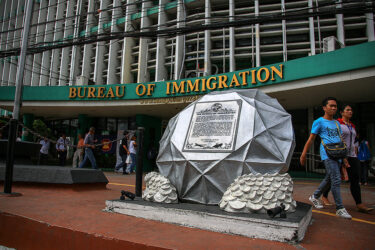
Working in the Philippines offers lucrative opportunities for expatriates, but engaging in illegal employment without the proper work visa is a severe violation that carries devastating consequences for both the employee and the hiring company. Under the strict enforcement policies of 2026, Philippine authorities—specifically the Bureau of Immigration (BI) and the Department of Labor and Employment (DOLE)—have intensified their crackdowns on undocumented foreign labor.
For professionals and businesses, understanding the severe legal, financial, and operational risks of unauthorized work is the critical first step toward building a legally sound, interruption-free operation in the country.
Understanding Illegal Employment in the Philippines
Illegal employment in the Philippines is defined as any foreign national engaging in gainful activity, commerce, or employment within the country’s jurisdiction without holding a valid Alien Employment Permit (AEP) and an appropriate working visa. This strict prohibition applies whether the compensation is paid locally in Philippine Pesos or deposited offshore, as long as the services or labor are rendered to local affiliates or projects within the country.
A common scenario involves foreigners arriving on a 9(a) Temporary Visitor (tourist) Visa and commencing their corporate duties while their employer informally “processes” their 9G visa in the background. Legally, a tourist visa explicitly forbids any form of employment. Starting work before the formal issuance of an AEP and a Provisional Work Permit (PWP) or a 9G visa immediately classifies the individual as an illegal alien, voiding their legal stay.
Immigration Penalties for Foreign Nationals
Foreigners caught engaging in illegal employment face swift and severe administrative actions from the Bureau of Immigration (BI), fundamentally jeopardizing their ability to remain in or return to the Philippines.
- Arrest and Custody: The BI holds the authority to execute warrantless arrests during intelligence operations or workplace raids, often resulting in immediate detention at the BI Warden Facility in Bicutan while charges are verified.
- Administrative Fines: The BI assesses heavy monetary penalties for unauthorized work, typically starting at a PHP 50,000 base fine, compounded by an additional PHP 500 per day if the individual has also overstayed their authorized visa validity.
- Summary Deportation: Unauthorized workers are subject to summary deportation proceedings under Sections 37 and 45 of the Philippine Immigration Act, culminating in a mandatory, escorted order to leave the country.
- Perpetual Blacklisting: Upon deportation for illegal employment, the foreign national is automatically placed on the BI’s derogatory blacklist, barring them indefinitely from re-entering the Philippines for any future purpose.
These penalties are aggressively enforced in 2026, with the BI demonstrating zero tolerance for foreign nationals who flout basic immigration statutes.
DOLE Sanctions for Employers and Businesses
The Department of Labor and Employment (DOLE) imposes parallel, highly punitive sanctions on companies that facilitate illegal employment, targeting their financial resources and operational licenses to deter undocumented hiring.
- Monetary Fines: Under DOLE regulations, employers are fined PHP 10,000 for every year (or fraction thereof) for each foreign national found working on their premises without a valid AEP.
- AEP Revocation: Facilitating unauthorized work can lead to the immediate cancellation of all existing AEPs held by the company’s other compliant foreign workers, effectively paralyzing its expatriate workforce.
- Business Restrictions: DOLE has the power to issue worksite compliance orders and can recommend the suspension or closure of business operations to local government units, heavily disrupting corporate continuity.
- Watchlist Placement: Erring employers are blacklisted from the DOLE system, permanently prohibiting them from sponsoring any new foreign hires or expanding their global workforce.
These robust employer sanctions underscore the government’s stance that the burden of legal compliance falls equally on the hiring entity and the foreign employee.
Criminal and Civil Liabilities for Aggravated Cases
Beyond standard administrative fines, illegal employment can escalate into full-blown criminal prosecution under specific Philippine statutes. If an employer uses a foreign national to bypass constitutional foreign ownership limits or engage in illegal business practices, they can be prosecuted under the Anti-Dummy Law, which carries a penalty of 5 to 15 years imprisonment and corporate dissolution.
Furthermore, the Bureau of Immigration has issued stern, highly publicized warnings in 2025 and 2026 regarding Section 46 of the Philippine Immigration Act. Companies, landlords, or individuals found harboring, shielding, or providing employment to illegal aliens—such as undocumented workers from offshore gaming operations—face aggressive criminal charges. Civil liabilities may also arise, requiring the employer to shoulder the wage differentials, legal damages, and flight repatriation costs for the deported alien.
How Authorities Detect Unauthorized Work
The methods used by Philippine authorities to detect illegal employment have become highly sophisticated in 2026, moving far beyond simple random inspections. DOLE and the BI frequently conduct joint worksite inspections based on inter-agency intelligence operations and localized corporate surveillance.
Whistleblowers play a highly significant role in this ecosystem; disgruntled local employees, competitors, or even concerned citizens can anonymously report suspicious expatriate activities, triggering immediate BI investigations. Additionally, the BI increasingly cross-verifies BIR tax records, payroll data, and professional social media profiles to catch foreigners who claim to be tourists at the airport but are actively engaged in executive corporate roles within the country.
The Mandatory Dual-Permit Framework
To avoid the pitfalls of illegal employment, employers and foreign nationals must respect the Philippines’ mandatory dual-authorization system. The right to work and the right to reside are governed separately but must be secured together to achieve full compliance.
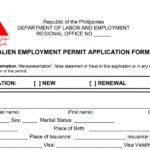
The first non-negotiable step is securing the Alien Employment Permit (AEP) from DOLE, which serves as formal proof that no qualified local Filipino worker is available for the specialized role. Once the AEP is approved, the employer must petition the BI for the 9(g) Pre-Arranged Employment Visa. Gainful activity cannot commence until both permits are active; relying on just one (e.g., having an AEP but remaining on a tourist visa without a provisional permit) still constitutes a major, actionable immigration violation.
Bridging the Gap: Provisional Work Permits (PWP)
Because the standard 9(g) work visa processing can take several months, the Bureau of Immigration offers a legal bridge to prevent illegal employment during the required waiting period. The Provisional Work Permit (PWP) allows a foreign national to commence work legally while their 9(g) visa application is actively pending at the BI.
To qualify for a PWP, the applicant must have already filed for their AEP at DOLE and submitted their 9(g) petition. The PWP is typically valid for three months or until the 9(g) visa is officially approved and stamped, whichever comes first. Securing this permit is the only legally safe way to accelerate a foreign employee’s start date without risking arrest and deportation during the lengthy administrative transition.
Common Misconceptions About Tourist Visas and Remote Work
Many expatriates inadvertently engage in illegal employment due to fundamental misconceptions about what a 9(a) tourist visa actually permits. A prevailing myth is that “volunteering,” undertaking “probationary training,” or working for equity instead of a salary exempts a foreigner from visa rules; however, Philippine law defines employment broadly to include any gainful activity that would otherwise be compensated.
Similarly, remote workers operating on tourist visas while servicing local Philippine clients or managing local teams are in direct violation of the law. While the government has introduced specialized visas for remote workers servicing purely foreign clients, those without proper authorization who conduct any local business on Philippine soil under a tourist status risk immediate blacklisting if discovered by authorities.
Strategies to Rectify and Regularize Immigration Status
If a company discovers it has inadvertently facilitated illegal employment, swift rectification is absolutely critical to mitigate penalties and avoid a total operational shutdown. Ignoring the violation only compounds the daily overstaying fines and drastically increases deportation risks.
The employer must immediately halt the foreign national’s work activities and initiate a comprehensive regularization process. This typically involves paying all accrued administrative fines to the BI and DOLE, securing the necessary government clearances, and officially filing for an AEP and 9(g) visa. In cases where the individual’s tourist visa has severely overstayed, they may be required to process a voluntary exit, settle their penalties at the airport with an Emigration Clearance Certificate (ECC), and re-enter legally to start the visa process correctly.
Wrapping Up
Illegal employment in the Philippines—whether defined as working on a tourist visa, allowing an AEP to expire, or bypassing the Bureau of Immigration entirely—is a high-risk violation that triggers severe enforcement actions. In 2026, foreign nationals caught working without authorization face immediate BI detention, fines starting at PHP 50,000, summary deportation, and perpetual blacklisting, while their employers are crippled by DOLE fines of PHP 10,000 per worker, AEP revocations, and potential criminal charges under the Anti-Dummy Law or the Philippine Immigration Act.
Protecting your career and your enterprise requires strict adherence to the dual-permit system: securing the DOLE AEP, filing for a Provisional Work Permit (PWP) for early starts, and finalizing the 9(g) visa before any operational duties commence.
Is Assistance Available?
Yes. Work Visa Philippines eliminates the risks of undocumented labor through precise, fully managed immigration strategies. We handle the bureaucratic heavy lifting, ensuring your foreign hires are legally safeguarded from day one through expert AEP filings, PWP bridging, and complete BI representation—turning potential liabilities into unassailable compliance.
Don’t let illegal employment jeopardize your business or your stay in the Philippines. Contact Work Visa Philippines and see how we can regularize your workforce:
- Contact Us Here
- Fill Out the Form Below
- Call us at +63 (02) 8540-9623