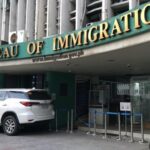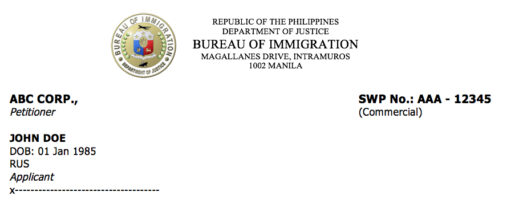
Foreign nationals who want to work in the Philippines must go through a two‑layer system: a work authorization from the Department of Labor and Employment (DOLE) and the proper visa or permit from the Bureau of Immigration (BI). Employers, not employees, are responsible for driving most of the process, and choosing the wrong permit (for example, using only a tourist visa or overstaying a Special Work Permit) can lead to fines, deportation, and long-term blacklisting.
In 2026, DOLE’s updated Department Order No. 248 further tightened Alien Employment Permit (AEP) rules with expanded labor market testing and skills-transfer obligations, while BI continues to enforce strict checks on 9(g) work visas, Special Work Permits (SWP), and Provisional Work Permits (PWP).
Understanding the Legal Framework for Foreigners Working in the Philippines
Before any foreigner can legally work in the Philippines, two things generally need to be in place: an employment-based authorization from DOLE via an Alien Employment Permit (AEP) if work lasts more than six months, and an appropriate immigration status from BI (usually a 9(g) Pre‑Arranged Employment Visa or, for short assignments, an SWP or PWP).
Key points about the framework:
- DOLE protects the local labor market by ensuring that qualified Filipinos cannot fill positions given to foreigners.
- BI ensures that the foreigner’s stay and purpose in the country match the visa or permit issued (tourist for tourism, 9(g) for employment, etc.).
- For regular, ongoing employment, the standard path is AEP + 9(g) work visa; for short-term or project-based work, SWP or PWP may be appropriate.
Foreigners who only have a tourist visa and no work authorization are not allowed to perform paid work, even if they are in the country “temporarily,” and both they and their employers may face sanctions if caught.
Main Options to Work in the Philippines as a Foreigner
There are three primary mechanisms to work in the Philippines legally as an employee of a Philippine company: the 9(g) Pre‑Arranged Employment Visa for long-term roles, the Special Work Permit (SWP) for short engagements, and the Provisional Work Permit (PWP) as a bridge while a 9(g) is being processed.
Overview of common options:
- 9(g) Pre-Arranged Employment Visa
- For: Long-term, regular employment with a Philippine-based company (e.g., BPO staff, software engineers, managers).
- Requirements: AEP from DOLE, employer sponsorship, and BI petition.
- Validity: Typically 1-3 years, renewable, tied to the employer and position.
- Special Work Permit (SWP)
- For: Short-term work (generally up to 6 months total) such as consultants, trainers, seasonal work, performers, or project-based roles.
- Requirements: Tourist visa base, BI approval; no AEP if total stay under 6 months.
- Validity: Usually issued in increments (e.g., up to 3 months, extendable up to 6).
- Provisional Work Permit (PWP)
-
- For: Foreigners who need to start work immediately while their 9(g) application is in process.
- Requirements: AEP filed or approved, BI petition, and current legal status.
- Validity: Typically up to 3 months, or until the 9(g) visa is approved.
For most full-time hires, especially in corporate and BPO environments, the target end-state is a 9(g) visa with an AEP. SWP and PWP are more temporary tools to lawfully work in the Philippines before or instead of full employment visas.
Alien Employment Permit (AEP): When You Need It and How It Works
DOLE issues the AEP, which is mandatory for most foreign nationals who will work in the Philippines for more than six months. It confirms that a foreigner can legally occupy a specific position with a specific Philippine employer, and it is a prerequisite for 9(g) visa issuance.
Key features of the AEP:
- Required when work exceeds 6 months, regardless of whether the foreigner is on a 9(g), 47(a)(2), or other work-authorized visa.
- Covers specific employer, position, and location; changes usually require amendment or a new permit.
- Validity usually matches the employment contract, up to 1-3 years, and must be renewed if employment continues beyond that period.
Under DOLE Department Order No. 248 (2025), which continues to apply in 2026, employers face:
- Expanded labor market testing, requiring job postings through PhilJobNet and other channels to show efforts to find local candidates.
- An Economic Needs Test (ENT) component, where DOLE reviews whether a foreign hire is necessary based on skills and local availability.
- Increased emphasis on skills transfer, requiring some employers to implement Understudy or Skills Development Programs, so Filipino staff can learn from foreign workers.
Employers must initiate and pay for the AEP, and foreign employees should ensure that the AEP matches their actual job title and responsibilities to avoid issues later with BI.
9(g) Work Visa: The Standard Long-Term Route
The 9(g) Pre‑Arranged Employment Visa is the most common path to long-term employment in the Philippines as an employee of a local company. It allows a foreigner to live and work in the country for the duration of their contract and is implemented by the BI once an AEP is in place.
Key aspects of the 9(g) visa:
- Requires a Philippine-based employer that acts as the petitioner and sponsor, such as a corporation, BPO, or branch office.
- Demands a valid AEP from DOLE to be submitted with the BI petition.
- Typically valid for 1-3 years, aligned with the employment contract, and renewable as long as the employment continues and AEP is renewed.
The general application flow:
- Employer obtains or renews AEP from DOLE (2-4 weeks with complete documents).
- Employer files 9(g) petition with BI (including AEP, corporate documents, contract, and applicant requirements).
- BI reviews, may call for an interview or hearing, and then issues an approval order and stamps the visa into the passport.
- Applicant obtains an Alien Certificate of Registration Identity Card (ACR I‑Card), required for long-term foreign residents.
Processing from AEP start to 9(g) implementation typically takes 2-3 months when handled properly.
Special Work Permit (SWP) and Provisional Work Permit (PWP): Short-Term and Interim Options
Not every foreigner needs or qualifies immediately for a 9(g) visa. For shorter engagements or immediate start dates, the SWP and PWP allow foreign nationals to work in the Philippines within specific, limited frameworks.
Special Work Permit (SWP)
The SWP is ideal for:
- Consultants, trainers, speakers, or technicians on short-term assignments.
- Foreigners engaged in projects or events where the total work period in the Philippines does not exceed about 6 months.
Characteristics:
- Issued by BI on top of a valid tourist or temporary visitor visa.
- Does not require an AEP if the total work duration is under the AEP threshold.
- Time-bound and non-convertible to a 9(g); if work continues, a new pathway must be used.
Provisional Work Permit (PWP)
The PWP is used when:
- A 9(g) application has already been filed or is about to be filed, but the foreign employee must begin work immediately.
- The foreigner is already in the Philippines and has an AEP filed or approved.
Features:
- Issued by BI, typically valid for 3 months or until the 9(g) visa is approved, whichever comes first.
- Requires proof of AEP application or DOLE endorsement.
- Allows legal work while avoiding gaps in status.
Using SWPs or PWPs without transitioning to a proper employment visa when required, or working beyond their valid periods, can lead to immigration enforcement actions.
Employer Responsibilities When Hiring Foreigners
Employers carry most of the compliance burden when they hire foreigners to work in the Philippines, and their obligations go beyond just AEP and 9(g) filings. They must also ensure their corporate registrations are current, maintain proper foreign worker records, and comply with DOLE and BI reporting rules.
Core responsibilities include:
- Holding valid business permits, SEC or DTI registration, and up-to-date General Information Sheets (GIS).
- Ensuring that roles offered to foreigners are truly specialized or managerial, and that labor market protections (such as job posting and ENT) are followed.
- Filing for AEPs, SWPs, PWPs, and 9(g) visas on time, and renewing them before expiry to keep employees in legal status.
- Reporting foreign worker rosters and changes to DOLE in line with Department Order No. 248 requirements (e.g., quarterly lists, updates within 10 days of changes).
- Providing understudy or training programs in certain cases to promote skills transfer to Filipino workers, and submitting documentation if requested.
Many companies work with immigration consultants or Employer of Record (EOR) providers to manage this complexity, especially when hiring multiple foreign employees or entering the Philippine market for the first time.
Compliance Risks and Common Mistakes to Avoid
Foreigners who work in the Philippines and their employers often make similar mistakes that can derail applications or lead to sanctions. Understanding these risks makes it easier to avoid them.
Frequent errors include:
- Allowing foreigners to start work on a tourist visa without any SWP, PWP, or AEP in place.
- Misusing SWPs for ongoing, long-term roles that should be covered by a 9(g) and AEP.
- Filing incomplete AEP applications (missing labor market postings, corporate documents, or understudy/skills plans).
- Letting AEPs or 9(g) visas lapse without timely renewal, resulting in overstays or unauthorized work.
- Failing to update DOLE and BI when foreign employees change job titles, work locations, or employers.
These missteps can lead to fines, denial of future applications, and even deportation or blacklisting for the foreign worker, as well as reputational and legal risk for the employer.
Best Practices for Foreigners Who Want to Work in the Philippines
Foreign professionals interested in building careers in the Philippines can significantly improve their chances of smooth processing by aligning their expectations and documentation with the system’s realities.
Practical tips:
- Target roles in sectors that commonly hire foreigners (IT/BPO, engineering, specialized manufacturing, senior management), where employers already understand AEP/9(g) processes.
- Clarify with prospective employers early whether they are prepared to sponsor AEP and 9(g) applications and whether they have done so before.
- Keep personal documents (passport, degrees, police clearances) updated and ready for authentication or apostille, if needed.
- Avoid any paid work, even remote work for a Philippine entity, while on a pure tourist visa without an appropriate permit.
- Consider professional help for complex situations, such as transfers from another ASEAN country, highly specialized roles, or overlapping visa categories.
Working with an experienced provider like Work Visa Philippines simplifies navigating DOLE and BI requirements and reduces the risk of costly mistakes.
Key Takeaways
Foreigners who work in the Philippines legally do so under a structured framework that combines DOLE’s Alien Employment Permit regime with BI’s work visa and permit categories, most notably the 9(g) Pre‑Arranged Employment Visa for long-term roles and the SWP and PWP for short-term or interim assignments. Employers must demonstrate a genuine need for foreign expertise through labor market testing and Economic Needs Tests, comply with Department Order No. 248’s reporting and skills-transfer expectations, and ensure timely AEP and visa filings, while foreign workers must avoid engaging in any paid activity on tourist status alone and maintain accurate, consistent documentation throughout the process.
Done correctly, this framework allows international talent to integrate smoothly and compliantly into Philippine companies, particularly in high-demand sectors such as BPO/IT, engineering, and senior management.
Planning to Hire Foreign Professionals?
If you are an employer planning to hire foreign professionals or an individual looking to work in the Philippines and need clear guidance on AEPs, 9(g) visas, SWPs, PWPs, and compliance under the latest DOLE and BI rules, Work Visa Philippines can manage the process end-to-end.
Contact our team to schedule a consultation and get a tailored plan for your hiring or relocation needs that keeps you fully aligned with Philippine immigration and labor regulations in 2026:
- Contact Us Here
- Fill Out the Form Below
- Call us at +63 (02) 8540-9623