The Philippine SIRV from the USA is an investor-residence pathway for American nationals who want to live in the Philippines while placing capital in qualifying Philippine investments. The Special Investor’s Resident Visa, or SIRV, is designed for foreign investors who are at least 21 years old, meet the program’s personal eligibility requirements, and are willing and able to invest at least US$75,000 in approved Philippine investment activities.
This visa is important because it gives American investors a residence option that is based on investment rather than employment. It is different from the 9(g) work visa, which requires a Philippine employer, and different from the SRRV, which is designed primarily for retirees. The SIRV is intended for investors who want their residence status connected to productive economic activity in the Philippines.
What The Philippine SIRV Is
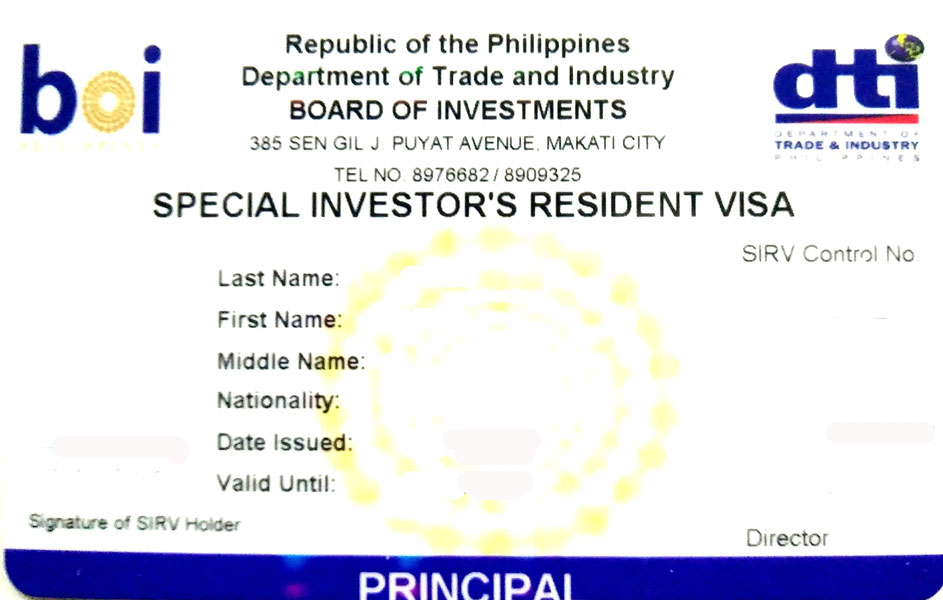
The Special Investor’s Resident Visa is a Philippine residence visa for qualified foreign nationals who invest the required amount in approved Philippine businesses, securities, or other eligible investment vehicles under the program rules. The program is administered through the Board of Investments and implemented with the participation of immigration and banking authorities.
The SIRV is not simply a visa issued in exchange for showing money in a bank account. The applicant must remit the investment funds through an accredited Philippine depository bank and then place those funds into an eligible investment within the period required by the program. The investment must also remain compliant after the visa is issued.
Why Americans Consider The SIRV
The Philippine SIRV from the USA can be attractive to American investors who want to spend significant time in the Philippines without being tied to a local employer. It can be relevant for people exploring business opportunities, investment diversification, or a long-term personal presence in the country.
The United States Embassy in Manila identifies the Special Investor’s Resident Visa as available to Americans at least 21 years old who will invest in viable economic activities and tourism-related projects and establishments. This gives American applicants a clear indication that the program is a recognized investor route rather than an informal long-stay arrangement.
SIRV Compared With Other Visa Options
Choosing the right visa begins with understanding how the SIRV differs from other Philippine immigration categories. The SIRV is based on investment, while the 9(g) visa is based on pre-arranged employment, and the SRRV is designed for qualified retirees.
A foreign national who wants to work for a Philippine company may need a 9(g) visa and an Alien Employment Permit. An American who wants to retire may consider the SRRV. An investor who wants residence connected to a qualifying Philippine investment may consider the SIRV.
These categories should not be treated as interchangeable. The right option depends on the applicant’s age, purpose, source of income, intended activities, and whether the person will be employed locally.
Main Eligibility Requirements
American applicants must satisfy both personal and investment conditions. The SIRV program generally requires the applicant to:
- Be at least 21 years old.
- Have no conviction for a crime involving moral turpitude.
- Be free from dangerous or contagious diseases.
- Meet the program’s character and security requirements.
- Be willing and able to invest at least US$75,000 in qualifying Philippine investments.
The applicant must also provide documentary evidence supporting each requirement. A statement of intent is not enough; the authorities will expect official records, clearances, medical documents, and bank or investment evidence.
The US$75,000 Investment
The standard investment threshold for the Philippine SIRV from the USA is at least US$75,000. This amount must be remitted into the Philippines through an accredited depository bank and then placed into a qualifying investment under the SIRV rules.
Applicants should not assume that any purchase or business expense will qualify. The investment must fall within an approved category. Residential real estate, personal expenses, and ordinary transfers to a Philippine bank account should not be treated as automatically qualifying SIRV investments.
The investment structure should therefore be selected carefully before funds are transferred. A mistake at this stage can affect both the visa application and the applicant’s ability to complete the conversion from temporary investment placement to the required qualifying investment.
Qualifying Investment Categories
The program rules identify eligible investments in Philippine corporations and approved economic activities. Public information describes qualifying options that may include shares in publicly listed Philippine corporations, shares in corporations covered by the Investment Priorities Plan, and shares in manufacturing or service corporations that meet the applicable requirements.
The current eligible investment list and documentary standards should be confirmed before filing because investment rules and approved programs can change. It is also important to distinguish between buying shares in an eligible company and simply owning an asset that is located in the Philippines.
American investors should review the investment vehicle, the company’s registration, the nature of the business, and the evidence that will be required to prove the investment to the Board of Investments.
The Six-Month Probationary Period
The SIRV process generally begins with a temporary or probationary residence period. The applicant remits the required funds and receives a probationary arrangement while completing the qualifying investment within the period prescribed by the program.
The probationary period is important because it gives the applicant time to convert the remitted funds into an eligible investment. It does not mean the investor can place the money anywhere and wait indefinitely. The investment must be completed and documented within the required period.
Applicants should plan the investment before the initial remittance so they are prepared to move quickly once the funds arrive in the Philippines.
Applying From The United States
American nationals may apply through a Philippine Embassy or Consulate in the United States or through the appropriate Philippine agency if they are already in the Philippines. The SIRV rules allow applications to be filed with a Philippine diplomatic or consular post in the applicant’s home country or place of residence, or with the Board of Investments if the applicant is already in the Philippines.
For an applicant in the United States, the specific consular post may depend on the applicant’s state of residence. Before preparing the file, the applicant should confirm the post’s current jurisdiction, appointment rules, filing procedure, fees, and document requirements.
The process can involve both US-issued documents and Philippine-issued bank or investment records, so early coordination is useful.
Step One: Prepare Personal Documents
The first stage is gathering the records that establish identity, age, health, marital status, and good character. A typical file may include:
- Valid US passport.
- Completed and notarized SIRV application form.
- Recent passport photographs.
- Birth certificate.
- Marriage certificate, if applicable.
- Personal history statement.
- Police clearance from the United States or the applicant’s place of residence.
- Medical certificate confirming physical and mental fitness.
- Other clearances required under the current SIRV checklist.
American documents may need authentication or an apostille certification before they can be accepted by Philippine authorities. The exact requirement depends on the document and the filing location.
Step Two: Obtain Police Clearance
Police clearance is an important part of the SIRV application because the program requires the applicant to meet character and security standards. The New York Philippine Consulate’s published checklist refers to a police clearance issued abroad and apostille certification from the relevant jurisdiction.
Applicants should allow time for the police certificate to be issued and authenticated. A clearance that is too old, incorrectly addressed, or missing the required authentication may need to be replaced.
It is also important to disclose previous residences or records accurately. Incomplete information can lead to questions during the review.
Step Three: Complete The Medical Examination
The applicant must provide medical evidence showing that they are physically and mentally fit and free from disqualifying contagious or dangerous diseases.
Medical documents may need to be issued by an accepted healthcare provider and authenticated or apostilled if they were prepared in the United States. The applicant should use the form and testing format required by the Philippine authority handling the application.
Medical records should be obtained close enough to the filing date that they remain valid under the applicable checklist.
Step Four: Remit The Funds
After the initial application or approval stage required by the program, the applicant remits at least US$75,000 through an accredited Philippine depository bank. Public guidance identifies the Land Bank of the Philippines and the Development Bank of the Philippines in connection with SIRV inward remittance documentation.
The bank issues proof of inward remittance and conversion into Philippine pesos. The investor should retain the bank certification, transfer records, and time-deposit documents because they will be needed to show that the funds entered the country through the required channel.
The remittance should be planned carefully with the bank and the applicant’s financial advisers, including consideration of US reporting obligations.
Step Five: Place The Qualifying Investment
The remitted funds are initially placed into the required Philippine banking arrangement while the investor completes the qualifying investment. Within the prescribed period, the applicant must move the funds into an approved investment category.
Examples may include qualifying shares in Philippine corporations or securities that meet the SIRV rules. The investor should obtain official proof of the completed investment, such as stock certificates, brokerage records, corporate documents, or other evidence accepted by the Board of Investments.
The investment must be genuine and properly documented. A private agreement or informal ownership arrangement may not be enough.
Step Six: Submit Investment Proof
Once the qualifying investment has been completed, the applicant submits the evidence to the Board of Investments or the relevant processing authority. This allows the authorities to verify that the investment meets the SIRV requirements.
The documents should identify the investor, the amount invested, the date of investment, the company or security involved, and the legal basis for treating it as an eligible investment. Any discrepancy can delay the transition from the probationary stage to the longer-term residence status.
Step Seven: Immigration Implementation
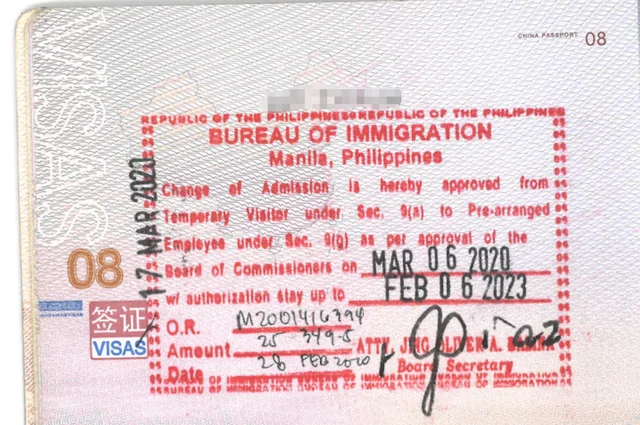
The Board of Investments endorses the applicant’s SIRV case for immigration implementation. The Bureau of Immigration then handles the relevant visa issuance, registration, and immigration documentation.
The investor may need to secure an ACR I-Card and complete other registration requirements. The applicant should also follow any reporting or compliance obligations imposed by the Board of Investments or the Bureau of Immigration.
Family Members
The SIRV may extend to the investor’s spouse and unmarried children under 21 years old, subject to the applicable requirements.
Family applications usually require proof of relationship, including marriage and birth certificates. US-issued civil documents may need apostille certification, translation where necessary, and submission in the format required by the Philippine consular post or immigration authority.
Because family members’ status is linked to the principal investor’s application, the documents should be prepared together whenever possible.
Rights And Limitations
The SIRV provides a residence pathway based on a qualifying investment, but it does not automatically grant every right available to Philippine citizens. It should not automatically be treated as a local work authorization.
An investor who wants to work for a Philippine company may need a separate work permit and employment visa. Similarly, the SIRV does not automatically confer Philippine citizenship, voting rights, or unrestricted access to regulated professions.
The visa’s central condition is the maintenance of the qualifying investment. If the investment is withdrawn or becomes non-compliant, the investor’s status may be affected.
SIRV And US Tax Planning
American applicants should consider US tax and reporting issues before remitting funds or acquiring Philippine investments. US citizens and certain US tax residents may have continuing reporting obligations even while living abroad.
The SIRV itself does not determine a person’s US tax liability, Philippine tax residence, or treatment of investment income. Those issues depend on the applicant’s personal facts, residence, income, ownership structure, and the nature of the Philippine investment.
Work Visa Philippines can assist with immigration coordination, but applicants should obtain qualified US and Philippine tax advice for tax-specific questions.
Common Mistakes
Applicants for a Philippine SIRV from the USA frequently make avoidable mistakes, including:
- Assuming the US$75,000 can be invested in any Philippine asset.
- Sending funds to a personal account without following the accredited-bank process.
- Failing to obtain apostilles for US-issued documents.
- Using outdated police clearances or medical certificates.
- Treating the probationary residence period as final approval.
- Neglecting to provide evidence that the investment was completed.
- Selling or withdrawing the investment after approval without checking the consequences.
- Assuming the SIRV automatically permits employment in the Philippines.
The best way to reduce these problems is to map the application, investment, and post-approval compliance steps before the first filing.
Final Thoughts
The Philippine SIRV from the USA offers eligible American investors a structured way to pursue residence in the Philippines through a qualifying investment of at least US$75,000. The process requires more than proof of funds: the applicant must meet the personal requirements, remit funds through the correct bank, place the capital in an approved investment, submit proof, and maintain compliance after approval.boi+2
For American investors, early planning is essential. The right investment vehicle, properly authenticated US documents, accurate bank records, and coordinated immigration filings can make the process substantially more manageable. Work Visa Philippines helps applicants understand the SIRV pathway, organize their documentation, and coordinate the steps needed to establish a lawful long-term presence in the Philippines.
Why Seek Expert Help
For Work Visa Philippines, the Philippine SIRV from the USA is an important option for American investors who want a residence strategy connected to Philippine investment rather than local employment. It can be particularly useful for clients who want to spend substantial time in the country, explore business opportunities, or build a Philippine investment portfolio.
The process requires coordination across several institutions. Applicants may need to deal with a Philippine Consulate, the Board of Investments, an accredited depository bank, the Bureau of Immigration, and US authorities responsible for document authentication. Contact us today for an initial consultation:
- Contact Us Here
- Fill Out the Form Below
- Call us at +63 (02) 8540-9623