Visa renewal in the Philippines enables foreign nationals to legally extend their authorized stay beyond initial periods, whether on tourist visas, work visas, or resident permits. The Bureau of Immigration (BI) administers all extension procedures, with distinct processes for temporary visitors (9(a)), pre-arranged employment holders (9(g)), and special resident categories. Failure to renew before expiry results in overstay penalties starting at PHP 500 per day, potential deportation, and future entry complications. Tourist visa extensions now offer convenient online processing through BI’s eServices portal, while work visa renewals require employer petitions coordinated with Alien Employment Permit (AEP) timelines.
Understanding Philippine Visa Categories and Renewal Frameworks
Different visa classifications follow distinct visa renewal rules established by the Bureau of Immigration, with varying maximum stay durations, extension increments, and procedural requirements. Understanding your specific visa category determines the appropriate renewal pathway, timeline, and documentation needs.
The primary categories include:
- Temporary Visitor Visa (9(a)): Issued to tourists, business visitors, and short-term travelers, initially valid for 30 days (visa-exempt nationals) or as stamped upon entry. Extensions available in increments of 29 days, 1 month, 2 months, or 6 months, with a cumulative maximum stay of 36 months for most nationalities.
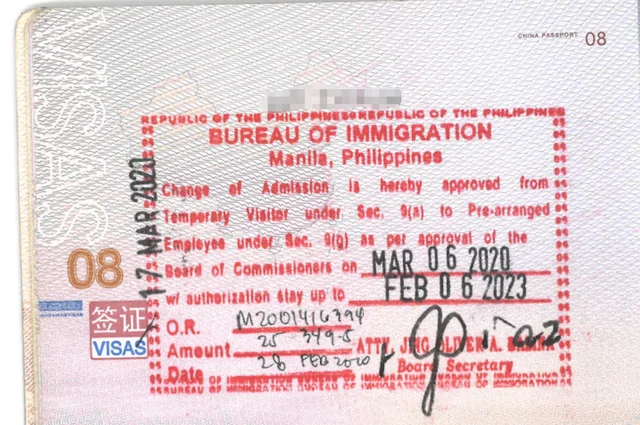
- Pre-Arranged Employment Visa (9(g)): Granted to foreign employees with approved Alien Employment Permits, valid for 1-3 years depending on employer petition. Renewals require concurrent AEP validity and employer sponsorship continuation.
- Special Resident Visas (SIRV/SRRV): Indefinite validity tied to investment or retirement requirements, with ACR I-Card renewals every 1-3 years rather than visa extensions.
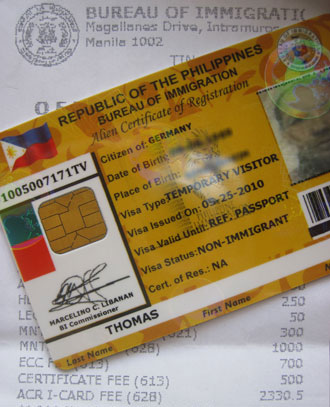
- ACR I-Card: Required for all foreign nationals staying beyond 59 days, renewed concurrently with visa extensions at intervals of 1-3 years depending on the underlying visa category.
Critical Timelines: When to File for Visa Renewal
Visa renewal timing proves essential to avoiding overstay violations, which trigger immediate penalties and potential immigration complications. The Bureau of Immigration recommends submitting extension applications 1-2 weeks before the current authorization expires, though requirements vary by visa type.
Tourist Visa (9(a)) Timeline:
- First extension (29 days): File before the initial 30-day period expires.
- Subsequent extensions (1/2/6 months): Submit before the current extension lapses.
- Maximum cumulative stay: 36 months from initial arrival date.
- Online applications: Process within 2-5 business days via BI eServices.
Work Visa (9(g)) Timeline:
- File extension petition 30 days before visa expiry.
- Ensure AEP renewal precedes or coincides with visa extension.
- Processing duration: 4-8 weeks for complete applications.
- No grace period; overstay fines begin immediately upon expiry.
ACR I-Card Renewal Timeline:
- Renew before the underlying visa expires.
- Annual reporting is required from January through March, regardless of card validity.
- Processing takes 1-2 weeks for biometrics and card printing.
Missed deadlines result in PHP 500-1,000 daily penalties plus administrative fines, potentially affecting future visa applications and entry privileges.
Tourist Visa (9(a)) Extension Procedure
Tourist visa renewal offers the most straightforward process, now available through BI’s Online Appointment and Processing System (OAPS) for many nationalities, eliminating the need for physical office visits for routine extensions. Visa-exempt nationals receive initial 30-day stays, extendable in various increments up to 36 months total.
Extension increments available:
- 29 days (first extension only)
- 1 month
- 2 months
- 6 months
Online Extension Process (via BI eServices):
- Create an account on e-services.immigration.gov.ph and complete registration verification.
- Select the “Visa Extension” service and choose desired duration.
- Upload the required documents: your passport bio-page, the latest arrival stamp, and the current visa page.
- Complete the Consolidated General Application Form (CGAF) online.
- Pay fees via authorized online payment channels (credit card, GCash, etc.).
- Receive electronic approval confirmation via email within 2-5 business days.
- Print approval notice; carry with passport for immigration verification.
In-Person Extension Process (BI offices):
- Visit the BI Main Office (Intramuros, Manila) or an authorized satellite office or mall.
- Obtain a queue number and proceed to the Temporary Visitor Extension counter.
- Submit the completed CGAF form with passport and photocopies.
- Receive Order of Payment Slip (OPS) indicating applicable fees.
- Pay at an authorized bank or cashier window; retain the Official Receipt.
- Return to the counter with OR for passport stamping.
- Collect passport with extension stamp (same day or next day pickup).
Certain nationalities face restricted maximum stays (14 days or 7 days) based on bilateral agreements; verify specific country limitations before travel.
Work Visa (9(g)) Extension Requirements and Procedure
Visa renewal for 9(g) work visa holders requires employer-initiated petitions demonstrating continued employment necessity, filed at least 30 days before the current visa expiry. Unlike tourist extensions, work visa renewals involve DOLE AEP alignment and more extensive documentation.
Prerequisite conditions:
- Valid Alien Employment Permit (AEP) covering extension period; renew the AEP first if expiring.
- Continuing employment relationship with the sponsoring employer.
- Compliance with previous visa conditions (no violations, completed understudy requirements).
- Updated employee clearances and medical certifications.
Required documentation:
- Employer petition letter addressed to the BI Commissioner requesting an extension.
- Current AEP card/approval showing validity beyond the requested visa period.
- Updated employment contract reflecting continued engagement.
- Employee passport with current 9(g) visa stamp.
- ACR I-Card (original for surrender if expired).
- Certification of foreign-to-Filipino employee ratios.
- Proof of tax compliance (BIR Form 2316 or equivalent).
- Four (4) passport photos if a biometrics update is required.
Processing procedure:
- Employers compile complete documentation packages with employee cooperation.
- Submit a petition at the BI Main Office or authorized regional office 30 days pre-expiry.
- Receive Order of Payment Slip indicating extension fees based on duration requested.
- Pay fees at authorized collecting banks; obtain Official Receipt.
- Attend scheduled hearings if required (typically for extensions beyond the initial period).
- Complete biometrics capture if the ACR I-Card requires renewal (reuses prior data when valid).
- Collect approved extension stamps and updated ACR I-Card within 2-4 weeks post-approval.
Promotions, role changes, or salary adjustments within the same employer require notification but not necessarily new visa applications; extension petitions can incorporate such changes with supporting documentation.
ACR I-Card Renewal Process and Requirements
The Alien Certificate of Registration Identity Card requires visa renewal coordination, as the ACR’s validity is directly tied to the underlying visa duration. All foreign nationals staying beyond 59 days must maintain valid ACR I-Cards, which are renewed at the BI alongside visa extensions.
Renewal triggers:
- ACR I-Card approaching expiry date (typically 1-3 years based on visa).
- Underlying visa extension approved, requiring a new card validity period.
- Change in personal information (name, civil status, address) requiring card update.
- Lost, stolen, or damaged card requiring replacement.
Required documents for renewal:
- Accomplished ACR I-Card renewal form (BI Form 2014-08-010).
- Original ACR I-Card (surrendered upon renewal).
- Passport with a valid visa implementation and photocopies of the bio-page and visa pages.
- Two (2) recent passport-sized photographs (2×2, white background).
- Official Receipt of visa extension fees if processed concurrently.
Processing steps:
- Submit renewal application to the BI Alien Registration Division.
- Present original ACR I-Card for perforation/cancellation.
- Pay renewal fees (USD 50 for 1-year, USD 100 for 2-year, USD 150 for 3-year validity).
- Proceed to the biometrics capture station to update your photo, fingerprints, and signature.
- Receive claim stub with estimated release date.
- Collect renewed ACR I-Card within 1-2 weeks; present claim stub and passport.
Annual reporting remains mandatory regardless of card validity, requiring foreign nationals to appear at BI between January 1 and March 31 each year.
Complete Fee Structure for Visa Extensions
Visa renewal fees vary significantly by visa category, extension duration, and applicant status, with all payments non-refundable regardless of application outcome. Budget appropriately based on intended stay duration.
Tourist Visa (9(a)) Extension Fees:
| Extension Duration | Approximate Fee (PHP) | Notes |
| 29 days (first) | 3,030 | Initial extension only |
| 1 month | 3,170 | Standard increment |
| 2 months | 5,410 | Combined increment |
| 6 months | 9,530 | Maximum single extension |
| Express processing | +500-1,000 | Optional expedited service |
Work Visa (9(g)) Extension Fees:
| Validity Period | Non-Top 1,000 (PHP) | Top 1,000 Corp (PHP) |
| 1 Year | 5,330 | 4,810 |
| 2 Years | 8,530 | 7,210 |
| 3 Years | 12,430 | 10,210 |
ACR I-Card Fees:
| Validity | Fee (USD) |
| 1 Year | 50 |
| 2 Years | 100 |
| 3 Years | 150 |
Additional fees may apply for late filing (overstay penalties), express processing, or special handling requests.
Overstay Penalties and Remediation
Failure to complete visa renewal before expiry triggers immediate overstay status, accumulating daily fines, and requiring additional clearances before departure or status regularization.
Penalty structure:
- Daily overstay fine: PHP 500-1,000 depending on duration.
- Administrative fine: PHP 2,000-10,000 for extended violations.
- BI Clearance Certificate: Required before departure (additional processing).
- Potential blacklisting: Extended overstays may affect future entry privileges.
- Deportation proceedings: Severe cases involving months of unauthorized stay.
Remediation process:
- Visit the BI immediately upon recognizing overstay status.
- Submit an explanation letter addressing the overstay circumstances.
- Pay accumulated fines and administrative penalties.
- Obtain BI Clearance Certificate confirming regularization.
- Complete visa extension or departure processing as appropriate.
Proactive renewal prevents these complications entirely.
Online vs. In-Person Processing Options
Modern visa renewal offers multiple channels, with BI’s digital transformation enabling online processing for many routine transactions while maintaining physical offices for complex cases.
Online processing (BI eServices) advantages:
- Available 24/7 from any location with internet access.
- Eliminates the need for travel to BI offices and reduces queue waiting times.
- Faster processing (2-5 days vs. same-day in-person).
- Digital payment options (credit cards, e-wallets).
- Email confirmations provide immediate documentation.
In-person processing benefits:
- Immediate resolution for complex cases or discrepancies.
- Same-day processing for urgent extensions.
- Direct consultation with immigration officers for questions.
- Required for certain visa categories (9(g), special visas).
- Necessary when biometrics capture or hearings apply.
Tourist extensions increasingly favor online channels, while work visa renewals typically require physical BI appearances for employer verification and hearings.
Best Practices for Seamless Visa Renewal
Strategic planning ensures visa renewal proceeds without complications, maintaining continuous legal status throughout Philippine stays.
- Calendar all visa/permit expiry dates with 30-day advance reminders.
- Compile renewal documents 2-3 weeks before the filing deadline.
- Verify AEP validity before initiating 9(g) extension (renew AEP first if needed).
- Maintain a passport validity exceeding the intended stay by 6 months or more.
- Retain copies of all approvals, receipts, and correspondence.
- Register for a BI eServices account even if not immediately needed.
- Complete annual ACR reporting in January to avoid March deadline congestion.
- Engage professional assistance for complex work visa renewals.
Key Takeaways
Visa renewal in the Philippines follows category-specific procedures administered by the Bureau of Immigration, with tourist visas offering flexible online extensions up to 36 months while work visas require employer-sponsored petitions aligned with AEP validity.
Filing 1-2 weeks before expiry prevents overstay penalties (PHP 500+ daily) and maintains continuous legal status. Fees range from PHP 3,000 for basic tourist extensions to PHP 15,000 and above for multi-year work visa renewals, with ACR I-Card updates adding USD 50-150. Work Visa Philippines delivers complete renewal management for seamless 2026 immigration compliance.
Need Comprehensive Renewal Services?
Work Visa Philippines manages all visa renewal requirements for foreign employees and long-stay visitors, handling tourist extensions, 9(g) work visa renewals, AEP coordination, and ACR I-Card processing. Our team ensures continuous legal status without gaps or compliance violations.
Contact us today for an initial consultation:
- Contact Us Here
- Fill Out the Form Below
- Call us at +63 (02) 8540-9623