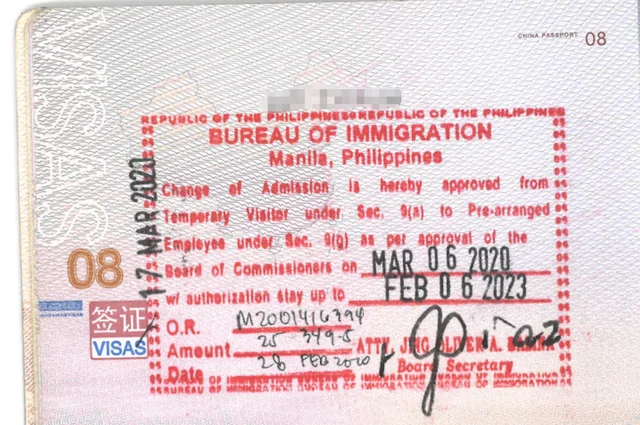
Renewing or extending your Philippine work visa—most commonly the 9(g) Pre-Arranged Employment Visa—involves coordinated renewal of the Alien Employment Permit (AEP) from the Department of Labor and Employment (DOLE) and the visa petition at the Bureau of Immigration (BI), a process that must commence at least 60 days before expiry to sidestep overstay fines of PHP 500 per day and ensure continuity for roles in high-demand fields like BPO/IT services, engineering projects, healthcare specialties, hospitality management, and corporate executive positions. Under the evolving immigration policies 2026 shaped by DOLE’s Department Order 248 and BI’s digital mandates, frequent errors such as untimely submissions, documentation inconsistencies, overlooked Understudy Training Program (UTP) reports, expired employer credentials, and failure to leverage the Online Application and Payment System (OAPS) result in rejections, processing delays of weeks or months, accumulated penalties, and even deportation proceedings for non-compliant foreign nationals.
Starting the Extension Process Too Late
The overwhelming majority of work visa extension complications arise from initiating the renewal cycle perilously close to—or after—the current AEP or visa expiration date, which cascades into overstay liabilities, frantic incomplete submissions, and heightened scrutiny from DOLE and BI evaluators already burdened by backlogs. Given the sequential nature of requirements—starting with DOLE’s labor market test (LMT) publication, followed by AEP renewal, and culminating in BI visa endorsement—delays compound exponentially, often rendering applications unviable.
Consequences of procrastination include:
- Immediate overstay fines commencing at PHP 500 per day, escalating to thousands within weeks and complicating waiver motions.
- BI operational blocks preventing extensions for those overstaying beyond six months without extraordinary justification.
- Heightened rejection likelihood due to rushed documentation riddled with clerical errors or omissions.
To circumvent this, employers and applicants should embed automated reminders in HR systems to flag expirations 90 days in advance, launching the LMT process immediately (requiring 15-30 days on PhilJobNet and PESO offices), targeting AEP submission 60 days out (15 working days processing under DO 248), and BI filing 45 days prior. Work Visa Philippines clients routinely achieve approvals with this 90-day buffer, minimizing stress and costs.
Submitting Incomplete or Inconsistent Documentation
Applicants frequently undermine their work visa extension prospects by tendering incomplete document packages or materials that diverge from the original visa grant, such as discrepancies in job descriptions, salary figures, or employment terms that trigger BI’s verification protocols and DOLE’s Economic Needs Test (ENT) red flags. This oversight not only prolongs processing but also invites outright denials, necessitating costly resubmissions or appeals.
Typical documentation pitfalls encompass:
- Employment contracts reflecting unamended changes in duties or compensation without prior DOLE notification.
- Absence of the mandatory newspaper clipping evidencing the prior AEP renewal’s publication.
- Omission of updated employer financial statements, like audited balance sheets or BIR Form 2303 withholding certificates.
A foolproof prevention checklist includes:
- Renewed AEP original with supporting LMT/ENT correspondence (plus three certified copies).
- Signed updated employment contract mirroring original terms (notarized if required).
- Valid passport demonstrating at least 6 months of remaining validity, alongside the current ACR I-Card.
- Fresh NBI clearance (valid for one year) and medical certificate from a BI-accredited Bureau of Quarantine clinic (six months validity).
Cross-verifying every item against the initial approval packet via digital checklists prevents mismatches, a practice our team enforces for 100% first-pass success rates.
Overlooking Essential DOLE AEP Renewal Obligations
Since the AEP underpins every 9(g) work visa extension, neglecting its annual renewal—or submitting without fulfilling DOLE’s updated LMT/ENT protocols per Department Order 248—creates an insurmountable barrier, as BI mandates a current AEP for all petitions. This mistake disproportionately affects employers unfamiliar with the 2026 refinements.
Prevalent errors:
- Bypassing the required 15-30 day job vacancy postings on PhilJobNet, PESO, and local employment offices.
- Failing to attach UTP quarterly progress reports for applicable large enterprises or sectors.
- Using outdated exemption certificates, which now require explicit DOLE re-issuance.
Structured renewal sequence:
- Employers publish LMT vacancy postings 30 days minimum prior to AEP filing.
- Compile an ENT justification letter detailing persistent local skill shortages, backed by industry data.
- Lodge AEP renewal application (PHP 9,000-11,000 fee) targeting 15-working-day turnaround.
- Retain DOLE approval and publication clipping for BI submission.
Delegating to specialized HR or consultants ensures DOLE alignment from inception.
Disregarding Understudy Training Program Documentation
For work visa extension involving UTP-mandated positions, insufficient evidence of skills transfer to Filipino understudies—now rigorously audited under DOLE’s enhanced guidelines—leads to AEP refusals and stalled visa renewals, reflecting the policy’s emphasis on sustainable local workforce development. Many overlook the depth of reporting required.
Oversights include:
- Absence of designated understudy profiles or comprehensive training logs.
- Incomplete quarterly submissions detailing hours trained, modules covered, and competency assessments.
- Underfunding programs, resulting in unverifiable outcomes.
Effective countermeasures:
- Develop and maintain meticulous UTP dossiers with timelines, curricula, attendance sheets, and certification proofs.
- Demonstrate understudy progression toward role independence, such as internal promotions.
- Allocate dedicated budgets (PHP 50,000-200,000 per trainee) and integrate into annual compliance calendars.
Proactive UTP management not only secures extensions but also enhances employer reputation with DOLE.
Neglecting Employer Corporate Credential Updates
Expired or lapsed corporate documents from the sponsoring entity—ranging from SEC General Information Sheets (GIS) to mayor’s business permits—erode the foundation of any work visa extension petition, as BI assesses the employer’s ongoing viability and compliance posture. Annual renewals often slip through cracks.
Critical lapses:
- GIS filings exceeding six months outdated.
- Missing the latest Income Tax Returns (ITR) or BIR registration proofs.
- Violations of the 1:5 Filipino-to-foreign employee ratio threshold.
Verification essentials:
- Current SEC/DTI Certificate of Registration and latest GIS (within six months).
- Valid mayor’s permit, BIR Certificate of Registration (2303), and barangay clearance.
- Sworn certification of current workforce composition affirming ratio compliance.
Conducting pre-renewal corporate audits 30 days ahead mitigates this entirely.
Failing to Leverage BI’s Digital OAPS Platform
Ignoring the mandatory Online Application and Payment System (OAPS) under 2026 immigration policies—or mishandling digital submissions—results in immediate rejections or protracted delays for work visa extension, as manual processes are obsolete and portal errors go unchecked without status tracking.
Common digital missteps:
- Attempting paper-only lodgments, now prohibited for 9(g) renewals.
- Payment failures using non-integrated methods.
- Unmonitored queues leading to missed deadlines or additional requirements.
Optimization strategies:
- Complete OAPS pre-registration and upload all docs in the prescribed formats.
- Utilize approved gateways like GCash, Maya, credit cards, or Landbank for instantaneous payments.
- Daily portal checks for notices, reducing BI inquiries by 70%.
OAPS mastery halves processing times.
Skipping Personal Clearances and Medical Renewals
Outdated personal clearances undermine work visa extension validity, with BI rejecting petitions lacking current NBI reports (one-year validity) or medical certificates from accredited clinics (six months), often due to procrastination or using unauthorized providers.
Avoidable errors:
- Non-BI Quarantine-approved medical facilities.
- Delays in securing embassy/police clearances for non-Philippine NBI equivalents.
Renewal protocol:
- Schedule medical at PNP Health Service or BI panels (PHP 2,000-5,000).
- Obtain NBI via online appointment or e-Clearance.
- Include BI Movement Clearance if >12 months since last.
Allocate 2-4 weeks; renew proactively.
Common Mistakes and Pro Tips for Success
Work visa extension journeys falter on procedural and preparatory lapses, yet a structured approach fortified by checklists and foresight yields near-certain approvals. This section distills pitfalls into bullets with targeted remedies for quick reference and implementation.
Critical mistakes to evade:
- Procrastination starts risking overstay (PHP 500/day).
- Documentation inconsistencies (job/salary mismatches).
- AEP/UTP renewal oversights.
- Lapsed employer corporate docs.
- OAPS/digital platform neglect.
- Stale medical/NBI clearances.
Proven tips for flawless execution:
- Initiate 90-day countdown: Day 90 LMT, Day 60 AEP, and Day 45 BI.
- Conduct bi-weekly doc audits against the original packet.
- Engage BI/DOLE-accredited agents for impartial reviews.
- Harness OAPS tracking religiously for proactive responses.
- Secure tourist-style extensions as interim buffers if timelines slip.
Post-Extension Obligations and Long-Term Maintenance
Securing approval for a work visa extension triggers immediate compliance requirements to prevent future hurdles: updating the ACR I-Card, registering changes with SSS/Pag-IBIG/BIR, and advancing UTP milestones. Annual cycles repeat, demanding vigilance.
Essential follow-ups:
- Apply for an updated ACR I-Card within 30 days (USD 50 fee).
- Complete BI Annual Report (Jan 1-Mar 1 annually).
- Notify DOLE/BI of any contract/job changes promptly.
Sustained diligence preserves status.
Key Takeaways
Sidestepping late filings, doc errors, AEP/UTP lapses, corporate oversights, and digital skips guarantees work visa extension success, averting PHP 500/day penalties amid 2026 policy rigor for enduring BPO/IT/engineering tenures. Thorough 90-day orchestration with checklists triumphs.
Is Assistance Available?
Yes. Work Visa Philippines prevents pitfalls and assists in full AEP/BI renewals, doc audits, and UTP compliance. Reach out today to book a consultation:
- Contact Us Here
- Fill Out the Form Below
- Call us at +63 (02) 8540-9623