For foreign nationals planning to work, invest, or live long term in the Philippines, the first question is almost always: “What are the visa requirements for foreigners?” Unlike many countries with a single work visa stream, the Philippines uses a layered system that ties immigration status to purpose—whether you are coming as an employee, investor, refugee, or dependent.
Understanding these visa requirements is not optional; it is the foundation of any legal stay. Incorrect classification, missing documents, or a mismatch between visa type and activity can lead to refusal, fines, or even future entry bans. For workvisaphilippines.com, the goal is to explain these rules in plain terms so job seekers, employers, and investors can choose the right path from the start.
Visa-Free Entry and Basic Entry Rules
Before diving into work visas, it helps to see where “visa requirements for foreigners” begin at the border. Many countries’ citizens can enter the Philippines without a prior visa for short stays, while others must obtain a visa at a Philippine embassy or consulate before departure.
Nationals of most ASEAN countries, plus several other states, may enter visa‑free for up to 14-30 days, depending on the agreement. Even for these travelers, basic visa‑like conditions still apply: a passport valid for at least six months, a confirmed return or onward ticket, and proof of sufficient funds. These entry conditions are the first practical expression of the visa requirements for foreigners; they determine whether you can legally land in the country, even if you are not applying for a long‑term visa yet.
Temporary Visitor Visa (9(a)): First Entry Point
For many foreigners, the 9(a) Temporary Visitor’s Visa is the first “visa” they encounter, even if their main goal is work or business. The 9(a) covers short‑term stays for tourism, business meetings, training, conferences, and related activities, but it is not a work authorization.
The typical visa requirements for foreigners applying for a 9(a) include:
- A passport valid for at least six months beyond the intended stay.
- A completed non‑immigrant visa application form.
- A return or onward ticket.
- Proof of purpose (e.g., tourism, business, or an invitation letter for a conference or training).
For business‑oriented activity, applicants may need an invitation letter from a Philippine company or recognition from a local chamber of commerce, plus proof of income or business operations abroad. These documents are not optional; they show consular officers that the visit is temporary and does not substitute for a proper work visa.
The 9(g) Work Visa and Alien Employment Permit
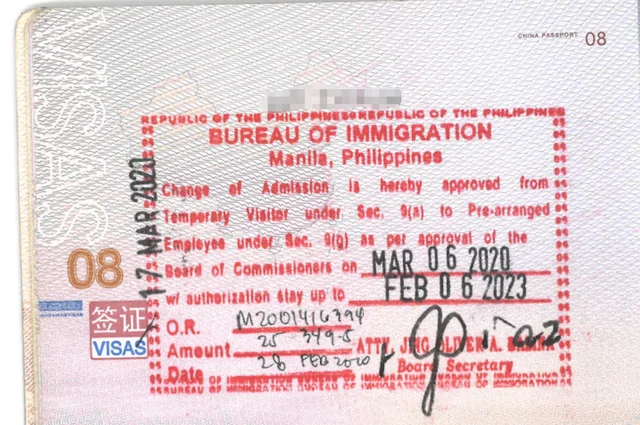
When the plan is to actually work in the Philippines, the core visa requirement shifts from the 9(a) to the 9(g) Pre‑Arranged Employment Visa, supported by an Alien Employment Permit (AEP) from DOLE. This two‑step system is the standard expression of visa requirements for foreigners who want to be employed by a Philippine‑based company.
An AEP is DOLE’s approval that the foreign national may be hired for a specific role, salary, and duration, and that no qualified Filipino worker is available or being displaced. The 9(g) is then the Bureau of Immigration’s authorization that allows the foreigner to enter or stay in the Philippines under that employment contract. Because the two are linked, skipping the AEP or trying to “work on a tourist visa” is a common compliance mistake.
Typical Documents for a 9(g) Work Visa
The visa requirements for foreigners under the 9(g) route are detailed and must be prepared by both the employer and the employee. Under the current 2026 framework, with DOLE Department Order 248‑era rules, many of these documents are now standard rather than optional.
From the foreign employee’s side, usual requirements include:
- A valid passport (usually at least six months beyond the permit’s validity).
- A completed 9(g) application form and supporting personal data information.
- A signed employment contract stating position, salary, and duration.
- Proof of qualifications (diplomas, certificates, professional licenses).
- A clear medical examination and, in some cases, NBI or police clearance.
From the employer, common requirements are:
- SEC registration or DTI registration, depending on business type.
- Mayor’s permit and other local business permits.
- Articles of Incorporation and proof of paid‑up capital or adequate financial capacity.
- Proof of the AEP approval and, under 2026 rules, evidence of the Labor Market Test and Economic Needs Test (ENT).
These documents are what the Bureau of Immigration actually checks when assessing visa requirements for foreigners; missing or inconsistent paperwork is one of the top reasons for delays or denials.
Other Common Work-Related Visas
Not every foreign worker fits the standard 9(g) model, so the Philippines has several other visa categories that still fall under the broader umbrella of visa requirements for foreigners.
- Special Investors Resident Visa (SIRV): For foreign nationals who commit significant capital to national‑priority projects, this visa offers long‑term residency and a more flexible framework, though it still requires proof of investment, compliance with capital requirements, and security checks.
- Treaty Trader/Treaty Investor (9(d)): Nationals of countries with treaty arrangements may qualify under preferential rules, but they must still meet capital and business‑operation tests.
- Special Resident Retiree’s Visa (SRRV): For retirees with a proven income or pension, this visa is attractive for long‑term residence, but it does not authorize regular employment unless the retiree meets specific additional conditions.
Each of these routes has its own visa requirements for foreigners, but they all share the same core: proof of identity, financial capacity, a legitimate reason for staying, and compliance with sector‑specific rules.
Compliance and Renewal Rules
Visa requirements for foreigners do not end once the visa is approved. The Philippines expects holders to maintain the conditions under which the visa was granted. For a 9(g) worker, this means staying with the approved employer, performing the approved role, and earning at least the stated salary.
Renewals also follow structured requirements. Typical needs include:
- An updated employment contract or letter of intent.
- Updated AEP or renewal approval from DOLE.
- Proof of continued employment and compliance with past tax and social‑security filings.
- Updated medical exam and passport validity.
Changing employers, roles, or industries often requires not just a renewal but a new AEP and a fresh 9(g) petition, because the visa is tied to both the person and the specific employment arrangement. For companies and employees, this means that “visa requirements for foreigners” are not static; they evolve with the person’s job and residence plans.
What Happens When Visa Rules Are Not Followed
Understanding what not to do is just as important as understanding the visa requirements for foreigners. Common mistakes include: using a 9(a) tourist or business visa for paid work, overstaying without a proper extension, or failing to report changes in employment or address. These errors can lead to administrative penalties, ECC‑B blocks, or eventual repatriation.
In practice, authorities may:
- Impose fines and require overstaying clearance.
- Block future visa applications or extensions until the matter is resolved.
- In serious cases, issue entry bans or repatriate the foreign national.
These outcomes are why employers and employees must treat visa requirements as part of their ongoing compliance plan, not just a one‑time hurdle.
How Work Visa Philippines Can Help
For foreigners and Philippine companies navigating visa requirements for foreigners, the worst mistake is to assume “if it worked for someone else, it will work for me.” Every nationality, job role, and company structure can affect which visa is available and how the requirements are interpreted.
Work Visa Philippines helps match your situation to the right visa category, from the first 9(a) application to a full 9(g) work visa, investment‑based route, or long‑term residency option. Our focus is on aligning your business plan with immigration rules, so your stay remains legal, predictable, and hassle‑free.
- Contact Us Here
- Fill Out the Form Below
- Call us at +63 (02) 8540-9623