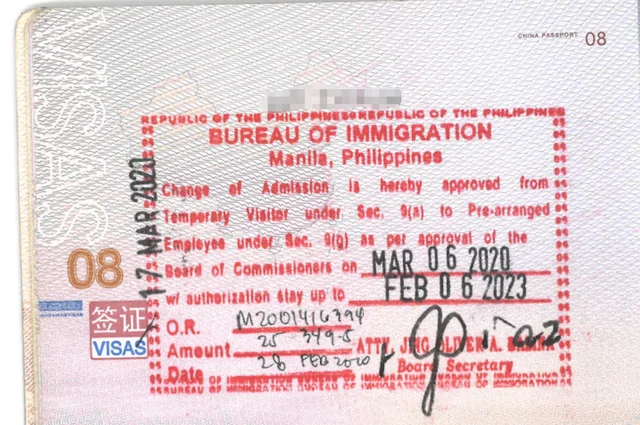
The Special Visa for Employment Generation (SVEG) is a long‑stay visa in the Philippines designed for foreign nationals who start a business and create jobs for Filipinos. For workvisaphilippines.com, the core idea is that employment generation is not just a business strategy; it is also a legal pathway that can grant a foreign entrepreneur multiple‑entry privileges and long‑term residence linked to job creation.
This visa is ideal for expats who want to live in the Philippines by building a real, lawful enterprise that employs regular Filipino workers, rather than relying on casual or short‑term setups. Understanding the rules, eligibility, and documentation from the start makes it easier to turn employment generation into a stable visa outcome.
How the SVEG Promotes Employment Generation
The SVEG is built on the principle that foreign investment should help local employment, not just benefit the investor. The visa is granted to qualified non‑immigrant foreigners who actually employ at least 10 full‑time Filipino workers in a lawful, sustainable enterprise, trade, or industry.
This requirement serves two purposes. First, it creates a measurable threshold of job creation that must be maintained to keep the visa valid. Second, it ties the foreigner’s stay to a real business presence, reducing the risk that the visa is used as a backdoor for long‑term tourism or undocumented work.
For employers, this means the visa is not just a personal benefit; it is a shared responsibility to run a compliant business, pay proper taxes, and maintain at least 10 Filipino employees on a regular basis.
Who Can Apply for SVEG
The SVEG is open to qualified non‑immigrant foreign nationals who own, manage, or operate a business in the Philippines that meets the employment‑generation test. The applicant must be a foreign national legally in the country, running a lawful enterprise, and directly employing at least 10 regular Filipino workers under a legitimate employment contract.
The visa is typically issued after the Bureau of Immigration (BI) receives approval from the Department of Labor and Employment (DOLE), which verifies the employment figures and conditions. This dual‑agency check means the case must show real, documented jobs, not just a theoretical headcount.
In practice, the SVEG fits well with foreign‑owned corporations, service companies, and export‑oriented or domestic‑market businesses that already have a Filipino workforce and solid payroll records.
Employment Generation and Visa Requirements
The central requirement for the SVEG is employment generation of at least 10 full‑time Filipino employees in a lawful and sustainable enterprise. This is not a one‑time snapshot; the applicant must be able to demonstrate ongoing employment that can be verified by DOLE and BI.
To qualify, the business must:
- Be legally registered with the proper authorities (e.g., SEC, DTI, or local government).
- Maintain regular employment records, including payroll, SSS, PhilHealth, and Pag‑IBIG reports for the Filipino staff.
- Show that the foreign applicant has management authority, including hiring and dismissing employees and overseeing operations.
- Prove that the enterprise is viable and sustainable, not a short‑term or temporary setup.
These conditions are what make the SVEG a visa tied to real employment generation, not just a number on paper.
Typical Documents Needed
To apply for the SVEG, a foreign national must submit a full set of documents that prove identity, business legitimacy, and employment records. The exact list may vary slightly by office and by updates to BI and DOJ guidelines, but the core elements are consistent across recent practice guides.
Commonly requested documents include:
- A valid passport and recent admission and visa history.
- The BI Consolidated General Application Form (CGAF) for SVEG conversion or application.
- A notarized letter of request addressed to the BI Commissioner stating the intent to generate employment and the business details.
- Business registration documents (e.g., Articles of Incorporation, SEC/DTI registration, BIR registration).
- Alien Employment Permit (AEP) and proof of hiring at least 10 Filipino employees, often in the form of a certification from the company.
- Payroll and tax records, including proof of SSS, PhilHealth, and Pag‑IBIG compliance for the Filipino workers.
- Valid medical certificate and clearances from the Bureau of Immigration and the National Intelligence Coordinating Agency (NICA).
These documents are what the immigration and labor agencies check when assessing whether the applicant truly meets the employment‑generation standard. Any gaps or inconsistencies can delay approval or trigger a request for additional proof.
Application Process and Timeline
The SVEG application process is more structured than many other visa conversions, which is why many employers and foreign nationals prefer professional support. The process is generally handled at the BI Main Office, although some preparatory steps can be done through local BI satellite offices or authorized assistance units.
A typical process includes:
- Securing the CGAF and checklist from the BI Public Information and Assistance Unit (PIAU) or the official BI website.
- Preparing and organizing all required documents, including company records and employment certifications, then submitting them for pre‑screening to the Central Receiving Unit (CRU) or other frontline officers.
- Receiving an Order of Payment Slip (OPS), paying the regulatory fees, and submitting the official receipt.
- Attending a scheduled hearing where the BI reviews the evidence and may ask for clarification.
- If the application is approved, reporting to the Alien Registration Division (ARD) for image and fingerprint capture, claiming the Alien Certificate of Registration (ACR) I‑Card and Identification Certification (IC), then submitting the passport for visa stamping.
Under the SVEG guidelines, BI has around 15 days from filing to resolve the application, assuming the documents are complete and the case meets the requirements. This relatively short review window makes it even more important to submit a clean, well‑organized file from the start.
Why Employment Generation Must Be Real
Because the SVEG is explicitly tied to employment generation, BI and DOLE pay close attention to whether the Filipino employees are genuine, active workers, not just nominal entries in a payroll sheet.
Authorities may conduct inspections or request detailed proof, such as:
- Employee contracts and IDS clearance for job seekers.
- Attendance or time‑keeping records, if applicable.
- Proof of regular salary payments and tax withholding.
If the visa holder is no longer employed by at least 10 Filipino workers, the SVEG status can be questioned or revoked, and the foreign national may need to revert to a different visa or leave the country. This is why employment generation must be treated as an ongoing requirement, not a one‑time hurdle.
Key Takeaways
For foreign nationals who want to live in the Philippines by building a real business that supports local jobs, the SVEG offers a structured, long‑term pathway linked to employment generation. By meeting the requirement of at least 10 full‑time Filipino employees in a lawful, sustainable enterprise, the applicant can obtain a special non‑immigrant visa with multiple‑entry rights and extended stay conditions.
The key is to treat the visa not as a shortcut, but as a reward for real, compliant job creation that the business can maintain over time.
How Can Work Visa Philippines Assist?
For workvisaphilippines.com, the SVEG is a powerful example of how immigration status and employment strategy can reinforce each other. A foreigner who wants to live and work in the Philippines can build a long‑term visa case around creating real, documented jobs for Filipinos, rather than trying to stretch a short‑stay visa indefinitely.
This is especially useful for:
- Foreign entrepreneurs who already own or intend to own a Philippine corporation.
- Business owners who want multiple‑entry privileges and a stable, long‑term status in the country.
- Expats who want to avoid the hassle of frequent visa renewals by tying their stay to a sustainable business with local employees.
Our team helps foreign nationals plan the SVEG route from the corporate stage: registering the business, hiring Filipino staff correctly, and preparing the visa application so that employment generation is clear, documented, and compliant. Reach out to us for assistance:
- Contact Us Here
- Fill Out the Form Below
- Call us at +63 (02) 8540-9623