For expats and employers, understanding visas in the Philippines is the first step to a legal, stable stay, whether for work, study, investment, or long‑term residence. The Philippines does not have a single “tourist visa” or “expat visa”; instead, it uses a layered system under Commonwealth Act No. 613 and the Bureau of Immigration (BI), with distinct categories for visitors, workers, investors, families, and permanent residents.
For workvisaphilippines.com, the key takeaway is this: every foreigner must match their activity to the correct visa category, and employers must know which visas support paid employment versus short‑term or non‑work stays. A mismatch between visa type and behavior is one of the main triggers for fines, overstays, or future entry problems.
How the Philippine Visa System Is Structured
Philippine visas are broadly divided into section 9 (non‑immigrant) and section 13 (immigrant) categories, following the Immigration Act. Non‑immigrant visas are for temporary stays such as tourism, business visits, study, and work, while immigrant visas are for those seeking permanent residence in the Philippines.
Under the non‑immigrant umbrella, common types include the 9(a) Temporary Visitor Visa, 9(g) Pre‑Arranged Employment Visa, 9(d) Treaty Trader or Investor Visa, 9(f) Student Visa, and various special‑purpose visas such as those for officials, seafarers, or special employment cases. Immigrant visas cover quota and non‑quota categories, including family‑based routes and certain skilled‑immigrant tracks.
This structure means that “visas in the Philippines” are not interchangeable; a tourist class 9(a) cannot legally substitute for a work‑linked 9(g), and a retirement or investor visa has its own rules even if the holder also works part‑time under specific conditions.
Visitor Visas and Short Stays
For many expats, the starting point is the 9(a) Temporary Visitor Visa, which covers visits for tourism, business, medical treatment, training, conferences, and similar purposes. Depending on nationality and consular policy, visitors may enter visa‑free for limited periods or apply for an eVisa or embassy‑issued 9(a) before arrival.
Basic requirements for a 9(a)‑type entry include:
- A passport valid for at least six months beyond the intended stay.
- A completed visa or eVisa application form.
- A return or onward ticket.
- Proof of purpose (e.g., tourism, business invitation, or hotel booking) and financial capacity to support the stay.
It is important to remember that a visitor visa does not authorize employment or active local work, even if the traveler is paid by a foreign employer. Many expats misunderstand this, treating a business visitor 9(a) as a de facto work authorization, which can later lead to problems with BI and DOLE.
Work Visas and Employment
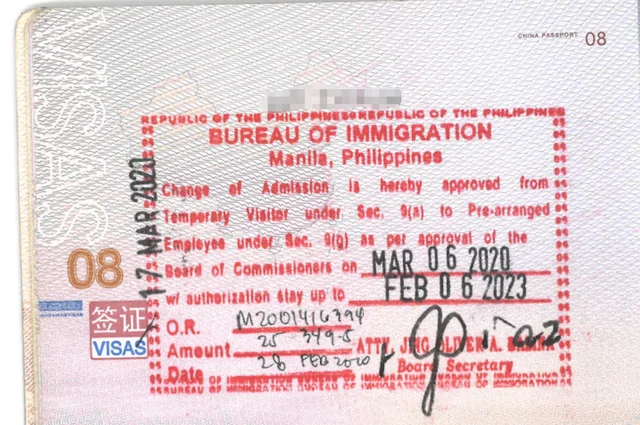
For expats who plan to work in the Philippines, visas in the Philippines must be tied to a formal employment process. The standard route for foreign workers is the 9(g) Pre‑Arranged Employment Visa, supported by an Alien Employment Permit (AEP) from the Department of Labor and Employment (DOLE).
An AEP is DOLE’s approval that a foreign national can be hired for a specific role, salary, and term, and that the hire will not displace a qualified Filipino worker. The 9(g) is BI’s authorization that allows the foreigner to reside and work in the Philippines for the duration of the contract, typically 1, 2, or 3 years depending on the agreement.
Other work‑linked visas and permits include:
- Special Work Permit (SWP): for short‑term or limited‑scope paid work, often for foreign contractors or project staff.
- Provisional Work Permit: for situations where the AEP is pending or being processed under specific transitional rules.
- Special non-immigrant visas under E.O. 226 and related programs: for certain offshore, export‑oriented, or priority‑industry roles.
These options show that “work visas” in the Philippines are not a single category; they come in different forms depending on the nature, duration, and sponsorship of the employment.
Long-Stay and Residency Visas
Beyond short‑term visas, the Philippines offers several pathways for expats who want to stay longer or live permanently, which are also part of the broader “visas in the Philippines” framework. These are usually immigrant or special‑resident‑type visas rather than simple tourist extensions.
Common long‑stay options include:
- Special Resident Retiree’s Visa (SRRV): long‑term, multiple‑entry residency for retirees who meet age and deposit or income requirements.
- Special Investor’s Resident Visa (SIRV): for foreign nationals who invest in national‑priority projects or sectors under specific investment thresholds.
- Special Visa for Employment Generation (SVEG): for foreign entrepreneurs who create and sustain at least 10 full‑time Filipino jobs.
- Quota and non-quota immigrant visas (section 13): for permanent residency through family ties, employment, or special quota categories.
Each of these long‑stay pathways has its own eligibility tests, financial or employment requirements, and conditions regarding work authorization and extensions.
Visa-Free Entry and eVisa Options
Many foreign nationals can enter the Philippines visa‑free for short tourism or business stays, but this is a privilege, not a guarantee of long‑term stay or work rights. The number of eligible countries and the allowed stay length (often 14-30 days) vary, and some nationality‑based rules may change over time.
The Philippines also operates an eVisa system that allows eligible applicants to apply online for certain non‑immigrant visas, including 9(a)‑type visas, before arrival. The eVisa stream is designed to reduce airport queues and paperwork, but it does not remove the need for correct passport validity, return tickets, and proof of purpose.
More importantly, eVisas are generally not convertible to other visa types, nor are they automatically extendable, which is why expats who intend to work or stay longer must start the correct visa route before the visitor period ends.
Practical Steps for Expats and Employers
For expats and employers, the best way to deal with visas in the Philippines is to map the visa category to the real activity from day one. A short‑term business trip fits a 9(a) or visa‑free entry; a regular job requires a 9(g) and AEP; long‑term residence usually calls for an immigrant or special resident visa.
Helpful steps include:
- Confirming whether the applicant’s nationality is visa‑free, eVisa‑eligible, or requires a full consular visa.
- Clarifying the purpose of stay (tourism, business visitor, employee, investor, retiree, student) and aligning it with the matching BI‑registered visa category.
- Planning for work visa timelines early, especially since DOLE’s AEP and BI’s 9(g) processes can take weeks and may be slower under 2026 rules.
- Keeping passports valid for at least six months beyond the intended stay and having adequate return or onward tickets and proof of funds.
For employers, this also means treating the visa process as part of the onboarding workflow, not an afterthought after the hire has already landed.
Key Takeaways
For anyone planning to come to the Philippines, the first question should be: “What is the correct visa for my real activity?” rather than “Can I just enter on a tourist visa?” The Philippine system is flexible, but it is also strict about separating visit, work, study, investment, and permanent residence purposes into different visa categories.
A clear understanding of the 9(a), 9(g), AEP, SRRV, SIRV, and SVEG routes lets employers and individuals choose a pathway that is compliant, sustainable, and aligned with career and business goals.
Is Assistance Available?
Yes. Work Visa Philippines helps expats and employers navigate these options, from the first 9(a) business visit to the full 9(g) work‑visa and long‑term residency planning, so the focus can be on building a life and career in the country, not on correcting immigration mistakes.
Our team of experts helps expats and employers choose and prepare the right visas in the Philippines so the entire stay remains lawful from entry to extension. Schedule a consultation today:
- Contact Us Here
- Fill Out the Form Below
- Call us at +63 (02) 8540-9623