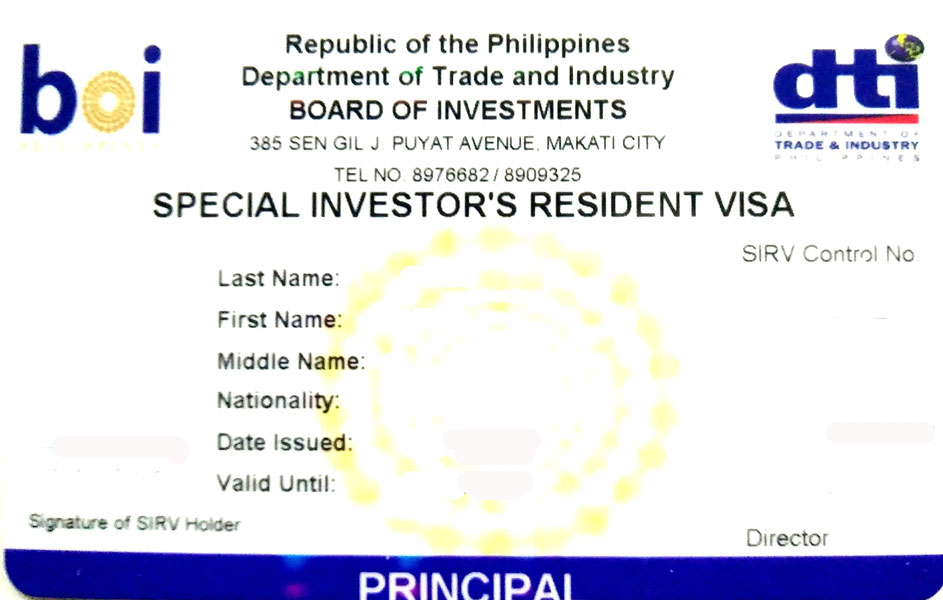
The Special Investor’s Resident Visa (SIRV) is a Philippine residence option for foreign nationals who are willing and able to make and maintain a qualifying investment in the country. It is designed to encourage foreign capital in viable Philippine enterprises and economic activities, while giving the investor a lawful basis to reside in the Philippines.
The SIRV is particularly relevant for foreign entrepreneurs, investors, executives, and families looking for a long-term residence pathway based on investment rather than ordinary employment. The program is not a tourist visa, and it is not simply a way to hold money in a Philippine bank. The applicant must meet personal eligibility rules, remit the required funds through the proper channel, place the funds in a qualifying investment, and maintain compliance after approval.
What The Special Investor’s Resident Visa Is
The Special Investor’s Resident Visa is a special resident visa granted to foreign investors who satisfy the investment and personal eligibility conditions established under the Philippine investment framework. The program is connected to Book V of the Omnibus Investments Code, or Executive Order No. 226, as amended, and is administered through the Board of Investments in coordination with the Department of Foreign Affairs and Bureau of Immigration.
The SIRV provides a residence pathway for a foreign national whose presence in the Philippines is supported by a qualifying investment. It may be suitable for an investor who wants to establish a business presence, hold qualifying corporate shares, participate in an approved enterprise, or relocate with family while maintaining investment in the country.
Why Foreign Investors Consider the SIRV
Foreign investors consider the SIRV because it can provide more stability than repeatedly extending visitor status. A visitor visa allows temporary entry, but it does not create an investment-based residence framework. A 9(g) work visa, on the other hand, is tied to a specific Philippine employer and employment role.
The SIRV is different because its basis is investment. The investor can seek residence while maintaining eligible capital in the Philippines. This can be useful for entrepreneurs who are building a local operation, investors who want a long-term presence, and individuals who prefer an investment-linked route rather than an employer-sponsored immigration status.
Who Can Apply
A foreign national may apply for the Special Investor’s Resident Visa if they satisfy the personal and financial requirements. The applicant must generally be at least 21 years old, must not have been convicted of a crime involving moral turpitude, must not have been institutionalized for a mental disease or disability, and must be free from loathsome, dangerous, or contagious diseases.
The applicant must also be willing and able to invest at least US$75,000 in the Philippines. This is a central requirement of the program and must be supported by bank, remittance, and investment documentation.
The SIRV is intended for qualifying foreign investors. A person should not apply simply because they want a long-term stay; there must be a genuine ability and intention to make the required qualifying investment.
The US$75,000 Investment Requirement
The standard investment requirement for the Special Investor’s Resident Visa is at least US$75,000. The investor must remit the funds into the Philippines and invest the capital in viable economic activities in accordance with the program’s rules.
The amount should not be treated as a fee paid to the government. Investment capital must be placed in the appropriate investment structure. The investor must keep documentary evidence of the source of the money, its remittance into the Philippines, its deposit through an accredited bank, and its eventual use in an eligible investment.
The capital should be planned before the visa is filed. An investor who transfers money without understanding the approved investment options may encounter avoidable delays or be unable to use the funds for the intended SIRV application.
Eligible Investments
The SIRV program is designed to promote investment in viable Philippine economic activities. Qualifying investments are generally linked to approved business activities, shares in Philippine corporations, or other instruments accepted under the applicable Board of Investments rules.
The investor should confirm whether the proposed placement is eligible before moving funds. The program does not mean that every Philippine asset is acceptable. Personal expenses, ordinary bank deposits, and many forms of personal property do not automatically qualify as SIRV investments.
A foreign investor may need to show that the target company, enterprise, or activity is properly registered, legally operating, and within a category recognized by the SIRV program.
Qualifying Businesses and Corporate Shares
A common SIRV approach is investment in shares of stock of a Philippine corporation. The corporation may need to be engaged in a viable economic activity and meet the program’s eligibility requirements.
The investor should review the company’s corporate registration, business permits, ownership structure, financial condition, and authorized business purpose. If the company is subject to foreign ownership limits, the SIRV investment must still comply with the Constitution, the Foreign Investments Act, the Foreign Investment Negative List, and sector-specific laws.
The SIRV does not override foreign ownership restrictions. An investor cannot use the visa program to acquire ownership that Philippine law otherwise prohibits.
The Probationary SIRV Stage
The SIRV process normally begins with a probationary visa. After initial review, the Board of Investments may endorse the issuance of a probationary multiple-entry visa valid for six months.
This probationary period gives the investor time to complete the required investment after funds have been remitted into the Philippines. It should not be treated as final, permanent approval. The investor must use the period to place the funds in an eligible investment and submit proof to the Board of Investments.
The applicant generally has 180 days from the date of remittance to make the investment, report the investment to BOI, and complete the required registration and reporting steps.
Applying from Abroad or in the Philippines
An applicant may begin the SIRV process through a Philippine Embassy or Consulate abroad, or may apply through the Board of Investments in Manila if already lawfully present in the Philippines.
Applicants filing through a Philippine Foreign Service Post should expect the Embassy or Consulate to receive the documents, conduct an initial review, and transmit the case to the relevant government office in Manila for evaluation. The Embassy or Consulate then issues the visa after approval from the Philippine authorities.
Applicants already in the Philippines should maintain valid immigration status while the application is pending. An investor should not allow visitor status to expire simply because an SIRV application has been started.
Step One: Conduct Eligibility Review
The first step is confirming eligibility before documents are collected or funds are transferred. The investor should assess age, nationality, criminal history, medical eligibility, immigration history, source of funds, investment goals, and proposed Philippine investment.
This early review is important because an investment that does not qualify for SIRV purposes may not support the application. It is more efficient to confirm eligibility and structure the investment properly before opening accounts or signing corporate documents.
Step Two: Prepare the Application Forms
The applicant must complete the prescribed SIRV forms. The Board of Investments checklist refers to a completed and duly notarized application form with recent identification photographs and a Personal History Statement Form from the National Intelligence Coordinating Agency, including dependents aged 14 and above.
The forms must be accurate and consistent with the passport, civil records, police certificate, medical records, bank documents, and corporate investment documents.
Applicants should not leave questions unanswered or provide conflicting information about prior residences, employment history, dependents, or financial activity.
Step Three: Gather Personal Documents
The investor must prepare documents establishing identity, health, character, and family status. The specific requirements can vary, but common documents include:
- Valid passport with sufficient remaining validity.
- Completed and notarized visa application form.
- Recent passport-size photographs.
- Personal History Statement Form.
- Police clearance from the applicant’s country of residence.
- Medical certificate and required laboratory or X-ray results.
- Birth certificate, if required.
- Marriage certificate for a spouse applicant.
- Birth certificates for dependent children.
- Deed of Undertaking for the principal investor.
Documents issued outside the Philippines may need apostille certification or other authentication. Applicants should verify the document treatment required by the filing post or the Board of Investments.
Step Four: Remit the Investment Funds
The investor must remit at least US$75,000 into the Philippines through the prescribed financial channels. Public SIRV guidance identifies BOI-accredited depository banks, including the Land Bank of the Philippines and the Development Bank of the Philippines, as part of the process.
The funds are generally placed in a peso time deposit during the probationary stage. The investor must keep the remittance records, bank certification, deposit documents, and source of funds evidence.
The bank documentation is critical. It is not enough to show that money arrived in the Philippines; the investor must show that the money was remitted and held through the correct process for SIRV purposes.
Step Five: Secure the Probationary Visa
After the application is evaluated, the Board of Investments may endorse the issuance of a probationary multiple-entry SIRV. The probationary visa is usually valid for six months.
This stage allows the investor to enter or remain in the Philippines while completing the qualifying investment. The investor should use the period carefully, because the final SIRV depends on meeting the investment requirement within the permitted timeframe.
The probationary visa does not remove the need to follow other Philippine laws, including company registration, tax registration, foreign ownership restrictions, and immigration reporting rules.
Step Six: Make the Eligible Investment
During the probationary period, the investor must place the remitted funds into a qualifying Philippine investment. This may involve subscribing to shares in a Philippine corporation, investing in a BOI-registered enterprise, or using another approved investment channel.
The investment should be supported by formal records. Depending on the structure, these may include subscription agreements, board resolutions, stock certificates, SEC records, proof of payment, audited financial statements, broker confirmations, or BOI certificates.
The investment must be real, traceable, and compliant with the program requirements.
Step Seven: Report the Investment to BOI
Once the investment is completed, the investor must report it to the Board of Investments. The relevant guidance states that the investor has 180 days from the date of remittance to make the investment and report it to BOI, while also completing prescribed registration requirements with the central bank and furnishing a copy to the Bureau of Immigration.
The Board of Investments reviews the evidence to determine whether the investment satisfies the program. If the investor fails to complete the qualifying investment or cannot provide sufficient proof, the final visa process may be affected.
Step Eight: Obtain the Indefinite SIRV
After the Board of Investments confirms that the qualifying investment has been completed and the applicant meets the requirements, it can endorse the issuance of the indefinite SIRV. The Bureau of Immigration then implements the appropriate immigration status.
The investor should also complete foreign registration requirements, including the ACR I-Card, if required. This card is separate from the visa but is part of long-term immigration compliance in the Philippines.
Dependents Under the SIRV
The Special Investor’s Resident Visa may extend to the principal investor’s spouse and unmarried children below 21 years old, subject to the applicable rules and supporting documents.
Dependents must generally provide valid passports, relationship documents, photographs, and personal history forms where required. Dependents aged 14 and above may need their own Personal History Statement Form.
Family applications should be coordinated with the principal investor’s filing so that the relationship evidence, travel plans, and long-term residence strategy are aligned.
What the SIRV Allows
The SIRV provides a residence basis for a qualifying foreign investor and may offer multiple-entry privileges. It is intended to allow the investor to reside in the Philippines as long as the investment remains compliant with the program rules.
However, the SIRV should not be treated as a blanket permit for every activity. Holding an SIRV does not automatically grant Philippine citizenship, voting rights, ownership rights beyond foreign investment limits, or unrestricted authority to practice regulated professions.
If the investor will perform employment duties, serve in an operational role, or practice a licensed profession, additional work, corporate, labor, or professional regulation requirements may need to be addressed.
Maintaining the Qualifying Investment
The investment must be maintained for the SIRV to remain valid. If the investor withdraws, sells, transfers, or materially changes the qualifying investment, the investor should first assess the immigration consequences.
A foreign national should not assume that replacing one investment with another will be automatically acceptable. The Board of Investments may need to review the replacement investment, and the Bureau of Immigration may need to be notified.
Ongoing compliance is as important as the first remittance. Investors should maintain updated records of their share ownership, corporate status, investment value, and compliance filings.
Tax, Corporate, and Banking Considerations
The Special Investor’s Resident Visa is an immigration program, but the investment may also create tax, corporate, banking, and reporting obligations. A foreign investor may need to consider:
- Corporate income tax and tax registration for the invested business.
- Withholding tax on dividends, interest, or other investment returns.
- Reporting requirements for foreign ownership.
- Bank source of funds and anti-money-laundering documentation.
- Home country tax and reporting obligations.
- Compliance with the Foreign Investments Act and foreign ownership limits.
The SIRV does not determine tax residence by itself. Investors should obtain proper tax advice based on their nationality, physical presence, investment structure, and source of income.
Final Perspective
The Special Investor’s Resident Visa offers qualified foreign nationals a route to long-term residence in the Philippines through an investment of at least US$75,000 in eligible Philippine economic activities. The process begins with an eligibility review and document preparation, continues through proper remittance and probationary status, and ends concludes with proof of a completed qualifying investment and the issuance of the indefinite SIRV.
The SIRV is not automatic and should not be treated as a substitute for ordinary work authorization or a way to bypass foreign ownership restrictions. Investors must maintain the qualifying investment, meet immigration obligations, and comply with corporate, tax, banking, and sector-specific requirements.
Work Visa Philippines helps foreign investors assess SIRV eligibility, organize the required documents, coordinate the application process, and plan the immigration implications of long-term investment in the Philippines.
Why Work Visa Philippines is the Best Choice
For Work Visa Philippines, the Special Investor’s Resident Visa is a useful option for foreign nationals who want to establish long-term Philippine residence through a qualifying investment. It can be relevant to entrepreneurs, shareholders, executives, international investors, and families who want a lawful residence structure that is not dependent solely on a Philippine employer.
The key is matching the investment plan to the immigration plan. The company structure, capital remittance, BOI documentation, visa application, and the investor’s intended role should all be reviewed together. Contact us today for an initial consultation:
- Contact Us Here
- Fill Out the Form Below
- Call us at +63 (02) 8540-9623