In the Philippines, a work visa vs a work permit is not an either–or choice but a two-step compliance requirement for most foreign employees. A work permit, usually the Alien Employment Permit (AEP), gives a foreign national the right to engage in employment, while a work visa (typically the 9(g) Pre-Arranged Employment Visa) gives the right to enter, stay, and work in the country.
The key message is that holding only one of these documents is not enough for lawful long-term employment. The AEP is issued by the Department of Labor and Employment, or DOLE, and focuses on labor-side authorization. The work visa is implemented by the Bureau of Immigration, or BI, and focuses on immigration status and residence. Both must be aligned with the same employer and position.
Why the Distinction Matters
Many employers and foreign workers mistakenly treat “work visa” and “work permit” as interchangeable terms. In practice, they are separate authorizations issued by different agencies with different purposes, requirements, and validity conditions.
The distinction matters because labor compliance and immigration compliance are enforced separately. A foreign employee may have a valid visa but no labor permit, or an AEP but no proper visa status. Either gap can lead to penalties, work stoppage, or immigration issues.
Understanding the differences between a work visa and a work permit helps companies plan hiring correctly and avoid costly mistakes.
What a Work Permit is
In the Philippine context, a work permit for foreign nationals is most commonly the Alien Employment Permit. The AEP is issued by DOLE and authorizes a foreign national to perform work for a specific employer and position.
The AEP is not a visa and does not by itself allow a foreign national to enter or reside in the Philippines. Its purpose is labor-side permission: it confirms that the position may be filled by a foreign worker under DOLE rules, subject to current regulations and any applicable exemptions.
The AEP is employer-specific and position-specific. Changing employers or job titles generally requires a new or amended permit.
What a Work Visa is
A work visa in the Philippines is an immigration status that allows a foreign national to enter, reside, and work in the country in line with approved employment. The most common long-term work visa is the 9(g) Pre-Arranged Employment Visa, implemented by the Bureau of Immigration.
The 9(g) visa is tied to the sponsoring employer and the approved position. It is reflected in the foreign employee’s passport through a visa stamp and is accompanied by an Alien Certificate of Registration I-Card as proof of immigration status.
The work visa does not replace the AEP. Instead, it works alongside it as the immigration component of lawful employment.
Which Agency Issues Each Document
The division of authority is a core part of the work visa vs work permit framework. The AEP is issued by DOLE through the regional office that has jurisdiction over the employer’s business location.
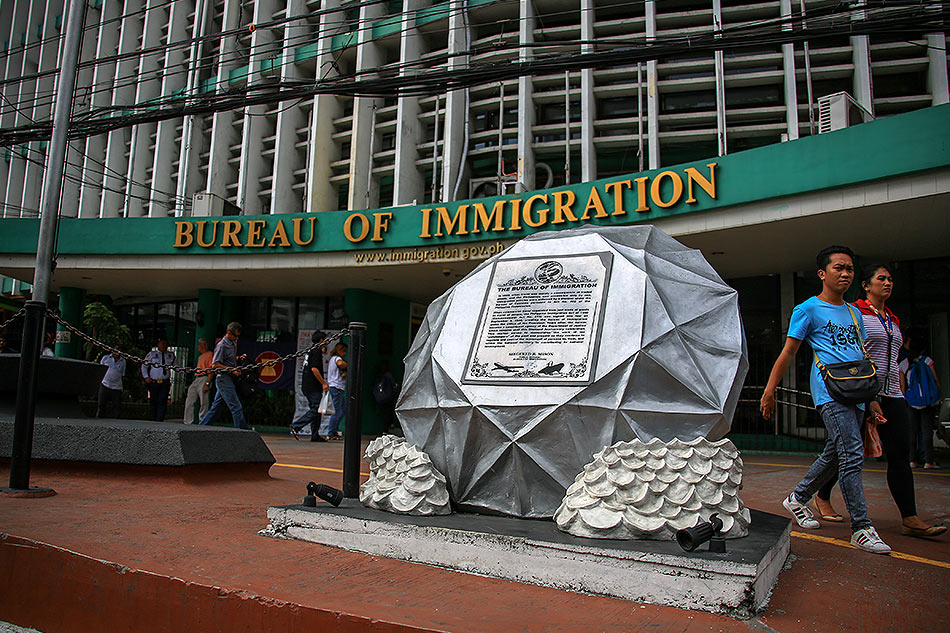
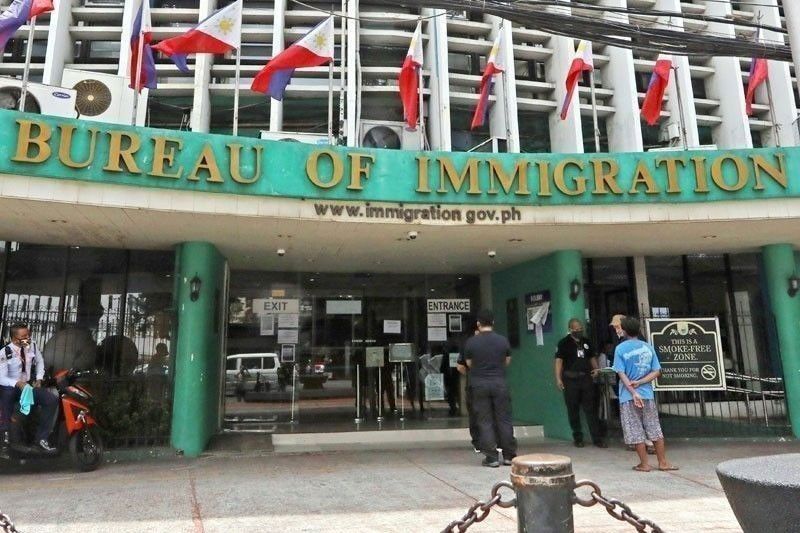
The work visa is approved and implemented by the Bureau of Immigration, which is under the Department of Justice. The BI reviews the 9(g) petition, issues the approval order, stamps the visa in the passport, and produces the ACR I-Card.
This split means that employers must comply with both labor and immigration rules, not just one set of requirements.
The Correct Order: AEP First, Then 9G
The standard sequence for most foreign employees is AEP first, then the 9(g) visa. DOLE rules and BI checklists require an approved AEP before the 9(g) petition can be accepted for filing.
In practice, the employer files the AEP application with DOLE, completes the posting and evaluation process, and receives the permit. Within 15 days of AEP issuance, the employer must file the 9(g) petition with BI to avoid compliance issues.
Holding only the AEP without the 9(g) visa, or only the 9(g) visa without the AEP, does not constitute full compliance for long-term employment.
When a Work Permit is Required
An AEP is generally required for foreign nationals who will be employed in the Philippines for more than a short, temporary period. DOLE rules state that the AEP is not an exclusive authority to work but is one of the requirements to legally engage in gainful employment through a work visa.
There are limited exceptions and alternative permits for certain categories, such as some investors, special residents, or short-term workers who may use other mechanisms. However, for standard commercial employment, the AEP is the baseline labor authorization.
Employers should confirm whether their foreign employee falls under an exemption before assuming that no AEP is needed.
When a Work Visa is Required
A work visa is required for foreign nationals who will reside and work in the Philippines beyond short business visits. A tourist visa or visa-free entry does not authorize employment.
The 9(g) visa is the main route for foreign employees of Philippine companies. Other work-related visas exist for specific cases, such as special non-immigrant visas for PEZA or BOI-linked personnel, but the principle remains: immigration status must match the employment purpose.
A foreign national who works without the proper visa can face immigration penalties, including fines, deportation, or future entry bans.
Special Work Permit and Provisional Work Permit
In addition to the AEP and 9(g) visa, there are temporary work authorizations that employers should understand. A Special Work Permit, or SWP, is used for short-term commercial work, typically for assignments of less than six months.
A Provisional Work Permit, or PWP, allows a foreign national to begin working while the 9(g) visa application is pending. The PWP is temporary and does not replace the need for a full 9(g) visa once processing is complete.
These permits help reduce onboarding delays, but must be used within their intended scope and validity.
Validity and Renewal
Both the work permit and work visa have limited validity and must be renewed to maintain lawful employment. The AEP is commonly issued for 1 to 3 years, depending on the employment contract and the DOLE assessment.
The 9(g) visa validity is also aligned with the employment contract and AEP period, and it can be extended as long as the employment relationship continues and requirements are met. Both documents must be kept current to avoid gaps in authorization.
Employers should track renewal dates well in advance and begin the process early to prevent operational disruptions.
Transferability and Changing Employers
Neither the AEP nor the 9(g) visa is freely transferable between employers. The AEP is tied to a specific employer and job position. If the foreign employee changes companies or roles, a new or amended AEP is generally required.
The 9(g) visa is similarly tied to the sponsoring employer. A foreign national who moves to a new company typically needs a new 9(g) petition and approval under the new employer.
Attempting to work for a different employer without updating both the AEP and the 9(g) visa creates significant compliance risk.
Common Mistakes in Work Visa vs Work Permit Compliance
Employers and foreign employees often encounter problems when they:
- Assume that a work visa alone is sufficient without an AEP.
- Obtain an AEP but fail to secure the corresponding 9(g) visa.
- Allow foreign staff to start work before either document is in place.
- Use a tourist visa or visa-free entry as a basis for employment.
- Change employers or positions without updating the AEP and 9(g) visa.
- Treat the PWP or SWP as a long-term solution instead of a temporary measure.
- Miss renewal deadlines and continue working with expired documents.
- Rely on outdated information about exemptions or special cases.
- Ignore DOLE posting and filing requirements for the AEP.
- Submit inconsistent information to DOLE and BI.
These errors can lead to fines, work stoppage, immigration penalties, and reputational risk for the employer.
How Employers Should Plan
Employers should treat work visa vs work permit compliance as a single integrated process rather than two unrelated tasks. The hiring plan should include time for AEP application, DOLE processing, 9(g) filing, BI review, and visa implementation.
A realistic timeline for standard cases is two to three months from document preparation to visa approval and ACR I-Card issuance. For critical roles, employers can consider PWP options once the AEP is secured and the 9(g) petition is filed.
Early coordination between HR, legal or immigration counsel, and the foreign employee helps prevent last-minute issues.
Final Insights
In the Philippines, a work permit (most commonly the Alien Employment Permit) and a work visa (typically the 9(g) Pre-Arranged Employment Visa) are separate but interconnected requirements for lawful foreign employment. The AEP is DOLE’s labor-side authorization to engage in work, while the 9(g) visa is BI’s immigration status that allows entry, residence, and work in line with that employment.
Employers must secure the AEP first, then file the 9(g) petition within the required period, and maintain both documents through renewal and any changes in employment. Temporary permits, such as the SWP and PWP, can support short-term or transitional situations but do not replace the need for full compliance in long-term employment.
Work Visa Philippines helps employers and foreign employees navigate the work visa vs work permit framework, align labor and immigration requirements, and build a compliant foundation for hiring and deploying foreign talent in the Philippines.
Reach Out for Visa Assistance
For Work Visa Philippines, the differences between a work visa vs a work permit are a foundational concept. Companies that understand the dual requirement can design compliant hiring processes, set accurate start dates, and avoid penalties that arise from partial or incorrect authorization.
The distinction also affects relocation planning, compensation structuring, and risk management. A foreign employee with both a valid AEP and 9(g) visa has a stronger legal footing than one with only one of the two. Our experienced team helps you navigate every step for a smooth approval and sustained employment in the Philippines:
- Contact Us Here
- Fill Out the Form Below
- Call us at +63 (02) 8540-9623