Foreign nationals entering the Philippines to establish, invest in, or manage a business need to consider two separate issues: the right to participate in Philippine foreign investment and the immigration status required for the activities they will actually perform in the country.
Owning shares in a Philippine company does not automatically give a foreign investor permission to work in that company. Likewise, obtaining a work visa does not by itself determine whether the proposed business activity can be 100 percent foreign-owned. Investment rules and immigration rules address different questions and need to be considered together.
For foreign investors, the appropriate immigration route depends largely on their role. An investor who will actively manage a Philippine company may need an employment-based visa. A foreign national working on a qualifying government-endorsed project may have access to a special non-immigrant visa. Someone whose primary objective is to maintain a qualifying investment and reside in the Philippines may consider the Special Investor’s Resident Visa (SIRV).
Philippine Foreign Investment Rules Come Before Visa Planning
Before choosing an immigration route, foreign investors should first determine whether the proposed business activity is open to foreign ownership and, if so, under what conditions. Philippine investment restrictions and immigration requirements are related to market entry, but they are not interchangeable.
The Board of Investments states that 100 percent foreign equity may be permitted in investment areas covered by the Foreign Investments Act, except those included in the Regular Foreign Investment Negative List (RFINL). The current 13th RFINL was promulgated through Executive Order No. 113 in April 2026.
This means an investor should identify the business activity before deciding how to structure the company.
Depending on the activity, the investor may need to consider:
- Foreign ownership restrictions
- Minimum capital requirements
- Nationality restrictions under the Constitution or special laws
- Industry-specific licensing
- Business registration requirements
- Tax registration and compliance
- Immigration status
- Employment authorization for foreign personnel
A foreign investor should therefore avoid treating incorporation and visa processing as completely separate projects.
Does Owning a Philippine Company Give a Foreigner the Right to Work?
Ownership and employment are separate concepts under Philippine law. A foreign shareholder can have an ownership interest in a Philippine company, but that does not automatically establish authorization to perform employment duties in the country.
This distinction becomes especially important when an investor plans to serve as president, chief executive, general manager, technical specialist, or another active officer of the Philippine entity.
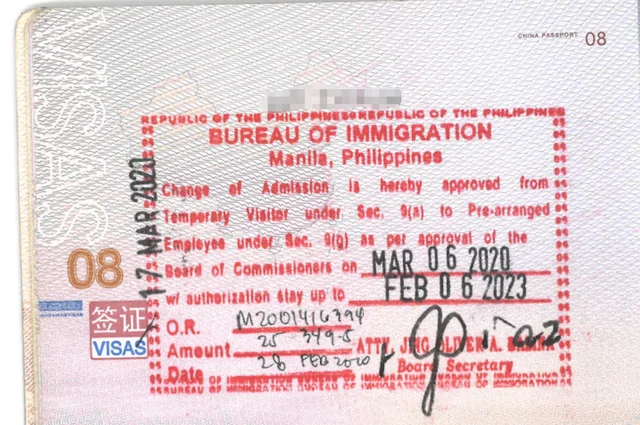
The Bureau of Immigration states that the 9(g) Pre-Arranged Employee Commercial Visa is available to foreign nationals proceeding to the Philippines to engage in a lawful occupation for wages, salary, or other compensation. Its FAQ further explains that a foreign national seeking this visa must be hired by a Philippine-based company, which acts as the petitioner.
Consequently, an investor who intends to work actively in the Philippine business should not assume that shareholder status alone resolves the immigration issue.
The proposed position and actual duties should be assessed before the foreign national begins working.
The 9(g) Visa for Foreign Investors Who Will Work in Their Company
The 9(g) work visa is relevant when a foreign investor is also going to have an employment role in a Philippine company. This makes it particularly important for investors who intend to be involved in day-to-day management or specialized functions.
The Bureau of Immigration describes the 9(g) commercial visa as a visa for foreign nationals engaging in lawful occupations in the Philippines. The current BI procedure includes document pre-screening, payment of applicable fees, a hearing, biometric procedures for the ACR I-Card, approval, and visa implementation.
For an investor, the practical question is therefore not simply:
“Do I own the company?”
The more relevant question is:
“What will I actually do in the Philippines?”
If the foreign investor will actively work for the Philippine entity, the company and the foreign national should assess the applicable employment and immigration requirements.
The Employer’s Role in a 9(g) Application
A 9(g) application is connected to the Philippine employer or petitioner.
The Bureau of Immigration requires a notarized certification of the number of foreign and Filipino employees, in addition to the applicable application and supporting documents.
This means the Philippine company needs to have its corporate and employment documentation in order.
Depending on the circumstances, the process can also involve labor requirements such as the Alien Employment Permit. The employment arrangement should therefore be reviewed before the investor assumes an operational position.
When a 9(g) May Be Relevant
A 9(g) assessment may be appropriate when a foreign investor plans to:
- Serve as an executive of a Philippine company
- Manage Philippine operations
- Perform specialized professional or technical work
- Receive compensation from the Philippine entity
- Take an active employment role in a Philippine subsidiary
- Continue working in the Philippines after establishing the investment
The exact immigration requirements depend on the investor’s circumstances and the nature of the position.
The 47(a)(2) PEZA Visa for Qualified Government-Registered Businesses
Some foreign investors enter the Philippines through businesses registered with government investment-promotion agencies. For qualifying enterprises, the 47(a)(2) Special Non-Immigrant Visa can provide another immigration route for foreign personnel.
The Board of Investments currently identifies the 47(a)(2) PEZA visa as a special non-immigrant visa for foreign nationals coming to the Philippines for work as applied by BOI-registered business enterprises. The BOI’s current procedures state that the service is available to all BOI-registered enterprises within five years from the date of registration, subject to the applicable requirements.
This is different from simply establishing an ordinary Philippine corporation.
The company needs to qualify for the applicable government registration, and the foreign employee’s role must satisfy the requirements for the special visa.
What Does the 47(a)(2) Process Involve?
The current BOI checklist provides several requirements, including:
- A completed, signed, and notarized application
- An organizational chart showing company officers and positions
- An employment contract or Secretary’s Certificate
- A DOJ application form
- A copy of the BOI Certificate of Registration and Terms and Conditions
- An original employment contract specifying the duration and position, or applicable Secretary’s Certificate
- Additional documents, depending on whether the application is new, a renewal, or involves dependents
For renewals or extensions, the BOI checklist specifically identifies an Alien Employment Permit as a situational requirement.
The documentation demonstrates why the 47(a)(2) visa should not be treated as a generic investor visa. It is connected to qualifying registered enterprises and the foreign national’s employment with that enterprise.
The SIRV for Investors Seeking Residence Through Investment
The Special Investor’s Resident Visa (SIRV) is different from an employment visa because its foundation is a qualifying investment rather than employment.
The Board of Investments currently provides a SIRV framework for foreign nationals at least 21 years old who have the capability to invest at least US$75,000 in an eligible form of investment under the applicable rules.
The SIRV process is administered through the Board of Investments and involves a probationary stage before conversion to an indefinite SIRV when the applicable requirements have been satisfied.
This can make the SIRV relevant to a foreign investor whose primary objective is to establish residence in the Philippines based on a qualifying investment rather than take a conventional employment position.
However, investors should not confuse residence with employment authorization.
The fact that a foreign national qualifies for an investment-based residence visa does not mean every type of employment or professional activity is automatically authorized.
How the SIRV Investment Requirement Works
The SIRV has a specific investment framework. The current BOI materials identify the minimum investment capability as US$75,000 in an eligible form of investment.
The application process also requires evidence, such as proof of inward remittance through an accredited bank.
Current BOI materials identify the following banks for the inward remittance requirement:
- Development Bank of the Philippines
- Land Bank of the Philippines
- Security Bank
- EastWest Bank
The applicant must also provide other documents, including the applicable application form, medical certificate, passport, and authenticated civil status documents where applicable.
The SIRV should therefore be considered an investment-based immigration route with its own investment and documentation requirements, rather than a replacement for an employment visa.
9(g) vs. 47(a)(2) vs. SIRV
Understanding the fundamental differences between these routes helps foreign investors avoid choosing a visa based only on the amount of investment involved.
| Immigration route | Primary basis | Typical relevance |
| 9(g) Pre-Arranged Employee Commercial Visa | Philippine employment | Foreign investor who will actively work for a Philippine-based company |
| 47(a)(2) Special Non-Immigrant Visa | Qualifying government-registered enterprise | Foreign personnel working for a qualifying BOI-registered business |
| SIRV | Qualifying investment | Foreign investor seeking residence through an eligible investment |
These categories serve different purposes.
The 9(g) is employment-based. The 47(a)(2) is connected to qualifying government-registered enterprises. The SIRV is investment-based.
The appropriate route should therefore be determined from the investor’s actual circumstances rather than simply from the fact that the person owns a Philippine business.
Foreign Ownership and Visa Status Are Separate Compliance Questions
A foreign investor can face two separate legal questions when establishing a Philippine business.
The first is:
Can the foreign investor own the proposed percentage of the Philippine business?
The second is:
What immigration status does the foreign investor need to perform the activities planned in the Philippines?
The first question is answered through foreign investment and sector-specific rules. The second concerns immigration and, where applicable, employment authorization.
The Board of Investments explains that the Foreign Investments Act generally allows 100 percent foreign equity in areas not included in the Regular Foreign Investment Negative List. However, restricted activities remain subject to nationality limitations or other conditions.
This means investors should conduct an ownership analysis before incorporating.
For example, an investor should not assume that a visa permitting residence or employment also permits ownership of a business in a restricted industry.
Likewise, registering a company with permitted foreign ownership does not automatically authorize the foreign shareholder to perform employment duties without the appropriate immigration status.
How the 2026 Foreign Investment Negative List Affects Planning
Foreign investors should use the current investment restrictions when planning a Philippine business rather than relying on an older negative list.
Executive Order No. 113, issued on April 13, 2026, promulgated the 13th Regular Foreign Investment Negative List. The Order states that the RFINL identifies investment areas or activities reserved for Philippine nationals, subject to the exceptions and conditions in the list.
This matters because ownership restrictions can change over time.
A business structure that was restricted under an earlier list may have different treatment under a newer list, while other constitutional or statutory restrictions may continue to apply.
Foreign investors should therefore verify the applicable list and sector-specific legislation at the time they establish the business.
What Foreign Investors Should Check Before Incorporation
Immigration planning is more efficient when performed before the company is established.
A foreign investor should review the following questions:
1. What Business Activity Will the Company Conduct?
The actual activity matters because foreign ownership restrictions can differ by industry.
The business should be classified accurately before determining the ownership structure.
2. Is the Activity Open to Foreign Ownership?
Check the current Regular Foreign Investment Negative List and any industry-specific legislation.
Do not rely solely on a general statement that the Philippines permits foreign investment.
3. Will the Investor Work for the Company?
If the investor will perform operational duties, management functions, or specialized work, the appropriate employment and immigration authorization should be assessed.
4. Will the Company Qualify for Government Registration?
If the business is intended to qualify for BOI registration or another investment-promotion framework, the investor should determine whether the planned activity and project meet the relevant requirements.
This can affect whether special immigration options such as the 47(a)(2) route are available.
5. Is Residence the Main Objective?
If the foreign national’s principal objective is to reside in the Philippines based on a qualifying investment, the SIRV may warrant consideration.
The investment itself must satisfy the SIRV rules.
A Foreign Investor May Need More Than One Regulatory Approval
A Philippine investment project can involve several government agencies. The precise agencies depend on the business activity and structure.
Potential areas include:
- Securities and Exchange Commission registration
- Bureau of Internal Revenue registration
- Local business permits
- Department of Labor and Employment requirements
- Bureau of Immigration requirements
- Board of Investments registration, where applicable
- PEZA registration, where applicable
- Professional licensing
- Industry-specific permits
A visa does not replace these business registrations.
Similarly, business registration does not replace immigration authorization for a foreign national who needs permission to work or reside in the Philippines.
This is why immigration planning should be integrated into the wider market-entry process.
What Happens When an Investor Also Becomes an Employee?
A common situation is for a foreign entrepreneur to establish a Philippine corporation and then appoint themselves as an officer or executive.
The ownership structure and employment arrangement should be documented separately.
The investor may be a shareholder because of their capital contribution. At the same time, they may have an employment or executive relationship with the company because they are performing work in the Philippines.
That second role can trigger separate immigration and labor considerations.
The Bureau of Immigration’s 9(g) framework specifically recognizes foreign nationals employed by Philippine-based companies.
The practical lesson is straightforward: do not assume that shareholder status automatically authorizes work.
Before assuming an operational role, the investor should determine what immigration and employment authorization applies.
Planning Immigration Status Before the Investor Arrives
Visa planning should begin before the foreign investor arrives, if possible. This gives the investor and company time to identify documentary requirements and avoid building the business around an incorrect assumption about immigration status.
A practical sequence is:
- Identify the proposed business activity.
- Review foreign ownership restrictions.
- Determine the intended ownership structure.
- Decide what role the foreign investor will perform.
- Determine whether the role involves Philippine employment.
- Assess 9(g), 47(a)(2), SIRV, or another applicable immigration route.
- Complete the appropriate business registrations.
- Prepare employment, investment, and corporate documentation.
- Secure the required permits and visas before undertaking activities that require authorization.
- Monitor continuing compliance after approval.
This approach reduces the risk of treating the visa as an afterthought.
Why Investors Should Not Choose a Visa Based Only on Investment Amount
Investment size is only one part of immigration planning.
Two investors can put similar amounts of money into the Philippines, but require different immigration solutions because their roles are different.
For example, one investor may remain outside the Philippines and simply maintain an investment. Another may move to Manila and become the company’s chief executive. Another may work on a project operated by a BOI-registered enterprise.
Their immigration circumstances are not necessarily identical.
The relevant factors include:
- The investor’s role
- The source and structure of the investment
- The business activity
- The company’s registration status
- Whether the investor receives compensation
- Whether the investor performs work in the Philippines
- Whether residence is the primary objective
- Whether the business qualifies for a special government program
This is why visa selection should follow an assessment of the actual business arrangement.
Key Takeaways
Philippine foreign investment involves more than determining how much capital a foreign national can place into a business. Investors also need to establish whether the proposed activity is open to foreign ownership, what corporate structure is appropriate, and what immigration authorization is required for the foreign national’s intended activities.
The current Philippine framework provides several immigration routes that may become relevant to investors. The 9(g) Pre-Arranged Employee Commercial Visa is designed for qualifying foreign employment with a Philippine-based company. The 47(a)(2) Special Non-Immigrant Visa is available in connection with qualifying government-registered enterprises, with current BOI procedures specifically covering foreign personnel of BOI-registered business enterprises. The SIRV provides an investment-based residence framework for qualifying foreign investors who meet its investment requirements.
These routes should not be treated as interchangeable. The appropriate immigration pathway depends on what the investor is actually doing in the Philippines, how the business is structured, and whether the investment and employment arrangements comply with Philippine law.
Foreign ownership should also be checked against the current 13th Regular Foreign Investment Negative List, issued in 2026, rather than relying on older investment guides.
Planning the investment structure and immigration status together can help foreign entrepreneurs establish their Philippine operations with the appropriate permissions from the beginning.
Are You Planning Foreign Investment in the Philippines?
Work Visa Philippines can help foreign investors understand the immigration requirements connected with establishing, managing, or working in a Philippine business.
Whether you are considering a 9(g) visa, a 47(a)(2) PEZA visa, an investment-based residence option, or another immigration route, our team can help assess your circumstances and identify the applicable requirements.
We can assist with the preparation and processing of Philippine work visa applications and help foreign investors understand how their intended role affects their immigration status.
Contact us today to discuss your investment, work visa, or foreign employment requirements:
- Contact Us Here
- Fill Out the Form Below
- Call us at +63 (02) 8540-9623