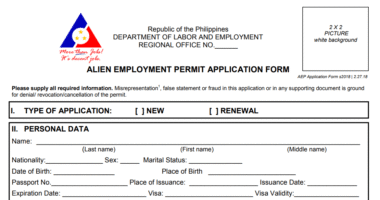
Securing an Alien Employment Permit (AEP) is a required first step for most foreign nationals seeking employment in the Philippines. However, applicants and companies are often confronted by denials or revocations—outcomes that can disrupt careers and business operations.
When Can AEP Denials or Revocations Occur?
An AEP may be denied by the Department of Labor and Employment (DOLE) during the initial application or renewal process. Revocation, on the other hand, refers to the cancellation of an AEP that has already been granted, often due to compliance lapses or the discovery of new information after permit issuance. Both outcomes can result in loss of employment authorization and even bar future applications for several years, depending on the grounds and severity of the violation.
Common Grounds for AEP Application Denials
The DOLE has established clear rules and regulations for evaluating new and renewal AEP applications, including a list of circumstances that typically result in denial:
- Submission of false, fraudulent, or tampered documents
- Misrepresentation of facts material to the application
- Lack of required skills, experience, or qualifications for the position
- Visa application or status not compliant with Philippine law
- Meritorious objection filed by a Filipino national who is qualified and willing to fill the position
- Employer non-compliance with business registration or other requirements
- Failure to submit critical documents or respond to DOLE queries
Any of these factors can result in a formal order of denial, making it essential to scrutinize submissions for accuracy and completeness before filing.
Grounds for AEP Revocation
Even after approval, an AEP can be revoked if:
- Any misrepresentation or fraud is discovered post-issuance
- Falsified documentation comes to light
- The foreign worker’s role or contract changes without DOLE notification
- The employment of the foreign national is objected to, with a meritorious claim from a qualified Filipino citizen
- The worker is convicted or found guilty of any criminal offense, or is identified as a fugitive from justice
- There’s grave misconduct or ill treatment of co-workers
- The worker or employer fails to comply with obligations under the Labor Code or other relevant orders
- The AEP card is not claimed within ten working days of the DOLE notice
Revocation is particularly serious: the affected individual may be barred from reapplying for up to ten years for certain violations.
What To Do if Your AEP Application Is Denied or Revoked
- Understand the DOLE Order
Upon denial or revocation, DOLE issues a formal order listing the reasons behind the decision. Read this notice carefully—the details guide your response and dictate your next allowable steps.
- Immediately Correct or Supplement Documentation (For Denials)
If denial resulted from incomplete, inaccurate, or missing documents, promptly submit correct information and clarify misunderstandings. This fast action greatly increases the odds of reversing the decision.
- Filing a Motion for Reconsideration
Applicants or employers can file a Motion for Reconsideration within ten (10) days of receiving a denial or revocation notice. The motion should explain why the decision should be overturned, supply supporting evidence, and address every concern cited by DOLE.
Note: Only one motion for reconsideration is allowed per order. If denied, further motions are not permitted.
- Filing an Appeal with the Secretary of DOLE
If the motion for reconsideration is denied, the applicant can elevate the case to the DOLE Secretary within ten (10) days of the new decision, using a written notice of appeal and a detailed memorandum.
The Secretary typically issues a final and executory resolution within sixty days. Legal representation is advisable at the appeal stage, especially for complex or high-stakes cases.
Barred Periods After Denial or Revocation
As of 2025, applicants whose AEPs have been revoked for grave reasons (e.g., fraud, criminal conviction, grave misconduct) are barred from reapplying for ten years. For lesser yet still substantive denials, a five-year prohibition may apply. During this period, the foreign national cannot legally secure another AEP, underscoring the importance of compliance and careful documentation from the start.
How Employers Can Avoid AEP Denials or Revocations
- Assess position eligibility: Only petition for roles that genuinely require foreign technical expertise or have no qualified local applicants.
- Ensure documentary accuracy: All contracts, credentials, and certificates must be authentic, up to date, and translated when necessary.
- Regularly monitor compliance: Promptly update DOLE about any material contract, position, or status changes.
- Respond rapidly to objections: If a Filipino national objects, provide clear, documented proof of the foreigner’s unique qualifications and the company’s recruitment efforts.
- Work with legal/immigration professionals: Pre-vet all AEP documentation to eliminate risks of oversight or non-compliance.
How Foreign Workers Can Strengthen Their AEP Applications
- Highlight unique skills: Clearly document credentials, certifications, and work experiences not readily available in the local workforce.
- Maintain a clean record: Stay free of criminal or administrative cases, and adhere strictly to visa conditions.
- Act promptly: If notified of potential denial or revocation, respond fully and within deadlines—delays can forfeit appeal rights.
Frequently Asked Questions
Q: Can a denied or revoked AEP be reinstated?
Yes, via successful appeal or reconsideration, provided new evidence addresses the DOLE’s grounds for denial.
Q: What happens if employment ends before AEP expiration?
The employer must notify DOLE; continued stay or employment under the old AEP may be deemed illegal.
Q: Is legal assistance required?
While not mandatory for initial filings, professional help is highly recommended for appeals, especially when business or immigration status is at risk.
Final Thoughts
AEP application denials and revocations are serious setbacks, but with the right understanding and swift corrective action, they can sometimes be resolved or successfully appealed. Employers and foreign professionals who proactively monitor compliance, maintain accurate documentation, and seek skilled support will avoid the vast majority of pitfalls and ensure continued legal employment in the Philippines.
Need Help With Your AEP Application or Appeal?
Work Visa Philippines provides expert support throughout every stage of the AEP process, from application to dispute resolution, reconsideration, and appeals. Safeguard your business and professional status by working with consultants who know Philippine labor and immigration law inside and out:
- Contact Us Here
- Fill Out the Form Below
- Call us at +63 (02) 8540-9623