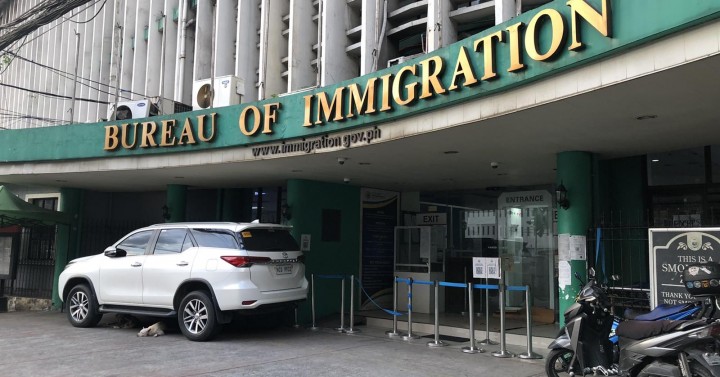
Securing a Philippine work visa is a multi‑agency process involving the Department of Labor and Employment (DOLE) and the Bureau of Immigration (BI), with typical end‑to‑end timelines ranging from 6 to 10 weeks for standard 9(g) visas.
Delays can extend this to 2-3 months if documentation is incomplete, labor‑market tests fail, or agency backlogs occur, making proactive planning essential for employers and foreign hires using workvisaphilippines.com.
Overview of the Philippine Work Visa Process
The standard Philippine work visa, which is the 9(g) Pre‑Arranged Employment Visa, requires sequential approvals from DOLE and BI, creating a dual‑track timeline.
- Stage 1: Document collection (1-2 weeks): Gather passports, contracts, corporate docs, and clearances.
- Stage 2: Alien Employment Permit (AEP) at DOLE (2–3 weeks): Labor‑market test and approval.
- Stage 3: 9(g) petition at BI (3-5 weeks): Hearing, evaluation, ACR I‑Card.
- Total: 6-10 weeks standard; 12+ weeks with delays.
Provisional Work Permits (PWPs) bridge gaps, allowing work during processing. PEZA firms shave 1-2 weeks via one‑stop shops.
Stage 1: Document Preparation (1-2 Weeks)
Gathering complete documentation forms the critical foundation that determines the overall speed of the Philippine work visa process. Employers typically spend 1 to 2 weeks collecting valid passports with at least six months remaining validity, notarized employment contracts specifying job duties and salary, company SEC or DTI registrations, NBI clearances, medical certificates from the Bureau of Quarantine, police clearances from the applicant’s home country, and proof of the mandatory 30-day labor market test posting on PhilJobNet.
The labor market test requires employers to advertise the position publicly for 15-30 days to demonstrate that no qualified Filipino worker is available, which naturally overlaps with document collection. Professional pre-filing audits prevent the common 20-30% rejection rate due to incomplete or mismatched documentation, such as salary discrepancies between contracts and AEP applications.
Stage 2: AEP Processing at DOLE (2-3 Weeks)
The Alien Employment Permit (AEP) from DOLE serves as the prerequisite gatekeeper for BI visa approval, averaging 2 to 4 weeks after the PhilJobNet posting period concludes. Regional DOLE offices conduct the Economic Needs Test (ENT), verifying recruitment proof from newspaper advertisements and online job boards.
Complete applications receive approval within 7-15 working days post-recruitment period. Top 1000 taxpayer companies qualify for fast-tracking to 5-10 business days, while labor union objections or incomplete recruitment records trigger reposting cycles that add full 30-day delays. Foreign nationals cannot legally work until the AEP issuance, making this phase pivotal for project timelines.
Stage 3: 9(g) Visa Petition at BI (3-5 Weeks)
The BI handles final adjudication through a structured multi-step workflow.
Petition filing at the BI Main Office includes the Consolidated General Application Form, joint employer-employee request letter, AEP, corporate documents, and fees exceeding PHP 10,000. This triggers evaluation, potential hearings before the Board of Commissioners, biometric capture, and ACR I-Card printing.
This phase consumes 3-6 weeks, depending on workload, document quality, and peak seasons.
Cumulative End-to-End Timeline
Aggregating all phases yields the full Philippine work visa processing picture.
Standard cases complete in 6-10 weeks: 1-2 weeks preparation, 2-3 weeks AEP, 3-5 weeks BI. Conservative planning budgets 8-12 weeks, accounting for holidays and minor requests for information.
PEZA-registered employers shave 1-2 weeks through one-stop processing.
Total Timeline: End-to-End Breakdown
Philippine work visa processing averages 6-10 weeks. Different work authorization routes offer varying speeds.
| Stage | Duration | Cumulative | Key Delays |
| Docs | 1-2 weeks | 1-2 | Missing apostilles |
| AEP | 2-3 weeks | 3-5 | Labor objections |
| BI 9(g) | 3-5 weeks | 6-10 | Incomplete petition |
For PEZA, it takes 4-6 weeks. For SWP (short‑term), it takes 1-2 weeks.
Factors That Delay Philippine Work Visa Processing
Common bottlenecks extend timelines:
- Incomplete documents: 1-2 weeks per iteration (e.g., mismatched job titles).
- DOLE objections: Failed labor test adds 30+ days reposting.
- BI backlogs/holidays: Peak seasons (Q1/Q4) add 2 weeks.
- Applicant issues: Criminal records, overstays require clearances (1-4 weeks).
Mitigation: Use PWPs. Make sure to file 2-3 months early.
Renewal and Extension Timelines for Work Visas
9(g) renewals mirror initials but faster (4-8 weeks):
- File 30 days pre‑expiry with updated AEP.
- Reuse biometrics; focus on compliance proof.
ACR renewals: 1 week; AR: January-March annually.
Acceleration Strategies for Faster Philippine Work Visas
Compress timelines by taking proactive steps in getting your Philippine work visa.
- Parallel processing: Collect docs during job offer; post PhilJobNet early.
- PEZA/BOI registration: Expedites to 4-6 weeks.
- PWP filing: Work legally during the 6-10 week wait.
- Specialist partners: Experts like workvisaphilippines.com coordinate DOLE/BI for 20-30% faster processing.
Special Work Visa Timelines (PEZA, Subic-Clark, SWP)
Alternatives to shorten waiting time:
- PEZA 47(a)(2) Visa: 4-6 weeks one‑stop.
- Subic‑Clark: 2-4 weeks OSS.
- SWP (short‑term): 1-2 weeks.
Employer Responsibilities
Companies drive the application process from start to finish.
HR teams coordinate PhilJobNet postings, secure corporate clearances, and monitor agency statuses. Failure to maintain compliance risks fines up to PHP 10,000 per month per foreign worker.
Role of Immigration Specialists
Professional services transform complex timelines into predictable outcomes.
End-to-end management eliminates documentation errors. Real-time status tracking prevents backlogs. Pre-arranged agency relationships expedite reviews. Comprehensive support covers renewals and compliance.
Key Takeaways
Philippine work visa processing demands realistic expectations of 6-12 weeks from preparation through final ACR I-Card issuance, with variations driven by documentation quality, agency workload, and applicant circumstances. Employers must budget conservatively, leveraging Provisional Work Permits and fast-track options like PEZA registration to maintain business continuity during waits. Proactive planning transforms potential 3-month delays into efficient 6-8 week outcomes.
How Work Visa Philippines Speeds Up Work Visas
Work Visa Philippines optimizes Philippine work visa timelines:
- Pre‑filing audits prevent document delays.
- DOLE/BI coordination shaves weeks.
- PWP/ACR management enables immediate onboarding.
- Renewal planning avoids lapses.
Work Visa Philippines streamlines the entire Philippine work visa journey through expert coordination, pre-filing audits, and timeline optimization across DOLE and BI. Our end-to-end management ensures foreign talent onboards legally and productively without compliance gaps.
Need a Philippine work visa timeline? Reach out to our team of specialists to guide you:
- Contact Us Here
- Fill Out the Form Below
- Call us at +63 (02) 8540-9623