Maintaining continuous, legal work authorization in the Philippines requires strict adherence to the renewal timelines set by the Department of Labor and Employment (DOLE) and the Bureau of Immigration (BI). For foreign professionals, the process to renew an Alien Employment Permit (AEP) and 9G work visa is not a single transaction but a sequential, dual-agency procedure that must begin months before expiration.
Understanding the Dual-Agency Renewal Workflow
The legal right to work and reside in the Philippines on a 9G status depends on two distinct but legally intertwined permits. DOLE manages the labor market impact through the AEP, while the BI regulates your actual immigration and residency status.
You cannot renew a 9G visa without first securing a renewed AEP, making DOLE the mandatory starting point for your application. Because the Bureau of Immigration will categorically reject any 9G petition without a valid AEP from DOLE, foreign workers and their employers must synchronize these applications perfectly. A delay at the DOLE level inevitably causes a bottleneck at the BI, putting the foreign national at immediate risk of overstaying their authorized residency period.
Ideal Timeline for AEP and 9G Renewals
Timing is the most critical factor in a successful work visa renewal, as government processing windows require proactive document assembly well ahead of your current visa’s expiry date.
- 90 Days Before Expiry: Begin gathering corporate documents, securing tax clearances, and compiling Understudy Training Program (UTP) reports with your HR department.
- 60 Days Before Expiry: File the AEP renewal application with the DOLE Regional Office; this is the mandatory filing window to avoid late penalties and allow for the 15-day processing time.
- 30 Days Before Expiry: Once the renewed AEP card is released, immediately file the 9G visa renewal petition at the Bureau of Immigration to ensure continuity of stay.
Missing these benchmarks can cascade into expired visas, forcing a complex and costly regularization process that interrupts your ability to legally work.
Core Requirements for DOLE AEP Renewal
Renewing your AEP requires proving to DOLE that your continued employment is necessary and that you are still occupying the exact role initially approved. The documentary burden falls jointly on the employer and the foreign national.
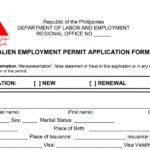
- Application Form: A duly accomplished AEP renewal form signed by both the foreign employee and the employer’s authorized representative.
- Original AEP Card: The expiring card must be physically surrendered to DOLE for perforation to prevent illegal use or tampering.
- Employment Contract: An updated or extended employment contract specifying the renewed term, salary, and an identical job description.
- Corporate Documents: The employer must submit their latest Mayor’s Permit, SEC registration, and current General Information Sheet (GIS) to prove the business remains operational.
If the original AEP card is lost, DOLE requires a notarized Affidavit of Loss and a police report before they will process the renewal, which can significantly delay the timeline.
The Bureau of Immigration 9G Visa Renewal Process
Once the AEP is successfully renewed, the applicant must shift focus to the Bureau of Immigration to extend their residency rights. The 9G renewal mirrors the initial application but generally moves faster if corporate records are clean and the AEP is verified.
- Petition Letter: A formal request from the sponsoring company addressed to the BI Commissioner, detailing the need for the employee’s continued stay.
- DOLE Approvals: A certified true copy of the newly issued AEP and the official receipt of payment from DOLE.
- BI Clearances: Presentation of the original passport (valid for at least six months), the current 9G visa stamp, and the expiring ACR I-Card.
- Biometrics and Verification: The applicant may need to attend a hearing or biometric capture session, depending on BI’s current electronic system requirements for that renewal cycle.
The BI phase usually spans 2 to 4 weeks, provided there are no derogatory findings, missing documents, or unresolved immigration holds on the applicant’s record.
Fines and Penalties for Late Renewals
Failing to renew your work permits on time triggers harsh financial and legal consequences from both labor and immigration authorities. The Philippine government strictly penalizes lapses to discourage undocumented employment.
- DOLE Penalties: An expired AEP without a pending renewal application incurs a fine of PHP 10,000 per year (or fraction thereof) for both the employer and the employee, and severe cases can lead to a 5-year ban on reapplying.
- BI Overstay Fines: If the 9G visa expires before the renewal petition is officially filed, the BI imposes a PHP 500 daily overstay penalty, plus additional fees for a motion for reconsideration.
- Deportation Risks: Continuing to work with an expired AEP or 9G visa classifies the individual as an illegal worker, subjecting them to summary deportation, business fines of PHP 100,000 or more for the employer, and permanent blacklisting.
Filing your AEP renewal exactly 60 days prior to expiration is the most effective way to shield yourself and your employer from these compounding fines.
The Understudy Training Program (UTP) Mandate
In 2026, DOLE intensified its scrutiny of the Understudy Training Program (UTP) during the AEP renewal phase to ensure foreign skills are actively being transferred to the local workforce. This requirement cannot be bypassed during a renewal.
When applying to renew an AEP, employers must submit comprehensive UTP progress reports demonstrating how the foreign national has trained their designated Filipino understudies over the past visa cycle. If DOLE determines that the training program was neglected, undocumented, or superficial, they have the authority to revoke the permit or deny the renewal entirely. This strict enforcement ensures that foreign hires remain a temporary necessity rather than a permanent replacement for local talent.
Navigating Job Title or Employer Changes
A critical rule of the AEP and 9G framework is that these permits are strictly bound to the specific employer and specific job title listed on the original application. A renewal is only valid if nothing fundamental has changed.
If you receive a promotion that substantially changes your job duties, or if you transfer to an entirely different department within the same company, you cannot simply “renew” your AEP; a change in position requires a full reapplication for a new AEP. Furthermore, if you resign to switch employers, your current 9G visa must be legally downgraded to a tourist visa, and the new employer must sponsor a brand-new AEP and 9G petition from scratch. Attempting to pass off a new role as a simple renewal will result in automatic rejection.
Costs and Fees for Renewing Your Work Status
Budgeting for your continued stay in the Philippines requires accounting for multi-agency fees, which scale depending on the duration of your requested visa extension.
- DOLE Fees: The AEP renewal costs PHP 4,000 for each year of validity requested, plus nominal publication fees.
- BI Visa Fees: Extending the 9G visa typically ranges from PHP 8,000 to PHP 15,000, depending on the number of years (1, 2, or 3), alongside legal research and express lane fees.
- ACR I-Card Renewal: Reissuing the mandatory identification card costs USD 50 (payable in Philippine Pesos) plus PHP 500 for express processing.
Total out-of-pocket government expenses usually range between PHP 25,000 and PHP 45,000, excluding external legal or professional consultancy fees.
Aligning the Annual Report with Renewals
A frequently overlooked compliance step during the renewal cycle is the Bureau of Immigration’s Annual Report (AR), which is mandatory for all active ACR I-Card holders. Missing this step can freeze your renewal process.
Regardless of when your 9G visa expires or is up for renewal, you must appear at a BI office between January 1 and March 1 every year to complete the AR and pay the standard fee (approximately PHP 310). If your visa is pending renewal during this window, you are still required to report. Failing to complete the Annual Report creates a derogatory hit in the BI system, which will instantly halt the processing of your 9G extension until all late penalties are settled.
Common Pitfalls to Avoid During the Renewal Cycle
Even minor administrative oversights can derail the entire renewal timeline, leaving foreign professionals stranded without legal work authorization. Awareness of these pitfalls is essential for a smooth process.
- Insufficient Passport Validity: Submitting a passport with less than six months of validity remaining will cause the BI to reject the 9G extension outright.
- Incomplete Corporate Documents: Failing to provide updated SEC registrations, valid Mayor’s Permits, or BIR tax clearances on the employer’s side will stall both DOLE and BI filings.
- Traveling Abroad: Departing the Philippines while the 9G renewal is actively pending at the BI can lead to application abandonment, forcing you to re-enter as a tourist and restart the process.
- Ignoring Publication Objections: DOLE requires a mandatory publication period for AEP renewals; ignoring local objections or failing to address them can lead to permit denial.
Treating the renewal with the same meticulous attention to detail as the initial application prevents these costly delays.
Strategies for Corporate HR and Expatriates
Smooth renewals require seamless communication between the foreign employee, the corporate HR department, and external immigration counsel. A proactive corporate strategy minimizes downtime and legal risk.
Instituting a centralized digital tracking system that alerts all parties 120 days before any visa or permit expires is the best defense against compliance failures. HR teams should concurrently audit their corporate filings—such as updating the General Information Sheet with the SEC and finalizing UTP reports—so that when the 60-day DOLE window opens, the employer’s document kit is flawless and ready for immediate submission.
Wrapping Up
Successfully executing the process to renew an AEP and 9G visa is a time-sensitive, dual-agency mandate that requires initiating DOLE procedures at least 60 days before expiration, followed immediately by Bureau of Immigration filings. Lapses in this timeline invite severe consequences, ranging from PHP 10,000 DOLE fines and PHP 500 daily BI overstay penalties to business sanctions and potential deportation. To guarantee approval in 2026, applicants must present flawless corporate documentation, physically surrender the expiring AEP card, and provide robust evidence of compliance with the Understudy Training Program (UTP) to prove local workforce development.
Is Assistance Available?
Yes. Work Visa Philippines eliminates the stress of this overlapping bureaucratic maze by managing your entire renewal lifecycle. We align your corporate HR documents, expedite DOLE 15-day processing, secure your BI 9G extension, and ensure your ACR I-Card and Annual Reports are perfectly synchronized.
Don’t let a missed deadline jeopardize your career in the Philippines. Contact Work Visa Philippines today to secure your renewal timeline:
- Contact Us Here
- Fill Out the Form Below
- Call us at +63 (02) 8540-9623