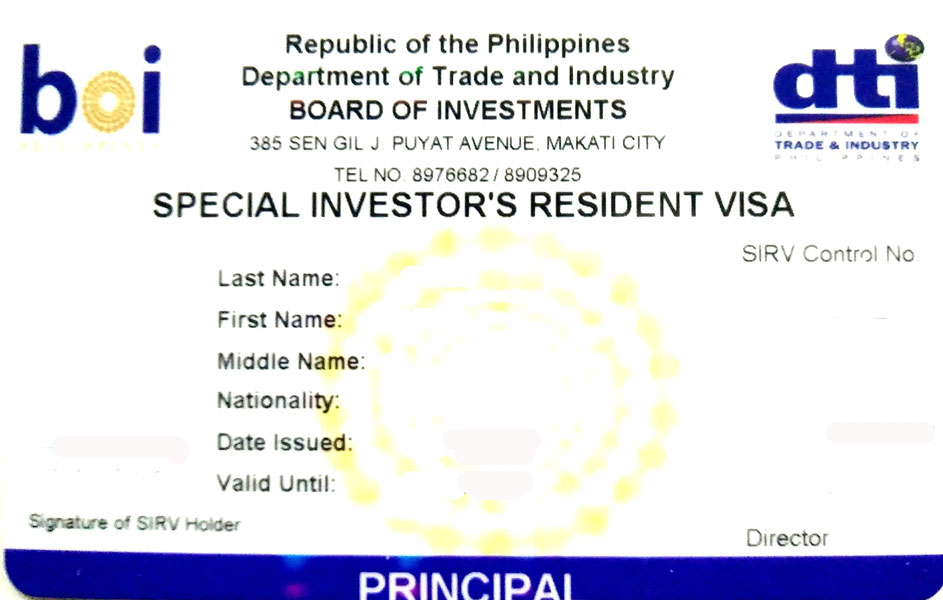
The Special Investor’s Resident Visa (SIRV) is the Philippines’ long‑stay visa for foreign nationals who commit qualifying investments in the country. It grants multiple‑entry privileges and potentially indefinite residence so long as the investment conditions are maintained.
For investors, founders, and advisers, the SIRV is a strategic route: it combines immigration stability with an investment pathway that supports business setup, family relocation, and ease of travel in and out of the Philippines.
Who the SIRV Is For
The SIRV targets foreign nationals aged 21 or older who are willing and able to place a qualifying investment in the Philippines and meet basic character and health requirements. It is intended for investors who want a long-term presence without immediately pursuing full immigrant status, providing a residency‑linked option that is contingent on maintaining the investment.
Key eligibility points are straightforward: the applicant must have no conviction involving moral turpitude, must not suffer from dangerous or contagious diseases, must not be institutionalized for mental disorders, and must fulfill the minimum investment requirement (commonly cited as USD 75,000, subject to the BOI/BI rules in force). Dependents—spouse and unmarried children under 21—can be included in many SIRV filings, making it attractive for family relocation.
What Counts as a Qualifying Investment
Not every type of spending qualifies for the SIRV. The program requires investment into eligible Philippine enterprises or approved instruments; commonly accepted forms include equity investments (shares) in new or existing Philippine corporations that meet BOI priorities, and, in practice, placements via authorized peso time deposits before conversion into proper investments.
Typical allowed investments:
- Shares in publicly listed companies or in companies engaged in activities found on the Board of Investments’ Investment Priorities Plan (IPP).
- Investments in the manufacturing or services sectors that comply with Book V of the Omnibus Investments Code.
Typical excluded investments:
- Ownership of condominium units, wholesale trading, share purchases, or partnerships (these often do not qualify).
Most applicants first remit the required funds to an accredited depository bank (commonly the Development Bank of the Philippines or Land Bank of the Philippines) into a peso time deposit. The deposit must remain for a minimum period (often 30 days) and up to a statutory maximum (commonly 180 days) before conversion into an eligible corporate investment. The probationary visa and deposit sequence provides time for the investor to formalize the investment and report it to the BOI.
Two-stage Visa Process
The SIRV process typically runs in two stages: an initial probationary multiple-entry visa valid for six months, and then conversion to an indefinite SIRV once the investment has been made and authenticated. This two-step model lets applicants arrive, finalize investment paperwork, and complete inward remittance and investment registration with the BOI within the probationary window.
Practical sequence:
- Apply via a Philippine Embassy/Consulate or directly with BOI/BI, depending on your location and instructions.
- On approval, you will receive a probationary, multiple-entry visa (usually valid for six months) so you can enter the Philippines and complete investment placement.
- Place the required funds in an accredited bank time deposit, then convert and report the investment to BOI within the allowed window (often 180 days).
- Submit proof of inward remittance and investment to BOI; BOI endorses to the Bureau of Immigration for issuance of the indefinite SIRV.
Document Checklist: What You’ll Need
While exact documentary requirements vary by post and situation, the SIRV typically requires the following core items—prepare these early to avoid delays:
- Valid passport with at least six months’ validity.
- Completed visa application forms per the Foreign Service Post/BOI/BI instructions.
- Passport‑sized photos meeting consular standards.
- Personal History Statement and biographical forms as required.
- Police/NBI clearances or Interpol checks showing no convictions for moral turpitude.
- Medical certificate authenticated by the Bureau of Quarantine (Department of Health) showing fitness to enter (often valid for six months).
- Marriage certificate and birth certificates of dependents, authenticated by the Philippine diplomatic post where applicable.
- Proof of inward remittance or bank deposit certificate from DBP/LBP showing the USD‑equivalent placement into an accredited peso time deposit.
- Evidence of the intended investment plan (share purchase agreements, corporate documents, BOI application materials) if converting the deposit into equity.
Banking and Remittance Mechanics
The SIRV requires inward remittance into an accredited Philippine bank. DBP and LBP are the most commonly used accredited banks for the SIRV deposit phase. The deposit is typically in Philippine peso, equivalent to the USD 75,000 threshold, and must be placed as a time deposit for at least 30 days and up to 180 days prior to conversion into the actual investment.
Practical banking steps:
- Open an account with the accredited bank (DBP or LBP), which may require in‑person presence and KYC documents.
- Inward remittance is credited, and a time deposit certificate is issued; secure an official Certificate of Placement or Bank Certificate as proof.
- After the minimum placement period, convert the deposit into an eligible investment (e.g., share subscription) and obtain documentation proving the investment (stock certificates, SEC filings, BOI registration endorsement).
- Provide proof of inward remittance and investment to BOI for endorsement to BI for indefinite SIRV issuance.
Family Inclusion and Dependents
SIRV applicants can generally include spouses and unmarried children under 21 as dependents in the visa application. Each dependent usually requires their own documentation (passport, photos, birth/marriage certificates) and medical/clearance documents as specified by BI/BOI. Including dependents in the initial application is recommended if relocation for family life is part of your plan.
Common Pitfalls and How To Avoid Them
Several recurring issues slow or derail SIRV cases; these are avoidable with preparation:
- Ineligible investment type: confirm the enterprise or asset qualifies under BOI/IPP rules before remitting funds.
- Incomplete or unauthenticated documents: foreign certificates often need embassy authentication or apostille—do this before submission.
- Late investment conversion: the probationary visa sets a window (typically 180 days) to convert deposits into an eligible investment; plan legal and corporate steps, so conversion occurs promptly.
- Bank KYC delays: set up the accredited bank account early; some banks need a personal appearance and extensive verification.
- Misunderstanding the permanence: the indefinite SIRV is contingent on maintaining the investment; withdrawal or selling the qualifying investment may affect the visa status.
Processing Times and Fees
Processing times vary by embassy and by BOI/BI workloads. The initial issuance of a probationary visa at a Foreign Service Post may take several weeks for endorsement and review. The conversion from probationary to indefinite SIRV after proof of investment can also take weeks, depending on BOI/BI schedules. Expect to allow multiple weeks for each stage and budget for consular, BOI, BI, and bank fees (and any professional advisor fees if using local counsel).
Maintenance Obligations and Post-issuance Compliance
SIRV holders must maintain the qualifying investment and comply with reporting obligations. BOI and BI may require periodic evidence that the investment remains in place and the holder complies with tax, corporate, and legal responsibilities. Selling the investment or materially altering the investment structure without consulting BOI/BI can jeopardize residency.
Tax, Corporate, and Regulatory Considerations
The SIRV is immigration in nature, not tax amnesty: investors still need to comply with Philippine corporate law, BIR tax rules, and sectoral licenses where applicable. Investing through a Philippine corporation triggers corporate governance, filing, and tax obligations. Consult local tax and legal counsel early to design the most efficient investment vehicle while preserving SIRV eligibility.
When SIRV May Not Be The Best Option
SIRV is ideal for investors who want a long-term residence tied to an eligible investment. It is not designed for small, speculative, or lifestyle purchases (like condominiums), which may not qualify. If your plan is retirement without active investment, the SRRV (Special Resident Retiree’s Visa) or other long-stay routes may be more suitable.
Next Steps
If you’re considering the SIRV, start by confirming the target investment’s eligibility under the BOI/IPPs and arranging preliminary bank contacts (DBP/LBP). Gather certified documents, schedule health and police clearances, and consider working with a local advisor to coordinate the banking, corporate, and immigration steps.
How We Can Help
Work Visa Philippines helps investors map a complete SIRV strategy: eligibility review, BOI pre-checks, bank coordination, document authentication, and BI filing support. Contact us to plan your SIRV application and avoid common delays:
- Contact Us Here
- Fill Out the Form Below
- Call us at +63 (02) 8540-9623