For companies and expats dealing with employment permits in the Philippines, the key issue is matching the right permit to the actual length and type of work assignment. The Philippine system does not use one single permit for all foreigners; instead, it separates short-term work, long-term employment, and temporary bridging arrangements into different legal routes.
For workvisaphilippines.com, this matters because employers must know when they need an Alien Employment Permit, a Special Work Permit, a Provisional Work Permit, or a full 9(g) work visa to keep a foreign hire compliant. Choosing the wrong permit can delay onboarding, create immigration issues, or force the worker to stop work until the paperwork is corrected.
Why You Need An Employment Permit
Employment permits are the legal foundation for hiring a foreign national in the Philippines. The Department of Labor and Employment requires most foreign workers to have an AEP before they can lawfully work, while the Bureau of Immigration requires the appropriate visa status based on the length and nature of the assignment.
The purpose of this system is to ensure that foreign workers fill roles that genuinely require international expertise without displacing available Filipino talent. Employers must therefore treat permits as part of workforce planning, not as a simple administrative formality after the employee has already started.
The Main Types of Employment Permits
The Philippines issues several employment-related permits, each serving a different purpose. The two most important for foreign workers are the Alien Employment Permit (AEP) and the Special Work Permit (SWP), but provisional and special-category visas can also be involved depending on the case.
Common permit types include:
- Alien Employment Permit (AEP) for long-term or regular foreign employment.
- Special Work Permit (SWP) for short-term work, usually under six months.
- Provisional Work Permit (PWP) as a temporary bridge while a 9(g) application is pending.
- Special visa or work-linked immigration categories for certain investors, treaty traders, or special non-immigrant cases.
The correct permit depends on how long the foreign worker will stay, whether the role is project-based or regular, and what kind of visa the person holds when entering the Philippines.
Alien Employment Permit Basics
The AEP is the standard employment permit for foreign nationals who plan to work in the Philippines on a longer-term basis. It is issued by DOLE and serves as proof that the foreigner may legally be hired because the employer has shown a need for the position and there is no available Filipino worker who can immediately fill it.
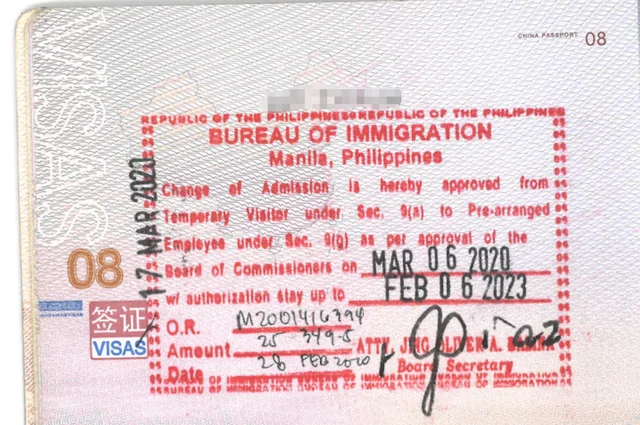
In practice, the AEP is the permit most employers need when hiring executives, technical specialists, managers, or other foreign workers for ongoing employment. It is not a substitute for a visa, but it is a prerequisite for the work visa in most long-term employment cases.
The AEP is typically valid for one to three years depending on the contract, with renewals possible under the applicable rules. Because the permit is tied to the employment relationship, changes in job title, employer, or work location may require a fresh review or new application.
Special Work Permit for Short Assignments
The Special Work Permit (SWP) is used when a foreign worker will perform gainful work in the Philippines for a short period. BI guidance shows the commercial SWP as a three- to six-month authorization, and practice materials consistently describe it as the permit used for short-term work assignments.
SWPs are commonly used for consultants, speakers, artists, performers, trainers, and project-based specialists who do not need a full, long-term employment setup. The permit is temporary, and if the engagement becomes longer or ongoing, the employer should transition the worker to the proper long-term route, such as an AEP and 9(g) visa.
This distinction is important because many employers assume that a short project can be extended indefinitely. In reality, once the assignment goes beyond the SWP window, the company must regularize the employee’s status or the worker may no longer be compliant.
Provisional Work Permit as a Bridge
A Provisional Work Permit is a temporary authorization that allows a foreign national to start working while a longer-term work visa application is still pending. This is particularly useful when the 9(g) application has been filed but has not yet been approved, and the company cannot wait to begin the assignment.
The PWP is not a long-term solution, and its usefulness is limited to the period while the underlying application is being processed. Employers should view it as a bridge, not as a stand-alone hiring route.
For foreign hires, the PWP can reduce downtime between arrival and the start date, but only if the employer has the main work visa process already in motion.
How Employers Should Decide
Employers should begin by asking three questions: How long will the assignment last, what type of work will the foreign national perform, and is there already a visa or permit pathway in place? If the work is short-term, an SWP may be enough; if it is long-term, an AEP plus 9(g) is usually required.
A practical decision guide looks like this:
- Less than six months, project-based: SWP is often the correct route.
- Ongoing employment, executive, managerial, or technical role: AEP plus 9(g) is usually the standard path.
- Work must start before the visa is approved: PWP may be used as a temporary bridge.
Getting this decision right early is one of the easiest ways to avoid compliance mistakes and onboarding delays.
Documents and Filing Expectations
Employment permit applications usually require both company and employee documents. While the exact checklist varies by permit type, employers should expect to provide corporate registration documents, job details, and supporting documentation for the foreign hire.
For AEP cases, common documents include the employment contract, passport copy, business registration details, and a justification showing why the foreigner is needed for the role. For SWP cases, the company generally needs the application form, visa details, and documents showing the temporary nature of the work.
Because the Philippines requires accurate filings with both labor and immigration agencies, missing or inconsistent documents can delay the process or raise questions from the authorities. Employers should therefore keep copies of contracts, permits, tax records, and visa pages in one organized compliance file.
Compliance After Approval
Getting the permit is only the first step. Employers must continue to monitor validity dates, work scope, and status changes throughout the assignment.
Important compliance tasks include:
- Renewing permits before they expire.
- Notifying authorities if the foreign worker changes employer, role, or assignment terms.
- Keeping the worker in the correct immigration status throughout the stay.
- Maintaining payroll, tax, and HR records in case of inspection or audit.
If the employee leaves the company or the project ends, the permit may need to be canceled, downgraded, or otherwise updated so the foreign national does not remain on an outdated employment basis.
Key Takeaways
Employment permits in the Philippines are not a one-size-fits-all process. The right choice depends on the duration of work, the nature of the assignment, and whether the worker needs a short-term, bridging, or long-term authorization.
For most long-term hires, the AEP and 9(g) work visa is the standard route. For short-term assignments, the SWP is often the better fit. For workers waiting on a full visa, the PWP can provide a temporary bridge.
Get Expert Assistance
Work Visa Philippines helps employers and foreign workers choose the appropriate permit path and ensure every step is compliant from application to renewal. Schedule a consultation today:
- Contact Us Here
- Fill Out the Form Below
- Call us at +63 (02) 8540-9623