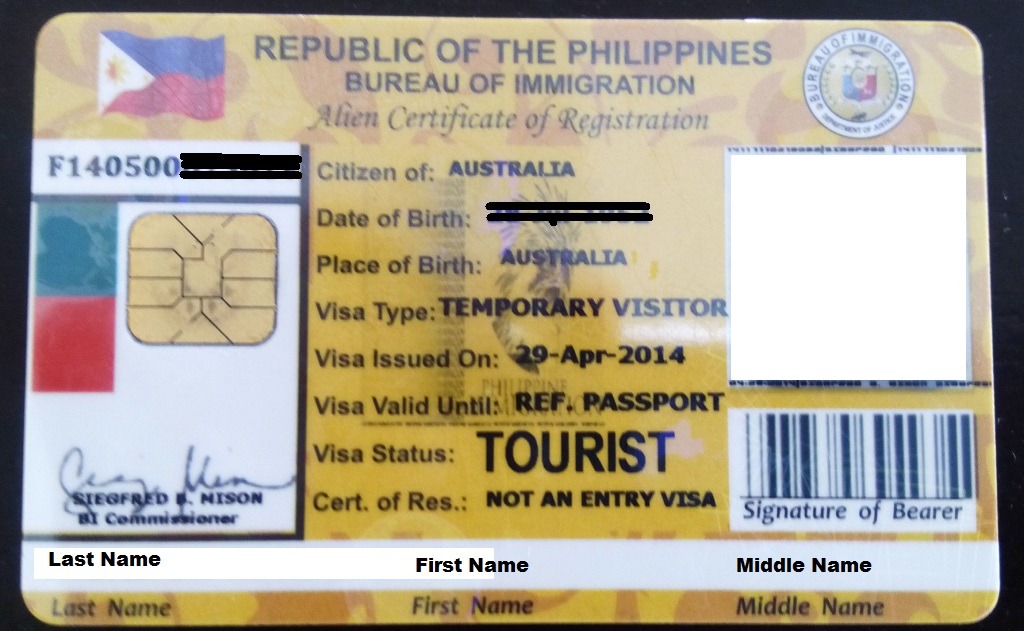
The Alien Certificate of Registration Identity Card, or ACR I-Card, is the official identity card issued by the Bureau of Immigration to many foreign nationals who stay in the Philippines beyond the visitor stage. For workvisaphilippines.com, it matters because the ACR I-Card is often the document that proves a foreigner’s lawful stay, visa status, and registration details after they have entered or extended their stay.
This card is not just a plastic ID. It is part of the country’s alien registration system, and it is required for many foreign residents, work visa holders, students, and dependents who remain in the Philippines long enough to be formally registered with the BI.
What the ACR I-Card Is
The ACR I-Card is a biometric identity card for foreign nationals in the Philippines. It contains personal details such as the holder’s name, photo, nationality, and immigration status, and it is designed to help BI verify that the foreign national is properly registered.
The card is linked to the alien registration process, which records a foreign national’s entry, residence, and relevant immigration data in the Philippines. In practical terms, it is the card that many foreign residents carry to prove that they are legally staying in the country under the visa they were granted.
Who Needs an ACR I-Card
The BI states that foreign nationals who hold a Temporary Visitor’s Visa or Tourist Visa and stay in the Philippines for more than 59 days must apply for an ACR I-Card. This makes the card relevant even to people who are not long-term workers, because a short stay that passes the 59-day threshold can trigger registration.
The card also applies to many immigrant and non-immigrant visa holders, including workers, students, retirees, and dependents who are required to register after receiving their visa approval or extension. For example, work visa holders and long-term residents commonly need the card because BI uses it as a core registration document.
When You Apply
Timing depends on the visa type and how long the foreign national remains in the Philippines. For temporary visitors, the BI indicates that the ACR I-Card is required after staying more than 59 days. For other visa holders, the card is often applied for together with the visa or visa extension application.
The Bureau of Immigration’s ACR I-Card Issuance service page says the ACR I-Card application must be submitted together with the visa application for qualifying applicants. That means the card is not always a separate later step; in many cases, it moves together with the visa process.
Why the Card Matters
For foreign nationals, the ACR I-Card is important because it serves as proof of registration and lawful stay. It is often required when dealing with banks, government offices, and certain immigration transactions, including re-entry and travel procedures.
The card also strengthens a foreigner’s ability to demonstrate their current immigration status if they are questioned by authorities or need to process a later extension, renewal, or travel document. For employers and expats, this means the card should be treated as a compliance item, not as a simple convenience.
Typical Documents Required
The exact checklist depends on the visa category, but the BI’s published documents and related guidance show the recurring requirements clearly.
Common documents include:
- A duly accomplished ACR I-Card application form.
- A certified true copy of the Order granting the visa or visa approval, when required for internal verification.
- A photocopy of the passport bio page and the pages showing the valid visa implementation and the latest admission with authorized stay.
- Proof of payment, such as official receipts for the visa or card fees.
- Two recent 2×2 photographs with a white background taken within the last three months.
Some categories may require additional documents, such as the Immigrant Certificate of Residence or school-related papers for students, or, in the case of late filings, an explanation letter and surrender of the original ACR I-Card.
How to Apply
The Bureau of Immigration’s ACR I-Card Certification service outlines a straightforward application flow. Although the exact steps may differ slightly by office or visa type, the standard process is easy to follow.
The general steps are:
- Secure and fill out the application form.
- Submit the completed form with the required supporting documents.
- Wait for the Order of Payment Slip (OPS).
- Pay the corresponding fees.
- Submit the application again with the official receipts attached.
- Return on the appointed date and time to claim the certification or card.
For some categories, the application can be filed at the BI Main Office or at other immigration offices authorized to process ACR I-Card transactions. This means location and visa type both matter when deciding where to file.
Fees and Processing
The BI’s published fee information shows that the ACR I-Card process is relatively standardized, though fees may change without notice. For issuance, the posted charge includes a USD 50 ACR I-Card fee, plus a PHP 500 additional charge in some cases.
For ACR I-Card Certification, the BI lists a certificate fee of PHP 500, a legal research fee of PHP 10, and, if express service is used, an additional PHP 500 express fee. The posted total for that certification service is PHP 1,010.
Processing speed depends on the office and system used. Some BI guidance notes that cards may be released with passport implementation, while other offices or systems process the card within a set number of hours after approval. In practical terms, foreign nationals should still expect a wait and should not leave the filing until the last minute.
ACR I-Card Certification
In some cases, foreign nationals may need an ACR I-Card certification rather than a new card issuance. The BI certification service is used to confirm whether a person has already registered or not yet registered.
This can be useful when a foreign national needs proof of registration for another immigration transaction or to clarify their BI record. The certification process is separate from card issuance, but it still relies on proper forms, payment, and supporting documents.
Common Mistakes to Avoid
One common mistake is assuming the ACR I-Card is only for long-term workers. In reality, many temporary visitors who stay beyond 59 days also need it.
Other mistakes include:
- Filing with an incomplete passport copy or missing visa pages.
- Submitting photos that do not match BI standards or are too old.
- Forgetting the official receipt or proof of payment.
- Waiting too long after the visa grant or extension and missing the proper filing window.
- Confusing the certification service with card issuance and applying for the wrong transaction.
These errors are avoidable if the foreign national keeps the passport, visa, and filing documents organized from the start.
Final Insights
The Alien Certificate of Registration Identity Card is one of the most important identity and registration documents for foreign nationals in the Philippines. It confirms registration with the Bureau of Immigration, supports lawful stay, and is often required once a foreigner remains in the country beyond the visitor stage.
Foreign nationals should apply on time, prepare the correct documents, and keep proof of visa and payment records ready for BI review.
Get Expert Assistance
Work Visa Philippines helps foreign nationals and employers handle ACR I-Card registration and related immigration steps correctly so their stay stays compliant from the start.
Contact us to through any of the following channels for assistance:
- Contact Us Here
- Fill Out the Form Below
- Call us at +63 (02) 8540-9623