Pre-approved visa processing in the Philippines refers to the practice of securing key work permits and visas, such as the 9(g) employment visa, before the foreign national travels to or starts working in the country. This concept is increasingly important because many employers and foreign staff prefer to have the major immigration and labor authorizations in place ahead of arrival or deployment.
The idea is simple: instead of waiting until the foreign worker is already in the Philippines to begin the full compliance process, the employer and the foreign national start the AEP and visa steps early, often while the worker is still abroad. This can reduce uncertainty, speed up onboarding, and help align travel dates with lawful work status.
What Pre-Approved Visa Processing Means
Pre-approved visa processing means preparing and, where possible, obtaining the core work authorization documents before the foreign national begins employment or enters the Philippines for work. The centerpiece of this process is usually the Alien Employment Permit from DOLE and the 9(g) pre-arranged employment visa from the Bureau of Immigration.
In some cases, the foreign national may receive provisional or conditional approvals that can be implemented or converted once they arrive. The exact pathway depends on the applicant’s location, the company’s structure, and the specific visa category being used.
Why Employers Use This Approach
Employers use pre-approved visa processing to manage risk and control timelines. Hiring a foreign national often involves coordination between HR, legal, finance, and operations, and delays in immigration can affect project start dates, client commitments, and payroll planning.
By starting the process early, employers can better predict when the foreign worker will be fully authorized to work. This is especially useful for companies with regional mobility programs, time-sensitive projects, or strict compliance requirements.
How the Process Generally Works
The process generally starts with the employer confirming the role, salary, and justification for hiring a foreign national. Once that is clear, the employer and the foreign worker begin assembling the documents needed for the AEP and the 9(g) visa.
The sequence can vary, but a common pattern is that the AEP application is prepared and filed first or in parallel with the early stages of the 9(g) case. As approvals are obtained, the foreign national can then plan travel or deployment with greater confidence that the work status is being secured.
Role of the Alien Employment Permit
The Alien Employment Permit is a DOLE-issued document that authorizes a foreign national to work in a specific position for a specific employer. It is a core requirement for most employment-based visas, including the 9(g) pre-arranged employment visa.
In pre-approved processing, the AEP is often the first major milestone. The employer must show that the position is genuine, that the company is legitimate, and that the foreign hire meets the requirements for the role. Once the AEP is issued, it becomes a key supporting document for the visa stage.
The 9(g) Pre-Arranged Employment Visa
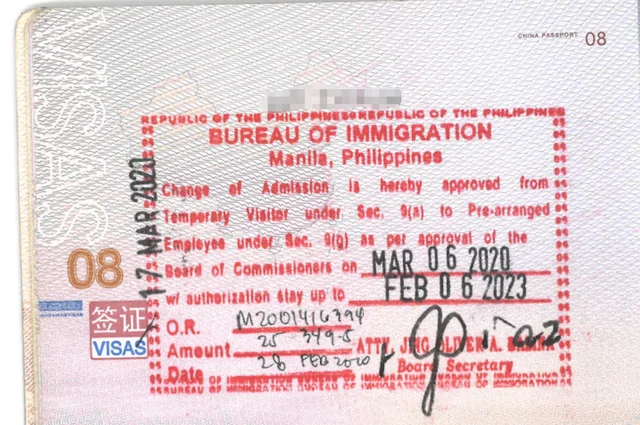
The 9(g) visa is the main long-term work visa for foreign employees in the Philippines. It allows the holder to stay and work for the sponsoring employer, subject to the conditions of the visa and the underlying AEP.
In a pre-approved approach, the 9(g) application is prepared and advanced as far as possible before the worker arrives or starts employment. Depending on the circumstances, parts of the case may be processed while the foreign national is abroad, with final implementation steps completed after arrival.
Who Can Benefit
Pre-approved visa processing is most useful for companies that regularly hire foreign staff or bring in expatriates for defined roles. It is also helpful for foreign executives, technical specialists, and professionals who need to align their travel with a clear work status.
This approach can also benefit investors and regional headquarters that deploy staff across multiple countries and want consistent immigration planning. The goal is to minimize last-minute surprises and ensure that the foreign worker is compliant from the start of employment.
Documents Typically Required
The document set for pre-approved processing is similar to the standard AEP and 9(g) requirements, but it must be prepared earlier and often with more attention to timing. Both employer-side and employee-side records are needed.
Common documents include:
- A completed and notarized AEP application form.
- A letter of request or employment contract describing the role, salary, and term.
- A copy of the foreign national’s passport and, if applicable, current visa.
- SEC or DTI registration of the employer and relevant business permits.
- Mayor’s permit or, for ecozone locators, PEZA or equivalent certification.
- A curriculum vitae of the foreign worker.
- Bureau of Immigration forms and supporting affidavits for the 9(g) case.
Exact requirements can vary depending on the office and the specific visa path, so confirmation with the proper agency is important.
Timing and Planning
Timing is critical in pre-approved visa processing. The employer must decide early enough to allow for document preparation, government processing, and any follow-up requests. Rushed cases are more likely to encounter delays or errors.
A realistic plan accounts for the time needed to secure the AEP, advance the 9(g) application, and complete any post-arrival steps such as visa implementation, ACR I-card capture, and local registrations. Proper planning helps avoid situations where the foreign worker arrives before the work authorization is ready.
Advantages of Early Processing
Early processing offers several advantages. It gives the employer more control over the start date, reduces the chance of working before proper authorization, and provides clearer visibility on fees and timelines.
It also helps the foreign worker plan travel, housing, and family arrangements with more certainty. For companies with compliance policies or audit requirements, pre-approved processing creates a cleaner paper trail and stronger evidence of good-faith effort to follow the rules.
Limitations and Considerations
Pre-approved visa processing does not mean that every step can be completed before arrival. Some stages, such as biometric capture, visa implementation, and certain post-approval requirements, may still need to be done in the Philippines.
There are also cases where the foreign national’s location, nationality, or specific visa type affects what can be done in advance. Employers should not assume that all elements can be finalized abroad and should plan for in-country steps where necessary.
Common Mistakes to Avoid
A common mistake is starting the process too late and then expecting full approval before travel. Another is assuming that pre-approved processing removes the need for careful document preparation and compliance checks.
Other frequent errors include:
- Filing under the wrong DOLE or BI office.
- Submitting an employment contract that does not match the actual role or salary.
- Ignoring the need for post-arrival steps such as visa implementation and ACR I-card procedures.
- Treating pre-approved processing as a guarantee of immediate approval without allowing time for government review.
Avoiding these mistakes requires clear planning and realistic expectations.
Final Thoughts
Pre-approved visa processing in the Philippines is a strategic way to secure key work permits and visas, such as the AEP and 9(g), before or near the time of arrival. It gives employers and foreign workers more control over timing, compliance, and onboarding.
Why It Matters for Work Visa Philippines
For Work Visa Philippines, pre-approved visa processing is a central part of helping employers and foreign workers manage complex immigration cases. Many clients want to know what can be done before arrival, what must be done after, and how to align travel with lawful work status.
This approach allows the firm to structure cases so that the AEP and 9(g) visa are advanced as far as possible before the foreign worker starts employment. It also helps set accurate timelines and reduce the risk of non-compliance.
Our team of experts helps companies and foreign professionals design and implement pre-approved visa strategies so that immigration and labor requirements are met in the right order. If your company is planning to hire foreign staff or deploy expatriates to the Philippines, early planning and proper processing can make the difference between a smooth start and a delayed, risky launch:
- Contact Us Here
- Fill Out the Form Below
- Call us at +63 (02) 8540-9623