Visa-free entry to the Philippines allows certain foreign nationals to arrive in the country without applying for a visa in advance, as long as they meet specific conditions. For Work Visa Philippines, this is an important topic because many foreign professionals first enter the country under visa-free rules, then shift to work-related status if they secure employment or decide to stay longer.
The key point is that visa-free entry is designed for short visits, such as tourism or business meetings, not for working in the Philippines. Foreign nationals who intend to work must still obtain the proper work authorization, such as an Alien Employment Permit and a 9(g) pre-arranged employment visa, even if they are eligible for visa-free entry.
What Visa-Free Entry Means
Visa-free entry means that eligible foreign nationals can enter the Philippines without obtaining a visa from a Philippine embassy or consulate before travel. Instead, they are granted a short stay at the port of entry if they present the required documents and are not on any blacklist or deportation order.
This privilege is based on Executive Order No. 408 and related issuances from the Department of Foreign Affairs. It applies to nationals of certain countries and to specific categories of travelers, such as former Filipino citizens under the Balikbayan Program and holders of certain special passports.
Who Can Enter Without a Visa
Visa-free entry is not available to everyone. It is limited to nationals of countries listed under Executive Order No. 408 and related policies, as well as certain special categories defined by the government.
Nationals from many countries may enter the Philippines without a visa for an initial stay of 30 days, provided they hold a passport valid for at least six months beyond the period of stay and possess a return or onward ticket. Brazilian and Israeli nationals are allowed a longer visa-free stay of 59 days based on existing bilateral agreements.
Other categories include:
- Indian nationals, who may be granted visa-free entry for up to 14 days for tourism under specific conditions.
- Holders of Hong Kong SAR and Macau SAR passports, who are generally allowed visa-free entry for up to 14 days.
- Holders of certain other visas or residence permits, who may qualify for short visa-free stays under special rules.
- Former Filipino citizens and their qualified family members under the Balikbayan Program, who may be allowed visa-free entry for up to one year when traveling with the Filipino principal.
Travelers should always verify their specific eligibility with the nearest Philippine embassy or the official immigration guidelines before departure.
Conditions for Visa-Free Entry
Visa-free entry is a privilege, not an absolute right. Even eligible travelers must meet certain conditions at the port of entry. If these conditions are not met, they may be denied entry or asked to return to their point of origin.
The standard conditions include:
- A passport valid for at least six months beyond the contemplated period of stay.
- A confirmed return ticket to the home country or an onward ticket to the next destination.
- Registration on the eTravel portal within the required time before arrival.
- No existing derogatory record with the Bureau of Immigration, National Intelligence Coordinating Agency, or Interpol.
In some cases, immigration officers may exercise discretion when the passport validity is shorter than six months, but foreign nationals should not rely on this and should always ensure compliance with the six-month rule.
Length of Stay Allowed
The length of visa-free stay depends on the traveler’s nationality and the applicable rule. The most common period is an initial stay of 30 days for many eligible countries under Executive Order No. 408.
Some categories receive shorter or longer periods:
- Many visa-free nationals are limited to 30 days per entry.
- Brazilian and Israeli nationals may be granted up to 59 days.
- Indian nationals may receive up to 14 days under the current tourism-focused rules.
- Holders of Hong Kong SAR and Macau SAR passports are generally allowed up to 14 days.
- Balikbayan-qualified former Filipinos and their eligible family members may be allowed up to one year when traveling with the Filipino principal.
These periods are maximums, not guarantees, and the actual allowed stay is determined by the immigration officer at the port of entry.
Extending Visa-Free Stay
Foreign nationals who enter under visa-free rules and wish to stay longer than the initial period may apply for an extension at the Bureau of Immigration. This is a common option for people who decide to extend a visit, pursue family matters, or prepare for a change of status.
Extensions are subject to approval, fees, and compliance with immigration rules. The Bureau of Immigration may grant extensions in increments, depending on the visa-free category and the reason for the extension.
However, visa-free entry is not intended as a long-term solution. People who intend to live or work in the Philippines should plan for the appropriate long-term visa instead of relying on repeated extensions.
Cannot Work on Visa-Free Entry
A critical rule is that visa-free entry does not grant the right to work in the Philippines. Foreign nationals who enter under visa-free rules are admitted as temporary visitors, not as workers.
To work legally, a foreign national must obtain an Alien Employment Permit from DOLE and secure the appropriate work visa, such as the 9(g) pre-arranged employment visa. Working while only on a visa-free or temporary visitor status can result in fines, deportation, and other penalties.
Many foreign professionals enter visa-free to explore opportunities, but before starting any employment, they must shift to the correct work status.
Visa-Free Entry and Work Visa Transition
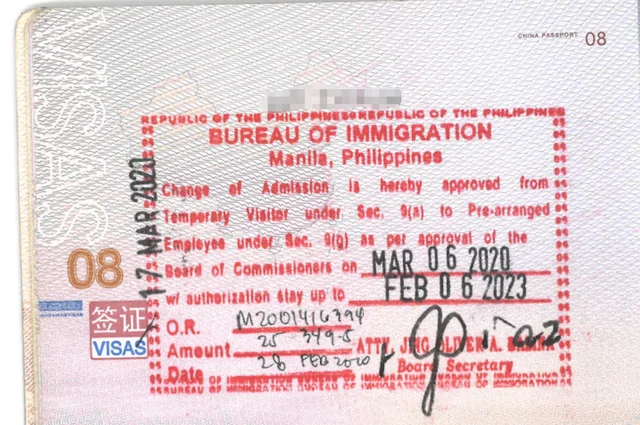
For foreign workers, visa-free entry is often the first step, not the final status. A common pattern is that a foreign national arrives under visa-free rules, finds a job or is transferred by a company, and then applies for work authorization.
Once an employer decides to hire the foreign national, the case typically moves to the Alien Employment Permit (AEP) and 9(g) visa process. The initial visa-free status allows the person to be physically present while the employer prepares the work documents, but the actual start of employment must align with the labor and immigration requirements.
This transition is important because it determines when the foreign worker becomes compliant for employment purposes. Employers should not assume that visa-free entry alone is sufficient to start work.
Common Misconceptions
One of the most common misconceptions is that visa-free entry allows a foreign national to work or do business activities that amount to employment. In reality, visa-free status is for short visits, such as tourism, family visits, or business meetings, not for performing work.
Other common misconceptions include:
- Assuming that all nationalities are eligible for visa-free entry.
- Believing that a visa-free stay can be extended indefinitely without changing status.
- Thinking that holding a visa-free entry removes the need for an AEP or work visa if the person later takes a job.
- Confusing visa-free entry with special visas, such as investor or retiree visas, which have different rules.
These misconceptions can lead to serious compliance issues, especially for employers hiring foreign staff.
Why It Matters for Employers
Employers who hire foreign nationals must understand that visa-free entry is not work authorization. Even if a foreign hire enters the Philippines without a visa, the employer must still secure the AEP and 9(g) visa before the person starts working.
For companies with regional or global mobility programs, this means that the immigration timeline must be planned separately from the travel timeline. A foreign employee may be able to arrive quickly under visa-free rules, but the lawful start date for employment is tied to the work permit and visa.
Failing to align these timelines can expose both the employer and the employee to penalties and status violations.
Wrapping Up
Visa-free entry to the Philippines is a useful privilege for eligible travelers, but it is not a work permit. It allows short stays for tourism, business meetings, or family visits, subject to passport validity, return tickets, and other conditions.
For anyone who intends to work in the Philippines, visa-free entry is only the beginning. The next steps are the AEP and 9(g) work visa, which provide the legal basis for employment.
Visa-Free Entry to Work Transition
For Work Visa Philippines, visa-free entry is a frequent starting point for many foreign workers and investors. Clients often enter visa-free, then engage the firm to handle the shift to work visas, investor status, or other long-term arrangements.
Understanding visa-free rules helps the firm guide clients on when to begin the AEP and 9(g) visa process, how to plan extensions, and how to avoid working before the proper status is in place. It also helps set realistic expectations about the relationship between short-term entry and long-term immigration goals.
Work Visa Philippines helps foreign nationals and employers move from visa-free entry to proper work status so that employment is lawful from the start. If you are planning to hire a foreign worker or if you are a foreign professional considering work in the Philippines, the immigration plan should be set up early and correctly. Contact us today for an initial consultation:
- Contact Us Here
- Fill Out the Form Below
- Call us at +63 (02) 8540-9623