The visa application process in the Philippines depends on the applicant’s nationality, travel purpose, intended length of stay, and activities planned in the country. A tourist, business visitor, foreign employee, investor, student, and dependent may each need a different visa category and supporting document set.
Choosing the correct immigration route is the first and most important step. A well-prepared application should explain why the applicant is coming to the Philippines, how long the applicant intends to stay, who will support the stay, and whether the applicant will work, study, invest, or simply visit.
What The Visa Application Process Involves
The Philippine visa application process is a formal review of an applicant’s identity, purpose of travel, eligibility, and supporting evidence. Depending on the category, the application may be handled by a Philippine Embassy or Consulate, the Bureau of Immigration, the Department of Foreign Affairs, or an official online visa platform.
A visa application is not only about submitting a form. Applicants must usually provide a valid passport, photographs, evidence of travel purpose, proof of financial capacity, and other records specific to the visa category. For employment cases, the application may also require an employer petition, an Alien Employment Permit, and corporate documents.
Step 1: Determine Whether A Visa Is Required
The first step is checking whether the applicant’s nationality is eligible for visa-free entry or requires a visa before travel. Nationals of some countries may enter the Philippines without a visa for a limited stay for tourism or business, subject to the applicable conditions.
Visa-free entry does not mean that every activity is permitted. A foreign national who enters as a visitor cannot automatically accept Philippine employment, perform local work, or change the purpose of the stay without securing the appropriate authorization.
Applicants should verify the rules for their specific passport and intended activity before booking travel. Visa-exemption arrangements may differ by nationality and may be updated by the Philippine authorities.
Step 2: Identify The Correct Visa Category
After confirming whether a visa is needed, the applicant must identify the category that matches the actual purpose of travel. The Bureau of Immigration lists different immigrant and non-immigrant visa categories, including temporary visitor, employment, investor, student, and family-related visas.
Common categories include:
- Temporary visitor visa for tourism, short business visits, or other limited activities.
- 9(g) work visa for foreign nationals working for a Philippine employer.
- 9(d) Treaty trader or investor visa for qualifying nationals and commercial activities.
- Special investor or resident visas for applicants who meet investment or residence requirements.
- Student and special-purpose visas for approved educational or institutional activities.
- Immigrant or permanent residence categories for eligible foreign nationals.
The correct visa is determined by the applicant’s actual purpose, not merely by the preferred length of stay.
Step 3: Review The Official Requirements
Each Philippine Embassy, Consulate, or immigration office may publish its own checklist and filing instructions. The official Philippine Embassy in Germany, for example, instructs applicants to complete the non-immigrant visa application form and submit a scanned copy of the signed form, passport data page, and supporting documents for pre-assessment.
The official eVisa policy also lists core visitor visa requirements, including a passport valid for the required period, a duly completed application, proof of bona fide tourist or business status, and other supporting documents.
Applicants should use the current checklist issued by the authority handling the case. Old checklists, third-party websites, and advice from applicants in another country may not reflect the procedure at the relevant filing location.
Step 4: Check Passport Validity
A valid passport is required for the Philippine visa application process. For visa-required travelers, the official eVisa policy states that the passport should generally be valid for at least six months beyond the applicant’s departure from the Philippines.
Many Philippine Embassy checklists also require a machine-readable passport and a photocopy of the passport data page. Non-machine-readable or handwritten passports may not be accepted for visa applications.
Applicants should ensure that the passport is undamaged, contains sufficient blank pages, and will remain valid for the planned travel and visa period. Passport details must match all application forms and supporting documents.
Step 5: Complete The Application Form
The application form should be completed fully, accurately, and legibly. Applicants should use the name shown on the passport and provide consistent information about employment, address, travel plans, previous travel, and intended stay.
If a form asks about prior visa refusals, overstays, criminal records, or immigration violations, the applicant should answer truthfully. Incomplete or misleading answers can cause delays, refusal, or complications in future applications.
For online applications, applicants should save the confirmation page, reference number, submitted form, and uploaded documents. These records may be required if the Embassy or Consulate asks for clarification.
Step 6: Prepare Proof Of Travel Purpose
The supporting documents should demonstrate why the applicant is traveling to the Philippines. A tourist may provide an itinerary, accommodation details, financial records, and proof of return or onward travel. A business visitor may also need a sponsorship or invitation letter from a company.
The proof should be consistent with the visa category. A person applying as a tourist should not submit documents suggesting that they will undertake local employment. Similarly, a foreign professional applying for a work visa must provide employment documents rather than relying on a tourist itinerary.
Step 7: Provide Financial Evidence
Some visa applications require proof that the applicant can support the planned stay. This may include bank statements, employment records, payslips, tax documents, or a sponsor’s undertaking.
The purpose of financial evidence is to show that the applicant has sufficient resources and is unlikely to become a public charge. The exact amount and format may depend on the applicant’s nationality, visa category, length of stay, and filing post.
Applicants should provide documents that are recent, verifiable, and consistent with their stated employment and travel plans.
Step 8: Submit Scanned Documents For Pre-Assessment
Some Philippine posts use an initial electronic review before requiring original documents. The Philippine Embassy in Germany’s published procedure instructs applicants to email a signed form, a scanned passport, and supporting documents for pre-assessment.
If the Visa Office finds the electronic documents complete, it then informs the applicant to submit the passport and hard copies by mail or in person by appointment.
This is a location-specific procedure, not a universal rule for every Philippine Embassy. Applicants should follow the exact instructions of the post with jurisdiction over their residence.
Step 9: Submit Original Documents
Once pre-assessment is complete, the applicant may be asked to submit the original passport and hard copies of supporting documents. The originals allow the visa officer to verify authenticity and compare them with the electronic copies.
The documents should be organized in the order requested by the Embassy or Consulate. Missing originals, unclear copies, or documents that do not match the scanned submission may require a new submission or additional review.
Applicants sending documents by mail should use a reliable service and include the required return envelope if the Embassy permits postal release.
Step 10: Pay The Required Fee
The applicant must pay the applicable visa fee using the payment method specified by the relevant Embassy, Consulate, or online system. Fees vary according to the visa type, nationality, number of entries, and processing location.
The fee may be non-refundable even if the application is refused or withdrawn. Applicants should verify the current amount before payment because fee schedules can change.
A copy of the payment receipt should be retained with the visa records.
Step 11: Attend An Interview If Required
Some applicants may be asked to attend an interview or provide additional information. The purpose is to confirm the applicant’s identity, travel purpose, financial situation, and intention to comply with the visa conditions.
Employment, investor, and other specialized cases may involve additional review because they require more than a simple visitor assessment. Applicants should be prepared to explain their job, employer, source of funds, planned activities, and intended stay in clear terms.
The information given during an interview must match the written application and supporting documents.
Step 12: Wait For Processing
Processing time depends on the visa category, the completeness of the file, the applicant’s nationality, and whether approval from Manila is required. The Philippine Embassy in Germany states that, after receiving the passport and hard-copy documents, processing may take five to ten working days, with longer periods possible for nationals requiring Department of Foreign Affairs approval.
Specialized employment, investor, immigrant, and dependent applications may take longer than ordinary visitor applications because they involve additional agencies or documentary review.
Applicants should avoid making non-refundable travel arrangements until the passport and visa have been released.
Step 13: Check The Issued Visa
When the visa is approved, applicants should immediately check the visa details. The name, passport number, category, entry type, validity dates, and conditions should be accurate.
If an error appears, the applicant should contact the issuing Embassy, Consulate, or immigration office before traveling. A mistake in the visa should not be ignored because it may create problems at boarding or arrival.
A visa permits the applicant to seek entry under the approved conditions. Final admission remains subject to inspection by Philippine immigration officers.
Visa Application Process For Foreign Workers
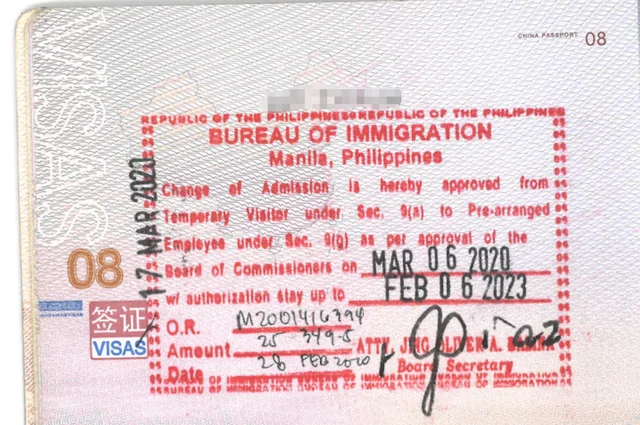
The visa application process is different for foreign nationals who will work in the Philippines. The most common long-term employment route is the 9(g) pre-arranged employment visa, which is filed with support from a Philippine employer.
For a 9(g) case, the employer generally files a petition with the Bureau of Immigration. The application may require the employment contract, passport copy, company registration documents, latest tax filings, the Alien Employment Permit from DOLE, and other supporting evidence.
The employee should not begin working merely because the application has been submitted. If work must begin while the 9(g) application is pending, the employer may apply for a Provisional Work Permit, which the Bureau of Immigration describes as being issued during the pendency of a pre-arranged employment visa application.
Applying For A 9G Visa From Abroad
A foreign employee applying from abroad normally requires Philippine-side employer sponsorship before the visa can be issued by a Philippine Embassy or Consulate. The New York Philippine Consulate explains that the employer or sponsor in the Philippines should first file the petition with the Bureau of Immigration, after which the consular post issues the visa only upon authorization from the Department of Foreign Affairs in Manila.
The applicant then submits the passport, visa form, photograph, and other documents required by the relevant post. The exact procedure may differ depending on the employee’s country of residence.
Converting Visitor Status To A Work Visa
Some foreign nationals enter the Philippines as temporary visitors and later receive a Philippine job offer. In suitable cases, the employer may support a change of status to a 9(g) visa through the Bureau of Immigration.
The foreign national must maintain a valid immigration status during processing and cannot begin employment simply because a petition has been filed. The employer should address the Alien Employment Permit and work authorization requirements before the employee starts work.
This route can be useful, but it should be planned carefully because visitor status and work authorization are legally different.
Documents For Employment Applications
Employment-based visa applications require documents from both the worker and the employer. The Bureau of Immigration’s 9(g) checklist includes items such as a joint letter request, the appropriate application form, passport copies, an employment contract or appointment document, employer tax records, corporate registration documents, the AEP, and a notarized certification of the employer’s foreign and Filipino employees.
Additional documents may be required for regulated professionals, dependents, or applications filed through a particular consular post. The employer should confirm the current checklist before filing because documentary requirements may change.
Family And Dependent Applications
Spouses and children accompanying a principal applicant may need separate visa applications and supporting documents. The required evidence usually includes marriage and birth certificates or other official proof of relationship.
Civil documents issued abroad may need apostille certification, authentication, translation, or other treatment. The applicant should confirm the exact requirements with the Embassy or Consulate where the family’s applications will be filed.
Dependent status is often connected to the principal applicant’s immigration status, so the family’s renewal and travel planning should be coordinated.
Common Mistakes In The Process
Applicants can avoid many problems by identifying common errors before filing. These include:
- Choosing a visitor visa when the real purpose is employment.
- Using an expired or non-compliant passport.
- Submitting an incomplete form.
- Failing to provide a return or onward ticket when required for a visitor application.
- Sending documents without the required apostille or authentication.
- Providing inconsistent employment or financial information.
- Starting work before the AEP, 9(g), or Provisional Work Permit is approved.
- Booking travel before visa issuance.
- Ignoring requests for additional documents.
- Relying on a checklist from a different Philippine post or an older date.
A complete application is not only a large application. Every document should be relevant, current, and consistent.
Next Steps
The visa application process in the Philippines begins with choosing the correct category and continues through document preparation, submission, payment, review, issuance, and post-arrival compliance. Visitor applications may be handled through an Embassy, Consulate, or official eVisa system, while employment cases usually require employer sponsorship and coordination with DOLE and the Bureau of Immigration.
Foreign nationals should start early, follow the instructions of the relevant Philippine authority, and avoid beginning work or other restricted activities before the proper authorization is issued. Work Visa Philippines helps applicants, employers, investors, and families navigate the process with clearer planning and properly matched immigration documents.
Work With Visa Professionals
For Work Visa Philippines, the visa application process is the foundation of lawful entry, employment, investment, and residence planning. Foreign nationals often focus on the visa form but overlook the importance of the employer petition, labor permit, document authentication, or post-arrival registration.
A coordinated approach helps applicants select the correct visa, prepare the right evidence, and avoid using a temporary status for activities that require separate authorization. Contact us today for an initial consultation:
- Contact Us Here
- Fill Out the Form Below
- Call us at +63 (02) 8540-9623