Finding expat jobs in the Philippines can be an attractive opportunity for foreign professionals, executives, technical specialists, and business owners. However, accepting a job offer is only the beginning. Foreign nationals must also obtain the appropriate labor authorization and immigration status before they can legally work in the country.
For Work Visa Philippines, the most important rule is that a tourist visa or visa-free entry does not automatically authorize employment. In most ordinary employment cases, the foreign worker needs an Alien Employment Permit from the Department of Labor and Employment and an appropriate work visa, commonly the 9(g) pre-arranged employment visa, from the Bureau of Immigration.
What Expat Jobs Mean
Expat jobs are positions taken by foreign nationals who live and work outside their country of citizenship. In the Philippines, these may include executive, managerial, technical, advisory, confidential, professional, or specialized roles.
The job may be with a Philippine corporation, a branch or subsidiary of an international business, a representative office, an educational institution, or another qualifying organization. The job title alone does not determine whether the person needs work authorization. The actual duties, employer relationship, compensation, work location, and duration of the assignment all matter.
Can Foreign Nationals Work In The Philippines?
Foreign nationals can legally work in the Philippines, but they must use the correct labor and immigration route. The Department of Labor and Employment states that foreign nationals who intend to engage in gainful employment in the Philippines must apply for an Alien Employment Permit unless a specific exemption applies.
The Bureau of Immigration separately requires the appropriate visa or work permit. The two systems work together: DOLE regulates the employment authorization, while immigration authorities regulate the foreign national’s entry, stay, and status.
A foreign national should therefore not begin work merely because an employer has issued a contract or because the person is already present in the Philippines.
The Main Legal Requirements
The legal framework for expat jobs normally involves three connected requirements:
- A genuine job offer or employment contract.
- An Alien Employment Permit from DOLE, when required.
- An appropriate immigration status, usually a 9(g) work visa for long-term employment.
A Provisional Work Permit may also be available in cases where the foreign national needs to begin working while a 9(g) application is pending. The Bureau of Immigration describes the PWP as an authorization issued during the pendency of a pre-arranged employment visa application.
The 9G Work Visa
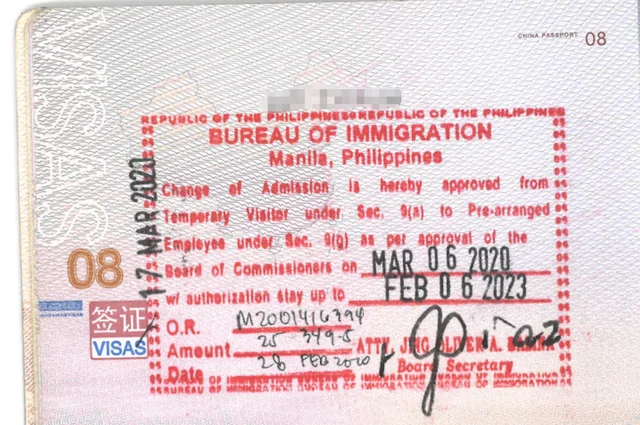
The 9(g) work visa is the standard long-term work visa for foreign nationals employed by a Philippine company. The Bureau of Immigration describes it as the Pre-Arranged Employment Visa for foreign nationals proceeding to the Philippines to engage in lawful work for wages, salary, or other compensation.
It is called “pre-arranged” because the employment must be arranged in advance and supported by a Philippine employer or qualifying petitioner. The employee cannot usually apply for the visa alone without an employer-sponsored position.
The visa is tied to the sponsoring employer and the approved position. It is not an open work permit that allows the foreign national to move freely between companies.
The Alien Employment Permit
The Alien Employment Permit is a labor authorization issued by DOLE. It is a major part of the legal process for expat jobs because it allows the government to assess whether the foreign national may occupy the position.
DOLE rules state that the AEP is one of the requirements for the issuance of a 9(g) visa and is not, by itself, the exclusive authority to work in the Philippines. This distinction is important. An AEP does not replace the immigration visa, and a 9(g) visa does not eliminate the need to address the AEP requirement.
The employer usually files the AEP application on behalf of the foreign worker.
Why The Employer Matters
The employer has a central role in the expat jobs process. A foreign worker generally cannot create a lawful employment-based status without a Philippine employer or local petitioner supporting the case.
The employer must provide corporate documents, the employment contract, the job description, proof of business operations, and information about the foreign worker’s qualifications. The company may also need to explain why the foreign worker is needed for the position.
The employer’s records must be consistent across the AEP, visa petition, payroll registration, and other government filings.
How To Find Expat Jobs
The search for expat jobs usually begins through professional networks, recruitment firms, company transfers, industry associations, and direct applications to Philippine businesses. Foreign professionals may be attractive to employers when they bring technical knowledge, regional experience, language abilities, or expertise that is difficult to recruit locally.
However, a foreign applicant should ask immigration-related questions before accepting an offer. Important questions include:
- Is the employer registered and operating in the Philippines?
- Will the employer sponsor the AEP and work visa?
- Is the role full-time, temporary, consultancy-based, or project-based?
- Where will the work be performed?
- Will the contract be with the Philippine company or a foreign parent?
- Does the position involve a regulated profession?
- When can the employee legally begin work?
These questions help the applicant identify whether the job can support a proper work authorization application.
Step One: Confirm The Job Structure
The first legal step is confirming the actual structure of the expat job. The employer and worker should identify the contracting entity, salary payer, position, duties, work location, and assignment length.
A foreign national assigned by a Japanese, American, European, or other foreign parent company may still need Philippine work authorization if the person will perform work in the Philippines. The source of salary alone does not determine whether a permit is required. The US Embassy’s guidance states that foreign nationals need an AEP regardless of the source of compensation and duration of employment in the relevant circumstances.
Step Two: Prepare The Contract
The employment contract should clearly describe the position and responsibilities. It should include the job title, duties, salary, benefits, term, and employer identity.
The contract becomes a key document in the AEP and work visa process. It should not describe the employee as a consultant if the actual relationship is full-time employment, and it should not use a generic title that fails to explain the need for foreign expertise.
Accurate drafting at this stage can reduce questions from DOLE and the Bureau of Immigration.
Step Three: Apply For The AEP
The employer files the AEP application with DOLE and provides the required documentary evidence. DOLE’s published rules identify documents such as a passport copy, notarized appointment or employment contract, business permit, and other records supporting the application.
The AEP is connected to the employer and position. If the foreign national changes companies or takes a materially different role, a new permit or updated authorization may be needed.
The employer should confirm the current filing office and procedure before submitting because government processing channels and administrative requirements can change.
Step Four: File The Work Visa
After the AEP requirements are addressed, the employer files the 9(g) work visa petition with the Bureau of Immigration. The BI application may include a joint request letter, application form, passport and admission records, employment contract, employer registration documents, tax filings, AEP, and other supporting evidence.
The Bureau of Immigration reviews the petition, may conduct a hearing, and may require biometrics and ACR I-Card processing. The applicant and employer should plan for these steps before setting a final employment start date.
Step Five: Use A Provisional Work Permit If Necessary
Some employers need the foreign worker to begin work before the 9(g) visa is approved. In that situation, the employer may apply for a Provisional Work Permit while the pre-arranged employment visa is pending.
The PWP is temporary and limited. It should not be treated as a permanent replacement for the 9(g) visa or as permission to work for another employer. Once the principal visa is approved, the worker should transition into the correct long-term status.
Step Six: Complete Registration
After the work visa is approved and implemented, the foreign national may need to complete the ACR I-Card and other Bureau of Immigration registration procedures. The ACR I-Card is part of the registration system for foreign nationals staying in the Philippines.
The employee should also coordinate with the employer regarding tax registration and payroll. DivinaLaw identifies the Tax Identification Number as another important requirement connected to foreign employment in the Philippines.
Types Of Expat Jobs
Expat jobs in the Philippines can arise in many sectors, but the position must still satisfy the legal requirements for foreign employment. Common examples include:
- Senior management and executive positions.
- Engineering and technical roles.
- Information technology and specialized digital positions.
- Manufacturing and production management.
- Education and academic positions.
- Banking, finance, and compliance.
- Construction and infrastructure.
- Regional business development.
- Research and scientific work.
- Specialized consulting linked to a local employer.
The foreign national’s qualifications should match the role. Employers should be prepared to show why the foreign applicant’s experience or expertise is relevant.
Regulated Professions
Some expat jobs involve professions regulated by Philippine law. Examples may include medicine, nursing, teaching, engineering, law, and other licensed occupations.
A work visa does not automatically grant a foreign national the right to practice a regulated profession. The person may need recognition of qualifications, registration, a special permit, or another authorization from the relevant Philippine regulatory body.
Before accepting such a position, the applicant should confirm both immigration eligibility and professional licensing requirements.
Short-Term Expat Assignments
Not every expat job requires a long-term 9(g) visa. Short-term assignments may require a Special Work Permit or another temporary authorization, depending on the work and duration.
The correct route should be determined before work starts. A foreign engineer visiting for training, a consultant performing a limited project, and a senior executive relocating for several years may require different immigration strategies.
The employer should not select a short-term permit solely because it appears faster if the actual assignment is long-term or involves regular employment.
Jobs Through A Foreign Employer
A foreign company may want to send an employee to the Philippines while keeping the person on a foreign payroll. This arrangement still requires careful analysis if the employee will perform work in the Philippines.
The source of compensation does not automatically remove the need for Philippine work authorization. The legal assessment depends on the work performed, the local entity, the employee’s relationship with the Philippine operation, and the length and nature of the assignment.
A foreign employer without a Philippine entity may need to establish a compliant local structure or use an appropriate employer-of-record arrangement, subject to professional advice and current Philippine rules.
Changing Employers
A 9(g) visa is generally tied to the employer that sponsored the application. A foreign national who resigns or changes companies should not assume that the existing visa can be transferred automatically.
The new employer may need to file a new AEP and a new work visa petition. The existing status may also need to be downgraded, canceled, or otherwise adjusted before the new employment can be implemented.
Foreign workers should consult before resigning because an employment change can affect their lawful status and the ability to continue working.
Taxes And Employer Compliance
Foreign workers may need a Philippine Tax Identification Number and may be subject to Philippine tax rules on employment income. The employer must review payroll, withholding, registration, and reporting obligations based on the employment arrangement.
Visa compliance does not automatically resolve tax questions. A foreign national may have continuing obligations in the home country as well, especially if the individual remains a citizen or tax resident elsewhere.
Expat applicants should address immigration and tax planning together, especially for senior roles and international assignments.
Exemptions From The AEP
Some foreign nationals are exempt from the AEP requirement under specific rules. The US Embassy identifies categories such as diplomatic personnel, accredited foreign government officials, missionaries engaged only in missionary work, and members of certain international organizations as examples of persons who may be exempt.
An exemption does not necessarily mean that no documentation is required. The foreign national may need to apply for a certificate of exemption or another confirmation from DOLE.
A person should not assume exemption based solely on job title or nationality. The specific facts and legal category must be verified.
Common Mistakes
Foreign workers and employers commonly make mistakes when applying for expat jobs. These include:
- Accepting a job before confirming visa sponsorship.
- Starting work on a tourist or visa-free status.
- Assuming an AEP alone authorizes employment.
- Using a visitor visa for regular local work.
- Filing the AEP and 9(g) with inconsistent job details.
- Failing to account for professional licensing.
- Allowing the worker’s immigration status to expire.
- Changing employers without reviewing the visa consequences.
- Treating a short-term permit as a solution for a long-term position.
- Delaying the process until immediately before the start date.
These errors can create work interruptions, penalties, or immigration consequences.
Key Takeaways
Expat jobs in the Philippines are available to qualified foreign professionals, but a job offer does not automatically create the right to work. In most ordinary cases, the foreign national needs an AEP from DOLE and the correct immigration status from the Bureau of Immigration, usually a 9(g) visa for long-term employment.
The most reliable approach is to begin with the employment structure, confirm the employer’s ability to sponsor the worker, prepare a consistent contract, and complete the labor and immigration approvals before work starts. Work Visa Philippines helps employers and foreign professionals make that process clearer and more manageable from the beginning.
How We Can Help
For Work Visa Philippines, expat jobs are closely connected to employer sponsorship, labor authorization, and immigration compliance. Helping a foreign professional find or accept a position is only part of the process. The employer and employee must also build a legal path for the person to work and remain in the Philippines.
Work Visa Philippines helps foreign professionals and Philippine companies assess the correct visa category, prepare AEP and immigration documents, manage timing, and plan renewals or employment changes. Contact us today for an initial consultation:
- Contact Us Here
- Fill Out the Form Below
- Call us at +63 (02) 8540-9623