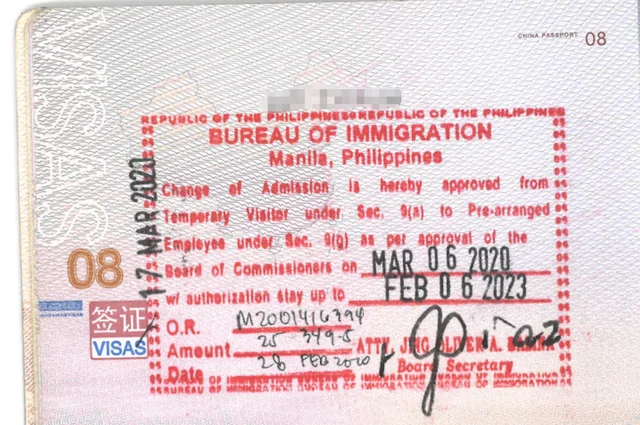
Foreign nationals who accept employment with a Philippine company generally need the proper authorization before they can legally work in the country. One of the principal immigration options is the 9(g) Pre-Arranged Employee Visa, commonly known as the 9(g) visa.
The 9G visa is designed for foreign nationals who have pre-arranged employment in the Philippines and is processed by the Bureau of Immigration (BI). However, obtaining the visa is not simply a matter of submitting a passport and an employment contract. The employer and foreign employee must also address labor requirements, including the Alien Employment Permit (AEP), unless an applicable exemption or exclusion applies.
What is a 9G visa in the Philippines?
The 9G visa is a non-immigrant visa for foreign nationals who are coming to the Philippines for pre-arranged employment. The Bureau of Immigration identifies it as the Pre-arranged Employment Visa under Section 9(g) of the Philippine Immigration Act.
For commercial employment, the visa is intended for a foreign national who will engage in lawful employment in the Philippines for compensation. The employer and the position are therefore central to the application.
A 9G visa should not be treated as a general authorization to work for any Philippine employer. The employment arrangement supporting the visa matters, and changes in the employer or employment circumstances may require additional immigration or labor action.
The BI also recognizes a non-commercial form of the 9G visa for foreign nationals engaged in activities such as missionary, social, or rehabilitation work. For most foreign professionals employed by Philippine businesses, however, the commercial 9G visa is the relevant category.
Who Can Apply for a 9G Visa?
Eligibility starts with having genuine, pre-arranged employment in the Philippines. The foreign national must have an employment relationship that satisfies Philippine immigration and labor rules.
The Bureau of Immigration describes the commercial 9G visa as available to foreign nationals proceeding to the Philippines to engage in a lawful occupation for wages, salary, or other forms of compensation.
In practice, a strong application normally involves three connected elements:
- A legitimate Philippine employer or petitioner
- A genuine employment arrangement and appropriate employment documentation
- Compliance with applicable DOLE and BI requirements
The employer is not merely providing a supporting letter. It plays an important role in the petition and must provide corporate and employment documents required by the Bureau of Immigration.
The foreign worker must also be qualified for the position and must satisfy applicable immigration requirements. Where the position involves a profession regulated in the Philippines, additional professional authorization may be necessary.
9G Visa Requirements: What Documents Are Needed?
The exact documentary requirements depend on the type of transaction and the applicant’s circumstances. The Bureau of Immigration’s published 9(g) checklist includes documents from both the foreign employee and the sponsoring employer.
Applicants should prepare their documents carefully because inconsistencies between the employment contract, AEP, corporate records, and visa application can result in requests for additional documents or delays.
Common 9G visa requirements include the following:
Documents for the Foreign Employee
The foreign national may need to provide:
- A properly accomplished Bureau of Immigration application form
- A valid passport and copies of the passport bio-page
- The applicant’s current Philippine immigration status or admission documents, where applicable
- An employment contract or equivalent appointment document
- A Bureau of Immigration clearance
- A Taxpayer Identification Number or proof of TIN, when applicable
- A medical clearance when required under applicable Bureau of Quarantine rules
- Additional documents relating to dependents, if dependents are included
The employment document should clearly identify important details such as the nature of the position, compensation, and duration of employment.
The applicant should also ensure that names, passport details, job titles, dates, and other information are consistent across the documents.
Documents From the Philippine Employer
The employer or petitioner generally needs to provide corporate and employment documentation.
Depending on the type of business, this may include:
- SEC registration documents for corporations or partnerships
- Articles of Incorporation or equivalent corporate documents
- The company’s current General Information Sheet
- DTI and business registration documents for applicable sole proprietorships
- Business permits
- The employer’s latest income tax return and applicable proof of payment
- The foreign employee’s employment contract or appointment document
- The Alien Employment Permit issued by DOLE, when required
- Proof of publication connected with the AEP, where required
- A notarized certification showing the number of foreign and Filipino employees
- A Special Temporary Permit from the Professional Regulation Commission, when applicable to a regulated profession
The BI’s documentary checklist also allows the Bureau to request additional supporting documents when necessary for verification and evaluation.
Why the Alien Employment Permit Is Important
The AEP is a labor permit administered by DOLE, while the 9G visa is an immigration authorization administered by the Bureau of Immigration. These are separate government requirements, even though they are closely connected in the process.
Under DOLE’s rules governing the employment of foreign nationals, an employer generally needs to secure an AEP before a foreign national begins employment in the Philippines, unless the foreign national falls within an applicable exemption or exclusion.
The AEP process is intended, among other things, to address whether a Filipino worker who is competent, able, and willing to perform the work is available.
This is why employers should not treat the AEP as a simple administrative formality. The employer must comply with the applicable labor market test and other documentary requirements.
There has also been an important recent procedural development. In June 2026, DOLE announced the full centralization of AEP processing and issuance at the DOLE Central Office, effective June 9, 2026. Employers should, therefore, verify the current filing procedure before submitting an AEP application rather than relying on older instructions referring to routine processing by DOLE Regional Offices.
The Labor Market Test and Foreign Employment
The labor market test is an important part of the Philippine framework for employing foreign nationals. It is intended to determine whether a Filipino citizen who is competent, able, and willing to perform the position is available.
Under the current DOLE rules, publication of the job vacancy remains part of the labor market test framework. DOLE’s supplemental guidelines also state that employers are encouraged to post vacancies through PhilJobNet and the appropriate Public Employment Service Office or Job Placement Office, although those additional postings are not a precondition to filing the AEP application.
This means employers should plan the recruitment and AEP process rather than waiting until the foreign employee is ready to start work.
The purpose is not necessarily to prevent businesses from hiring foreign professionals. Instead, the rules establish a process for determining whether foreign employment is justified under Philippine labor regulations.
Step-by-Step Process for Obtaining a 9G Visa
The 9G application involves several stages because labor authorization and immigration authorization are connected but handled by different government agencies.
Step 1: Confirm That a Foreign National Can Fill the Position
Before preparing the visa application, the employer should examine the proposed position and determine what permits and professional authorizations apply.
This includes checking whether the position requires an AEP and whether it involves a profession regulated by the Professional Regulation Commission.
The employer should also confirm that its own registrations and permits are current.
Step 2: Prepare the Employment Documentation
The employment contract is one of the most important documents in the application.
It should accurately describe the foreign employee’s position, duties, compensation, and employment period. The information should correspond with the employer’s corporate records and the documents submitted to DOLE.
An employer should avoid preparing one version of the job description for the AEP and another for the immigration application. Material inconsistencies can create unnecessary questions during processing.
Step 3: Apply for the Alien Employment Permit
Where an AEP is required, the employer must complete the applicable DOLE process.
The current DOLE rules require employers to comply with the applicable labor market test and documentary requirements. Because DOLE centralized AEP processing in 2026, applicants should confirm the current submission procedure directly with DOLE before filing.
The AEP should be secured before the foreign national begins employment, unless a specific exemption, exclusion, or other applicable rule provides otherwise.
Step 4: Prepare the 9G Visa Application
Once the required labor documentation is available, the employer and foreign employee can prepare the immigration application.
The Bureau of Immigration requires the applicable Consolidated General Application Form and supporting documents. The application should be assembled according to the current BI checklist for the specific 9G transaction.
At this stage, it is important to check every document for consistency.
For example, the following should not contradict one another:
- Foreign employee’s name and passport details
- Employer’s registered name
- Position title
- Job description
- Compensation
- Employment period
- AEP information
- Corporate registration details
Step 5: File With the Bureau of Immigration
The completed application is submitted to the Bureau of Immigration office authorized to process the relevant transaction.
The BI’s current 9G service information provides for submission of the required checklist, application form, supporting documents, and the notarized certification concerning the employer’s foreign and Filipino workforce.
Applicants should rely on the BI’s current instructions regarding the appropriate filing office because authorized locations and procedures may change.
Step 6: Pay the Applicable Government Fees
After submission and evaluation, the applicant or petitioner will be required to pay the applicable immigration fees.
It is better not to rely on old articles that quote a fixed 9G fee. Government charges can change, and the total amount may depend on the transaction, visa validity, dependents, and other applicable charges.
The safest approach is to confirm the current assessment from the Bureau of Immigration when the application is filed.
Step 7: Attend the Required Hearing and Biometric Procedures
The Bureau of Immigration’s published procedure provides for a hearing or evaluation as part of the application process.
The applicant may also need to complete image and fingerprint capturing for the Alien Certificate of Registration, or ACR I-Card, where applicable.
The ACR I-Card is separate from the visa itself. The BI describes it as an identification card issued to registered foreign nationals who have stayed in the Philippines for more than 59 days, subject to the applicable rules.
Step 8: Monitor the Application and Complete Visa Implementation
After evaluation and approval, the applicant must complete the remaining BI procedures, including visa implementation, where required.
Applicants should monitor the status of the application and respond promptly if the Bureau requests additional documentation.
A visa application should not be considered fully completed simply because documents were initially submitted. Government agencies may require clarification or additional evidence during evaluation.
What Happens to Dependents of a 9G Visa Holder?
A 9G visa can also provide a basis for the inclusion of eligible family members.
The Bureau of Immigration identifies the spouse and unmarried children below 21 years of age as eligible dependents for the applicable 9G commercial visa arrangement.
Each dependent has documentary requirements of their own. These may include:
- Passport documentation
- Proof of relationship to the principal applicant
- Applicable BI forms
- Medical clearance when required
- BI clearance
Applicants should prepare dependent documents early, particularly birth and marriage records, because foreign-issued civil documents may require additional authentication or recognition depending on the circumstances.
The dependent’s status should also be kept separate from the principal employee’s work authorization. Being a dependent of a 9G holder does not automatically mean that the dependent is authorized to work in the Philippines.
How Employers Can Make the 9G Process More Efficient
The most effective way to reduce avoidable delays is to treat the visa application as a coordinated labor, corporate, and immigration project.
Employers should consider the following practices:
- Start with the position, not the visa. Determine the job duties, qualifications, and applicable professional regulations first.
- Check AEP requirements early. Do not wait until the employee is ready to begin work before addressing DOLE requirements.
- Keep corporate documents current. SEC, DTI, tax, business permit, and workforce records should be reviewed before filing.
- Use one consistent employment description. The job title and duties should be consistent across the employment contract, AEP documents, and 9G application.
- Prepare the employee’s immigration records. Check passport validity, current Philippine status, BI clearances, and other personal documents before submission.
- Monitor regulatory changes. The 2026 centralization of AEP processing demonstrates why relying exclusively on older visa guides can create problems.
- Plan for dependents separately. If the foreign employee will be accompanied by family members, gather their relationship and identity documents at the beginning of the process.
9G Visa vs. Short-Term Work Authorization
Not every foreign national who performs work in the Philippines necessarily needs a 9G visa.
For example, the Bureau of Immigration also provides a Special Work Permit for foreign nationals who will engage in gainful employment for a limited period of three to six months.
The appropriate authorization depends on the actual circumstances of the assignment.
A short-term engagement should therefore not automatically be converted into a 9G application simply because the individual is foreign. Conversely, a foreign national taking up continuing employment with a Philippine company should not assume that a short-term permit is sufficient for a long-term employment arrangement.
The distinction matters because the wrong immigration status can expose both the foreign employee and employer to compliance issues.
Maintaining Compliance After Getting a 9G Visa
Obtaining the 9G visa is not the end of the employer’s compliance responsibilities.
Foreign employees and their employers should continue monitoring the validity of the visa, AEP, ACR I-Card, employment arrangement, and other applicable permits.
Registered foreign nationals also have continuing immigration obligations. For example, the Bureau of Immigration requires registered aliens to file an Annual Report within the first 60 days of each calendar year, subject to the applicable rules and penalties for late compliance.
Changes in employment can also require action.
If the foreign national changes employers, changes the nature of the position, or otherwise departs from the circumstances supporting the existing authorization, the employer and employee should obtain professional advice before making the change.
Simply continuing to use an existing 9G visa after a material change in employment may not be appropriate.
Final Thoughts
Understanding the 9G visa requirements is essential for foreign professionals planning to work for a Philippine company. The process involves more than completing a Bureau of Immigration form. The employer must also address the applicable labor requirements, including the Alien Employment Permit, while the foreign employee must provide the personal and immigration documents required for the application.
The most important step is to begin with the correct employment and immigration assessment. From there, the employer can prepare the AEP requirements, assemble the corporate and employee documents, submit the 9G application to the Bureau of Immigration, complete the required evaluation and biometric procedures, and maintain compliance after approval.
Because Philippine immigration and employment rules are subject to updates, applicants should always verify the latest requirements with the Bureau of Immigration and DOLE before filing. The 2026 centralization of AEP processing is one example of why older online guides may no longer accurately describe the current procedure.
Are You Looking for Help With 9G Visa Requirements?
Work Visa Philippines can assist foreign employees and Philippine employers with the requirements for obtaining and maintaining a 9G work visa.
Our team can help assess the appropriate work authorization, coordinate the documentation required for the application, assist with applicable AEP requirements, and guide employers and foreign nationals through the Bureau of Immigration process.
If you are planning to hire a foreign employee or are already working in the Philippines and need to regularize your employment status, getting the requirements right from the beginning can help prevent unnecessary delays and compliance problems.
Contact Work Visa Philippines today for assistance with your 9G visa application and other Philippine work visa requirements.
- Contact Us Here
- Fill Out the Form Below
- Call us at +63 (02) 8540-9623