For foreign employees, a lost Philippine visa can create extra concerns. A worker may worry about losing the right to stay in the country, missing work, or having trouble renewing an employment visa. Employers may also need to help the employee recover records and keep the company’s immigration files complete.
Losing a passport, visa record, or Alien Certificate of Registration Identity Card (ACR I-Card) can cause serious problems for foreign nationals living and working in the Philippines. These documents help prove a person’s identity and immigration status. They may also be needed when applying for a visa extension, reporting to the Bureau of Immigration (BI), or leaving the country.
However, losing a physical document does not automatically mean that the person’s visa or lawful stay has been canceled. The next steps depend on which document is missing, whether the immigration approval is still valid, and what the BI can confirm in its records.
What Does It Mean to Have a Lost Philippine Visa?
The phrase “lost Philippine visa” can refer to different problems. A foreign national may lose a passport containing a visa stamp, an ACR I-Card, a visa approval document, or a paper showing an approved extension of stay.
These documents serve different purposes. Knowing which one is missing helps the foreign national identify the correct office and replacement process.
Here are some common examples:
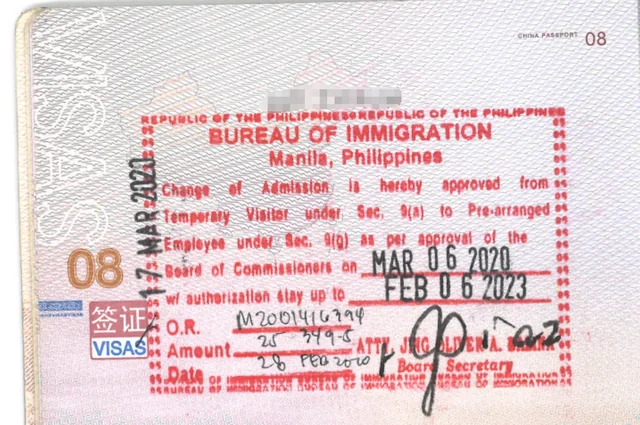
- Passport with a Philippine visa: The passport may contain the visa stamp or endorsement showing the person’s immigration category.
- ACR I-Card: This is an identification card issued by the BI to many foreign nationals who are registered in the Philippines.
- Visa approval or implementation document: This may show that the BI approved a visa application or change of status.
- Extension of stay document: This may serve as proof of an approved extension for a temporary visitor.
- Other immigration papers: These may include certain re-entry permits, Special Return Certificates, or Emigration Clearance Certificates.
A lost passport is not the same as a lost ACR I-Card. The first requires help from the passport-issuing country’s embassy or consulate. The second involves the BI’s alien registration process.
Foreign workers should also understand that the ACR I-Card is not the visa itself. It is an immigration identification document connected to the holder’s registration record.
Does Losing a Visa Document Cancel Your Legal Status?
This is often the first concern of a foreign worker who loses an immigration document. The important point is that losing the physical document does not, by itself, prove that the underlying visa has expired or been canceled.
The BI keeps immigration records on foreign nationals, including information about their admission, stay, and immigration documents. It can use these records to check a person’s status and confirm earlier approvals.
However, the foreign national must still address the missing document. Without the required records or identification, the person may face problems when dealing with government offices, renewing a visa, or preparing to depart.
For example, a foreign employee may still have an approved 9(g) visa even after losing the passport where the visa was stamped. The employee will need to obtain a replacement passport and ask the BI about transferring or re-endorsing the valid visa, subject to its review.
The same idea applies to a lost ACR I-Card. The person may still have a valid immigration status, but must follow the BI’s process for obtaining a replacement card.
Do not assume that a missing document automatically gives you extra time to stay in the Philippines. The authorized period of stay and the validity of the visa must still be checked.
What Should You Do Immediately After Losing a Philippine Immigration Document?
Acting quickly can help prevent further problems. It also creates a record showing that the foreign national reported the loss and took steps to replace the missing document.
The exact requirements depend on the document involved, but the following actions are useful starting points.
- Check which document is missing.
Identify whether the missing item is a passport, ACR I-Card, visa approval, extension receipt, or another BI document. If several documents were lost together, list each one.
- Write down the details of the loss.
Record the date, place, and circumstances. Note whether the document was misplaced, stolen, or lost with a bag or wallet. These details will help when preparing an Affidavit of Loss and explaining the incident to the authorities.
- Report theft or suspected theft to the police.
If the documents were stolen, report the incident to the nearest Philippine National Police station and ask for a police report or blotter record. This may also help when dealing with the foreign national’s embassy.
- Prepare an Affidavit of Loss.
An Affidavit of Loss is a sworn statement explaining what happened. It should identify the missing document and give a truthful account of when and where it was lost, as far as the person knows.
- Contact the correct government office.
A foreign passport must be replaced through the issuing country’s embassy or consulate. BI-issued immigration documents must be addressed through the appropriate BI office.
- Keep copies of all reports and requests.
Save the police report, affidavit, application forms, receipts, and written communications. These records can help when the person follows up with the BI or employer.
Do not use an old photocopy as a replacement for an original document. A copy may help the BI locate the person’s record, but the authority must confirm what document or approval is needed.
How Can You Replace a Lost Passport Containing a Philippine Visa?
A foreign passport is issued by the person’s country of nationality, not by the Philippine Bureau of Immigration. If the passport is lost, the foreign national must first contact the embassy or consulate that handles passport services.
This is an important step for workers with a 9(g) visa because the visa endorsement may be inside the missing passport.
The usual process involves the following steps:
- Report the loss and prepare supporting documents.
If the passport was stolen, obtain a police report. Prepare an Affidavit of Loss and any available copy of the missing passport, visa page, or BI approval.
- Apply for a replacement passport.
Contact the relevant embassy or consulate in the Philippines. Ask about the requirements for a new passport or an emergency travel document. Each country has its own process, so the foreign national should follow the instructions of the issuing authority.
- Contact the Bureau of Immigration.
Once a new passport is available, ask the BI which procedure applies to the lost visa endorsement. The foreign national may need to submit a request to transfer or re-endorse the valid visa in the new passport.
- Submit the required records.
The BI may ask for the new passport, Affidavit of Loss, police report, copies of the old passport or visa, and other documents needed to verify the previous immigration approval.
- Wait for BI verification and instructions.
The BI must confirm the person’s immigration record before taking action on the visa endorsement. The result will depend on the type of visa, the records available, and the requirements for that application.
A new passport does not automatically transfer the Philippine visa. The foreign national must complete the required BI process before treating the new passport as proof of the previous visa endorsement.
How Can You Replace a Lost ACR I-Card?
The ACR I-Card is an important identification document for many foreign nationals registered with the BI. It contains personal and immigration information and is linked to the holder’s record.
Foreign employees with long-term immigration status, including many 9(g) visa holders, should keep the card safe. If it is lost, the holder should apply for re-issuance through the BI.
The BI Citizen’s Charter 2025 includes a service for re-issuance of lost ACR I-Cards for certain permanent and temporary resident visa holders. Its listed requirements for a lost card include a letter request, Affidavit of Loss, police report, and biometric fingerprint capture after filing.
The applicant should check the current BI checklist to confirm the requirements for their particular visa category. The process may include these steps:
- Prepare a letter explaining that the ACR I-Card has been lost.
- Execute an Affidavit of Loss.
- Obtain a police report if required under the applicable BI checklist.
- Prepare the passport and copies of the relevant immigration pages.
- Complete the correct BI application form.
- Submit the application to the office handling the transaction.
- Attend biometric capture if required.
- Pay the applicable fees and keep the official receipt.
The BI will review the application and verify the person’s records before issuing a replacement. The holder should ask whether the replacement process affects any other pending immigration transaction.
Do not assume that every foreign national follows exactly the same procedure. The BI’s published service may cover specific visa groups, and additional requirements may apply to other categories.
What If You Lose Your 9(g) Employment Visa Documents?
Foreign workers holding a 9(g) Pre-Arranged Employment Visa should take extra care when their immigration papers go missing. Their visa is connected to an approved employment arrangement with a Philippine employer.
The loss of a passport or ACR I-Card does not automatically end the employment relationship or cancel the visa. However, the employee must still prove their identity and have their immigration records checked by the BI.
The employee should contact the company’s human resources team or authorized immigration representative as soon as possible. The employer may have copies of the original visa approval, passport pages, ACR I-Card, and application records.
These copies can help the employee prepare the replacement request. They do not replace the original documents, but they may help the BI identify the earlier approval.
The employer should also review the following:
- The employee’s current passport details and expiration date.
- The 9(g) visa approval and implementation documents.
- The employee’s ACR I-Card details, if a copy is available.
- The employment contract and company sponsorship documents.
- Any pending visa extension, amendment, or other immigration application.
If the employee has changed passports, the company should make sure the BI has the correct passport information for the relevant immigration transaction.
The employer should not assume that the employee can continue every immigration-related transaction without the missing documents. It should ask the BI what proof is acceptable while the replacement request is being processed.
What If You Lose a Visa Extension Receipt or Approval Document?
Foreign nationals may also lose a receipt, extension certificate, or other paper showing that the BI approved an extension of stay. This can be a problem when the person needs to prove the latest authorized stay.
The first step is to check whether the document is only missing or whether the extension itself has expired. These are two different issues.
If the extension was approved, the BI may be able to verify the transaction through its records. The foreign national should provide any available receipt, application reference, passport copy, or other details that can help locate the approval.
The person can then ask the BI about obtaining a duplicate, certification, or other proof of the approved extension.
If the authorized stay has already expired, replacing the missing paper alone will not solve the problem. The foreign national must ask the BI about the correct extension or status-regularization process and any applicable penalties.
Do not assume that a missing receipt means the extension was never approved. At the same time, do not assume that an extension remains valid without checking the official record.
Can a Foreign Worker Travel While Waiting for Replacement Documents?
Travel plans require extra care when a foreign national has lost a passport, visa endorsement, or other immigration document. The person should not book an international trip based only on a photocopy or a pending replacement request.
A foreign passport is usually required for international travel. If it gets lost, the person should contact their country’s embassy or consulate first to ask how to get a replacement passport or emergency travel document.
The foreign national should also ask the BI whether any additional immigration document or clearance is needed for departure or return. The requirements may depend on the visa category, the person’s immigration status, and the purpose of travel.
For example, some registered foreign nationals may need an Emigration Clearance Certificate or other departure document, depending on their status and circumstances. Certain visa holders may also need a re-entry permit or Special Return Certificate for their return to the Philippines.
A replacement passport alone does not settle every immigration requirement. The foreign national should confirm the complete travel requirements with the BI before leaving the country.
What Problems Can Happen If You Do Not Replace Lost Immigration Documents?
Ignoring a lost document can make future immigration transactions harder. The person may be unable to provide the required proof when applying for an extension, updating records, or preparing to leave the Philippines.
Possible problems include:
- Delays in visa renewal or other BI applications.
- Difficulty proving the latest authorized period of stay.
- Problems updating passport details after receiving a replacement.
- Delays in obtaining departure or re-entry documents.
- Additional requests for records or explanations from the BI.
- Administrative penalties if a separate immigration violation has occurred.
It is important to separate the loss of a document from a violation of immigration rules. Losing an ACR I-Card does not automatically mean that a person has overstayed or is subject to deportation. However, if the person’s authorized stay has expired or another rule has been violated, that issue must be addressed separately.
Foreign nationals should not wait until their visa renewal or departure date to report a missing document. Early action gives them more time to obtain the required records and complete the correct process.
How Can Employers Help Foreign Workers Protect Their Immigration Records?
Philippine employers that hire foreign nationals should have a simple system for keeping immigration records. This is useful when an employee loses a passport, visa document, or ACR I-Card.
The employer should keep secure copies of important documents while following data privacy rules. These records can help the employee apply for a replacement and allow the company to check the worker’s immigration status.
Employers can take these practical steps:
- Keep secure digital copies.
Maintain copies of the passport bio page, visa endorsement, ACR I-Card, and relevant BI approvals. Limit access to authorized personnel and store the files securely.
- Track visa and passport expiry dates.
Keep a record of the employee’s passport validity, visa validity, and important application deadlines. This helps the company identify issues before they become urgent.
- Report lost documents to the right office.
Help the employee identify whether the matter belongs to the embassy, the BI, or another government agency. Avoid giving advice based on assumptions.
- Keep employment records updated.
Maintain current employment contracts, company registration records, and other documents that may be needed for the employee’s immigration applications.
- Review the employee’s status before travel.
Before approving an overseas trip, check whether the employee has the documents needed to depart and return to the Philippines.
Final Insights
Losing an important Philippine visa document can be stressful, especially for foreigners living and working in the country. However, the steps to take depend on which document is missing. A lost passport, ACR I-Card, visa approval, or visa extension record may each require a different process.
Foreign workers should report the loss, prepare an Affidavit of Loss, obtain a police report when required, and contact the correct government office. If a passport containing a valid visa is lost, the person must first secure a replacement passport and then ask the BI about the visa endorsement. A lost ACR I-Card requires a separate replacement request.
Employers should help their foreign employees locate supporting records and check the requirements before a visa renewal or overseas trip. Most importantly, workers should not assume that losing a physical document cancels their immigration status—or that it gives them extra time to stay in the Philippines. The BI must verify the person’s record and confirm the correct next step.
Reach Out for Expert Help
Replacing lost immigration documents may require dealing with several government offices. Foreign workers may need to contact their embassy, the Bureau of Immigration, and their Philippine employer to recover their records and continue with their visa or other immigration processes.
Work Visa Philippines assists foreign nationals and Philippine companies with work visa applications and related immigration requirements. If a foreign employee has lost a passport containing a Philippine visa, an ACR I-Card, or other work visa records, getting the right guidance can help the parties identify the correct process and prepare the required documents.
Schedule a consultation with us today:
- Contact Us Here
- Fill Out the Form Below
- Call us at +63 (02) 8540-9623