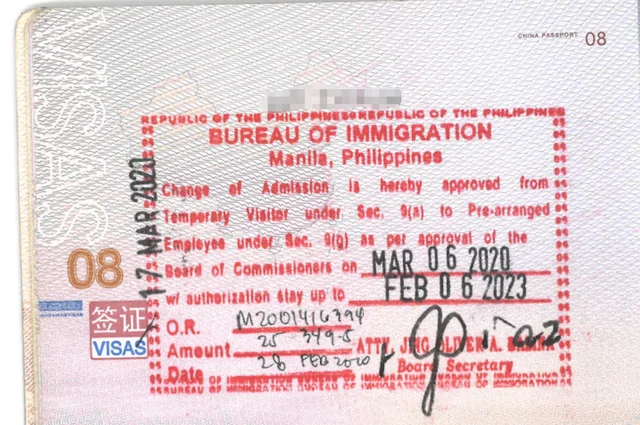
Investment for foreigners in the Philippines is possible in many sectors, but it is not unlimited. The Foreign Investments Act allows a non-Philippine national to own up to 100 percent of a domestic enterprise unless the activity is restricted by the Constitution, specific laws, or the current Foreign Investment Negative List.
For Work Visa Philippines, this topic is important because foreign investors often want to combine capital deployment with personal presence in the country. However, investment and immigration are separate legal processes. Owning a business does not automatically authorize the foreign owner to work in or manage that business without the correct visa or work authorization.
Can Foreigners Invest In The Philippines?
Foreign individuals and foreign corporations can invest in Philippine businesses, subject to the applicable rules. The Foreign Investments Act, as amended by Republic Act No. 11647, establishes the general principle that foreign investors may own up to 100 percent of an enterprise unless the activity appears on the Foreign Investment Negative List or is governed by a special law that limits foreign equity.
This means that many sectors are open to full foreign ownership, but some are restricted or reserved for Filipino citizens. The investor must therefore check the specific activity, not only the general industry label.
The Foreign Investment Negative List
The Foreign Investment Negative List, or FINL, is the mechanism through which the President identifies sectors where foreign equity is limited or prohibited. The 13th Regular FINL was issued under Executive Order No. 113 in 2026 and is updated periodically to reflect changes in law and policy.
The FINL is divided into two main lists:
- List A covers activities restricted by the Constitution and specific laws.
- List B covers activities restricted for reasons of security, defense, health, morals, and protection of small and medium enterprises.
Sectors not included in the FINL are generally open to 100 percent foreign ownership, subject to the applicable capital and regulatory requirements.
Sectors Open To 100 Percent Foreign Ownership
Many sectors are now open to full foreign equity under the updated FINL and related liberalization laws. Public sources identify the following examples of activities that may allow 100 percent foreign ownership in 2026:
- Renewable energy, including solar and wind projects.
- Retail trade enterprises that meet the required capital threshold.
- Telecommunications and internet services, subject to reciprocity conditions.
- Airlines, railways, and domestic shipping.
- Manufacturing in non-defense sectors.
- BPO and IT services.
- Hotels and resorts.
- Export-oriented enterprises.
The investor must still confirm the exact classification of the proposed activity. A business that appears to be “retail” or “telecom” may involve sub-activities that are regulated differently.
Sectors With 40 Percent Or Lower Foreign Equity
Some sectors remain restricted to 40 percent or less foreign equity. The 13th FINL and related materials identify the following examples:
- Mass media, except for recording and internet businesses.
- Private land ownership by individuals.
- Natural resource exploration, development, and utilization, with exceptions for renewable energy.
- Operation and management of public utilities that remain classified as such under the amended Public Service Act.
- Educational institutions, with exceptions.
- Commercial deep-sea fishing.
- Government procurement contracts for certain goods and infrastructure.
- Rice and corn production and processing, with exceptions.
- Small-scale mining.
- Private security agencies.
- Practice of licensed professions.
These restrictions are based on constitutional provisions, special statutes, or policy decisions to protect national interests or small businesses.
Domestic Market Versus Export Enterprises
The distinction between a domestic market enterprise and an export enterprise can affect capital requirements and, in some cases, ownership treatment. A domestic market enterprise primarily serves customers in the Philippines, while an export enterprise derives a substantial portion of its sales from outside the country.
For foreign-owned domestic market enterprises that are not on the Negative List, the Foreign Investments Act generally requires a minimum paid-in capital of US 200,000. This amount may be reduced to 100,000 if the enterprise involves advanced technology or employs at least 50 direct employees.
Export-oriented enterprises may be subject to different treatment, but the classification should be supported by the actual business model and documentary evidence.
Minimum Capital Requirements
Capital requirements depend on the enterprise type and applicable rules. For a foreign-owned domestic market enterprise not on the Negative List, the default minimum paid-in capital is commonly identified as US 200,000, with the possibility of reduction to 100,000 under certain conditions.
Export enterprises may not have the same statutory minimum, but the investor should still plan for realistic capitalization that can support operations, permits, staffing, and compliance costs.
The capital should be remitted through proper banking channels and documented as part of the company’s financial records.
Land Ownership Restrictions
Foreign investors must also consider land ownership rules. The 1987 Constitution prohibits foreign individuals from owning private land in the Philippines. Foreign corporations may own land only up to 40 percent of the equity, consistent with the constitutional limitation on land ownership by entities that are not at least 60 percent Filipino-owned.
Foreign investors can instead use long-term lease structures, invest in condominium units subject to the 40 percent foreign ownership limit per project, or hold shares in a Philippine corporation that owns land, within the allowable foreign equity.
Land ownership rules are separate from business ownership rules. A foreigner may own 100 percent of a company in an open sector, but still cannot own land directly as an individual.
Business Structures For Foreign Investors
Foreign investors commonly use several structures when entering the Philippine market:
- A domestic corporation with foreign shareholding, used when the activity allows the intended foreign equity.
- A one-person corporation, which may be suitable for an individual investor, subject to nationality and capital rules.
- A branch office of a foreign corporation, used when the foreign parent wants to operate under its existing corporate identity.
- A representative office, generally limited to non-revenue activities such as information dissemination and liaison.
- A partnership or joint venture, used when a local partnership is required or strategically useful.
The choice of structure affects registration, taxation, capital, liability, and immigration planning.
Registration Process
Once the investor confirms the ownership rules and selects the structure, the business can be registered with the appropriate agencies. The Securities and Exchange Commission handles corporations, partnerships, branches, and representative offices, while the Department of Trade and Industry handles sole proprietorship business names.
The process typically includes:
- Name verification and reservation.
- Preparation of incorporation documents.
- Filing with the SEC or DTI.
- Registration with the Bureau of Internal Revenue.
- Local government permits and business licenses.
- Industry-specific permits, where applicable.
Business registration alone does not authorize the foreign owner to work in the company.
Immigration Status For Foreign Investors
A foreign investor who wants to live in or manage a business in the Philippines must also address immigration status. Owning shares does not automatically grant the right to work in the company or remain in the country beyond the authorized period.
Depending on the role and investment, the investor may consider:
- 9(g) Pre-Arranged Employment Visa if the investor will be employed by the Philippine company.
- Special Investor’s Resident Visa if the investor meets the SIRV program requirements.
- Other investor or resident visas that may be available under applicable rules.
- Temporary visitor status for limited business activities that do not involve local employment.
The correct option depends on the investor’s actual duties, compensation, investment structure, nationality, and intended length of stay.
Tax And Financial Considerations
Foreign investment also requires tax and financial planning. The company may be subject to corporate income tax, value-added tax, or percentage tax, withholding, payroll, and other obligations, depending on the business.
The foreign investor may also have tax obligations in their home country. A US, Australian, Japanese, or European investor should obtain advice on cross-border taxation before moving funds or receiving income from the Philippine company.
Investment and immigration status do not automatically determine tax residence. These issues should be addressed separately with qualified professionals.
Common Mistakes
Foreign investors commonly encounter problems when they:
- Assume every sector allows 100 percent foreign ownership.
- Ignore the Foreign Investment Negative List and special laws.
- Use a Filipino shareholder only as a nominal figurehead.
- Treat SEC registration as a full operating authorization.
- Start operations without local permits or industry licenses.
- Assume ownership gives the foreigner permission to work in the company.
- Underestimate capitalization and operating costs.
- Fail to plan immigration status for the foreign owner or key personnel.
- Overlook land ownership restrictions.
- Neglect ongoing tax and corporate compliance.
These mistakes can lead to business registration problems, shareholder disputes, penalties, and immigration issues.
Final Insights
Foreign nationals can invest in many sectors in the Philippines, but the process begins with checking the Foreign Investment Negative List and applicable capital rules. Many activities are open to 100 percent foreign ownership, while others remain restricted to 40 percent or less, or are reserved exclusively for Filipino citizens.
A foreign investor must also remember that owning shares is not the same as having permission to work in the company. If the investor will manage, operate, or provide services in the Philippines, the correct immigration and work authorization should be planned separately.
Work Visa Philippines helps foreign investors coordinate business formation and immigration planning so they can establish Philippine operations with a clearer and more compliant path.
Get Started With Your Investment
For Work Visa Philippines, investment for foreigners is closely connected to business formation, immigration planning, and long-term compliance. A foreign investor may want to establish a company, hire employees, manage operations, and maintain a lawful personal status at the same time.
The company’s ownership structure should support the intended visa strategy, while the foreign owner’s actual duties should match the authority granted by the chosen immigration status. Contact us today for an initial consultation:
- Contact Us Here
- Fill Out the Form Below
- Call us at +63 (02) 8540-9623