The visa policy of the Philippines determines who may enter the country without a visa, who must obtain a visa in advance, how long visitors may stay, and what options exist for long-term residence. The policy is based on Executive Order No. 408, subsequent executive issuances, and administrative rules issued by the Department of Foreign Affairs and the Bureau of Immigration.
Understanding this policy is essential because many foreign nationals begin their stay as temporary visitors and later need to convert to employment, investor, student, or other long-term status. The visa policy sets the baseline for entry, while other laws and regulations govern work authorization, residence, and business activities.
Who Can Enter Without A Visa
The Department of Foreign Affairs maintains a list of eligible countries whose nationals may enter the Philippines without a visa for tourism or business, subject to certain conditions. Nationals from more than 150 countries, including the United States, United Kingdom, Canada, Australia, New Zealand, Japan, South Korea, and most European Union and ASEAN member states, are generally granted visa-free entry for an initial period of 30 days.
Some nationalities are granted longer visa-free stays under bilateral agreements. For example, citizens of Brazil and Israel may enter without a visa for an initial stay of up to 59 days.
Visa-free entry is not automatic. The traveler must still satisfy passport validity, onward ticket, and other entry requirements.
Passport Validity Requirement
A key condition for visa-free entry is that the passport must be valid for at least six months beyond the intended period of stay in the Philippines. This requirement is based on the Philippine Immigration Act and related executive issuances.
Travelers with passports that expire sooner may be denied boarding or refused entry at the port of arrival. The six-month rule applies even if the intended stay is only a few days.
Return Or Onward Ticket
Visa-free travelers must also hold valid tickets for their return journey to their port of origin or to their next destination. Immigration officers at the port of entry may ask to see proof of onward travel within the allowed visa-free period.
This requirement is intended to show that the traveler does not intend to remain indefinitely without proper authorization. A one-way ticket without evidence of onward travel may lead to questions or denial of entry.
ETravel Registration
In addition to passport and ticket requirements, arriving travelers must complete the eTravel registration before arrival. The eTravel system is an online platform used by Philippine authorities for health and immigration information.
The registration is free and must be completed within 72 hours before arrival. Travelers should keep the eTravel QR code or confirmation accessible for presentation at the port of entry.
Length Of Stay For Visa-Free Visitors
Visa-exempt visitors are generally admitted for an initial period of 30 days. They may then apply for extensions at the Bureau of Immigration, subject to the applicable rules and fees.
The total period of stay for most visa-free visitors may be extended up to 36 months from the date of the most recent arrival, provided the extensions are granted, and the traveler remains in lawful status.
Some nationalities may have different maximum periods or conditions. Travelers should confirm the current rules with the Bureau of Immigration or the Philippine Embassy.
Visa Waiver For Initial Extensions
The Bureau of Immigration offers a Temporary Visitor (9A) Visa Waiver for non-visa-required tourists who were initially admitted for 30 days and wish to obtain an initial extension of 29 days. This waiver is available at the BI Main Office and certain authorized immigration offices.
The visa waiver is a simplified process for the first extension, but subsequent extensions follow the regular extension-of-stay procedure. Fees and requirements may change, so applicants should verify the current schedule before filing.
Who Needs A Visa In Advance
Not all foreign nationals are eligible for visa-free entry. Citizens of countries not included in the visa-free list must obtain a visa from a Philippine Embassy or Consulate before traveling to the Philippines.
These travelers must apply for the appropriate visa category, such as a temporary visitor visa, student visa, employment visa, or other non-immigrant or immigrant visa, depending on their purpose of travel.
The list of visa-required countries is updated periodically through executive issuances and DFA circulars.
Visa On Arrival And Special Programs
The Philippines does not have a general visa-on-arrival program for all nationalities. However, special visa-on-arrival arrangements exist for certain categories, such as accredited officials, investors, and participants in specific programs, subject to the applicable rules.
There are also special entry privileges for holders of certain travel documents, such as the APEC Business Travel Card with “PHL” listed, which may allow visa-free entry for a specified period for business purposes.
These programs are limited and should not be confused with general visa-free entry for tourists.
Balikbayan Visa-Free Privilege
Former Filipino citizens and their immediate family members may be eligible for the Balikbayan visa-free privilege. Under this program, a former Filipino who is now a naturalized citizen of a visa-free country may enter the Philippines without a visa for up to one year from the date of arrival.
The privilege is subject to conditions, including proof of former Philippine citizenship, relationship documents for family members, and compliance with immigration and customs rules.
This is a special program for former Filipinos and their families, not a general long-stay option for all foreign nationals.
Temporary Visitor Visa (9A)
The Temporary Visitor Visa, or 9A visa, is the standard non-immigrant visa for foreign nationals who wish to enter the Philippines for tourism, business meetings, or other short-term activities that do not involve local employment.
This visa is required for nationals of visa-required countries and may also be used by visa-exempt nationals who wish to stay longer than the initial visa-free period or who need a visa for other reasons.
The 9A visa does not authorize employment in the Philippines.
Employment And Work Visas
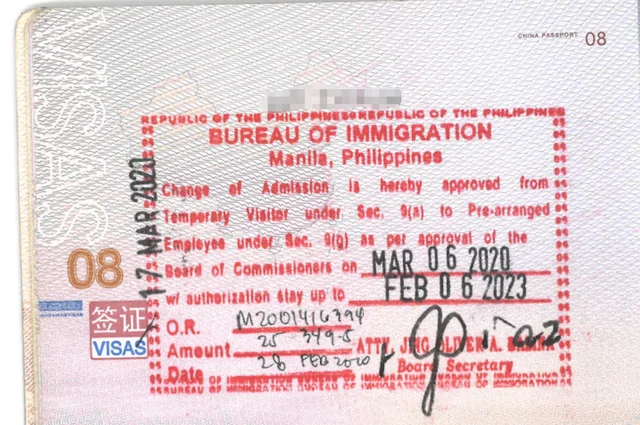
Foreign nationals who intend to work in the Philippines generally need a work visa, most commonly the 9(g) Pre-Arranged Employment Visa. This visa is based on a petition by a Philippine employer and is supported by an Alien Employment Permit from the Department of Labor and Employment.
A tourist visa or visa-free entry does not automatically authorize employment. A foreign national who enters as a visitor and later receives a job offer may, in suitable cases, apply for conversion to a work visa through the Bureau of Immigration, subject to the applicable requirements.
Student And Special Visas
Foreign students who will study in the Philippines need a student visa, or 9F visa, issued upon approval of their application and acceptance by an accredited educational institution.
Other special visas include the Treaty Trader or Treaty Investor (9D) visa, accredited official of a foreign government (9E), special visa for employment generation, special employment visa for offshore banking units, and other categories under the Bureau of Immigration’s visa list.
Each visa category has its own eligibility criteria, documentary requirements, and permitted activities.
Immigrant And Permanent Residence Visas
The Philippines also offers immigrant and permanent residence visas for eligible foreign nationals. These include the Immigrant Visa by Marriage (13A), Permanent Resident Visa (PRV), Returning Former Natural-Born Filipino Citizen (13G), Returning Resident (13E), and Quota Visa (13), among others.
These visas are intended for long-term or permanent residence and are subject to strict eligibility and documentary requirements.
They are not substitutes for work visas or temporary visitor visas.
Extension Of Stay
Visa-free visitors and temporary visa holders may apply for an extension of stay at the Bureau of Immigration. Extensions are granted in increments such as 29 days, one month, two months, or six months, depending on the applicable rules and the traveler’s status.
The total period of stay for most visa-free visitors may be extended up to 36 months from the date of the most recent arrival, provided the extensions are approved, and the traveler remains in compliance with immigration rules.
Extensions should be filed before the current authorized stay expires to avoid penalties or blacklisting.
ACR I-Card Requirement
Foreign nationals who stay in the Philippines beyond the initial visa-free or visitor period are generally required to secure an Alien Certificate of Registration Identity Card, or ACR I-Card. This card serves as the official identification document for registered aliens.
The ACR I-Card is connected to the foreign national’s immigration status and must be renewed periodically. It is often required for employment, school enrollment, banking, and other transactions.
The ACR I-Card is separate from the visa but is part of the overall immigration compliance framework.
Common Mistakes to Avoid
Foreign travelers commonly encounter problems when they:
- Assume visa-free entry applies to all nationalities.
- Overlook the six-month passport validity rule.
- Fail to secure a return or onward ticket.
- Ignore the eTravel registration requirement.
- Start working while holding only a tourist or visa-free status.
- Allow their authorized stay to expire before filing an extension.
- Confuse the Balikbayan privilege with a general long-stay option.
- Treat the ACR I-Card as optional when it is required.
- Assume that a visa extension automatically renews the ACR I-Card.
- Rely on outdated visa lists or third-party information.
These mistakes can lead to denied entry, penalties, or difficulties in future travel.
Key Takeaways
The visa policy of the Philippines allows nationals of more than 150 countries to enter without a visa for an initial period of 30 days, with some nationalities granted up to 59 days under bilateral agreements. Travelers must hold a passport valid for at least six months, possess a return or onward ticket, and complete the eTravel registration before arrival.
Visa-free visitors may extend their stay up to 36 months through the Bureau of Immigration, while foreign nationals from visa-required countries must obtain a visa in advance. Employment, study, investment, and long-term residence each require the appropriate visa and, where applicable, work authorization.
Work Visa Philippines helps foreign nationals navigate the visa policy, select the correct entry route, and plan extensions or conversions to long-term status in a compliant manner.
Why Hire an Expert
For Work Visa Philippines, the visa policy of the Philippines is the foundation for all immigration planning. Many clients begin as temporary visitors and later need to convert to employment, investor, student, or other long-term status.
Understanding the visa policy helps foreign nationals choose the correct entry route, avoid unauthorized work, and plan extensions or conversions promptly. Contact our team of experts for an initial consultation:
- Contact Us Here
- Fill Out the Form Below
- Call us at +63 (02) 8540-9623