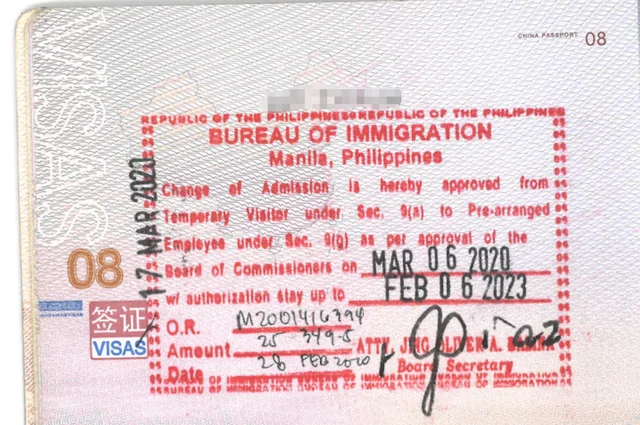
A marriage visa in the Philippines usually refers to the 13A Immigrant Visa by Marriage, which is the main residency route for a foreign national legally married to a Filipino citizen. This visa matters because it allows foreign spouses to live in the Philippines long-term without relying on short-term visitor status or a work-based visa.
The 13A is not just a convenience visa. It is a legal immigration path with specific eligibility rules, documentary requirements, and a two-step process for many applicants, especially those applying on a probationary basis first.
What the 13A Visa Is
The 13A is the Philippine Immigrant Visa by Marriage granted to a foreign national based on a valid marriage to a Philippine citizen. It is commonly called the marriage visa because the foreign spouse’s immigration status is tied to the Filipino spouse’s citizenship and the validity of the marriage.
Unlike a work visa, the 13A is intended for residence, not employment. A foreign spouse who wants to work in the Philippines may still need to consider separate labor and employment requirements depending on the job arrangement.
Who Can Apply
The main eligibility requirement is straightforward: the applicant must be a foreign national who is legally married to a Filipino citizen. The Bureau of Immigration states that the applicant must be proceeding on the basis of a valid marriage to a Philippine citizen.
The Filipino spouse is normally part of the process as the petitioner or sponsor. In practice, this means the marriage must be recognized under Philippine law, and the couple must be able to document the relationship properly.
Probationary and Permanent Status
A major feature of the marriage visa system is that many applicants first receive a probationary 13A before becoming eligible for permanent resident status. The probationary period gives the Bureau of Immigration time to confirm that the marriage is genuine and that the applicant continues to meet the visa conditions.
If the marriage remains valid and no disqualifying issue appears, the foreign spouse may later convert to a permanent 13A. This two-step structure is one reason the visa is often described as a “probationary to permanent” spouse visa.
Core Documentary Requirements
The required documents depend slightly on where the application is filed, but the checklist is usually similar across Philippine embassies, consulates, and the BI Main Office. The goal is to prove identity, marriage, health, police clearance, and financial capacity.
Common requirements include:
- Valid passport of the foreign applicant.
- Marriage certificate, or Report of Marriage if the marriage was contracted outside the Philippines.
- PSA birth certificate of the Filipino spouse.
- A passport copy of the Filipino spouse.
- Police clearance or equivalent criminal record certificate from the applicant’s country of residence or origin.
- Medical certificate and chest x-ray, usually on the form required by the embassy or BI.
- Proof of financial capacity, such as bank statements or other evidence of support.
- Passport-size photographs and completed application forms.
Some embassies also require the Filipino spouse’s personal appearance or a notarized endorsement letter.
Where to Apply
The application can be filed either in the Philippines or through a Philippine embassy or consulate abroad, depending on the applicant’s situation. The Bureau of Immigration states that applications for conversion to a non-quota immigrant visa by marriage may be filed at the BI Main Office and other immigration offices.
When filing overseas, the embassy or consulate may require extra steps such as medical examination forms, police clearances, or personal interview appointments. That means the exact filing route should be confirmed before documents are gathered, because different posts may ask for slightly different supporting items.
Financial Capacity and Support
A common concern in marriage visa cases is whether the couple must prove income or financial support. The answer is yes: authorities generally want to see that the applicant and/or Filipino spouse can support the family without creating an immigration burden.
Accepted proof may include bank statements, pensions, investment certificates, or other documents showing that the couple has regular resources. The exact standard can vary by consulate or by the circumstances of the case, but financial capability is a normal part of the review.
Medical and Police Checks
Health and character screening are part of the 13A process. The applicant usually needs a medical certificate from a recognized doctor or clinic, and the medical results must be recent enough to be valid when submitted.
A police clearance is also commonly required to show that the applicant does not have a serious criminal history that would make the marriage visa inappropriate. If the applicant has lived in multiple countries, the embassy or consulate may ask for more than one clearance depending on the applicant’s residence history.
Marriage Recognition Rules
The marriage itself must be properly recognized for the visa to work. If the marriage took place outside the Philippines, the couple usually needs a Report of Marriage or similar proof that the marriage was recorded by the Philippine foreign service post or otherwise recognized for Philippine immigration purposes.
If the marriage took place in the Philippines, the Philippine Statistics Authority marriage certificate is usually the standard proof. This distinction matters because a marriage that is valid in one country still needs to be documented in a way the Philippines accepts.
Benefits of the 13A Visa
The marriage visa offers several practical advantages for foreign spouses who want to settle in the Philippines long term. The biggest benefit is residency with the Filipino spouse, which makes living together in the country much more stable than repeated short visitor extensions.
Other common benefits include:
- Long-term stay rights are tied to the marriage relationship.
- A path to permanent resident status after the probationary period.
- Fewer repeated entry/exit concerns compared with tourist status.
- A more secure immigration status for family life in the Philippines.
These benefits make the 13A one of the most important visa categories for mixed-nationality couples living in the Philippines.
Common Mistakes Couples Make
The most common mistakes in marriage visa applications are usually documentary, not legal. Couples often delay the process because they do not realize that marriage records, police clearances, or financial evidence must be prepared in a specific way.
Typical mistakes include:
- Filing with a marriage certificate that has not been properly authenticated or reported.
- Forgetting the Filipino spouse’s PSA documents or passport copies.
- Submitting outdated medical or police clearances.
- Assuming the visa is automatic once the couple is married.
- Ignoring the probationary stage and preparing only for permanent residence.
These issues can slow the case or trigger requests for additional documents.
Why This Matters
The marriage visa is important because many foreign nationals in the Philippines are not only workers or investors; they are also spouses of Filipino citizens who want a stable, long-term residence path. The 13A is often the best solution for these applicants because it reflects their actual family situation rather than forcing them into a work or tourist category.
It is also a useful option for foreign spouses who may later explore work or business opportunities, since residency stability can make long-term planning easier. Understanding the 13A helps clients make better decisions about family life, immigration status, and future mobility in the Philippines.
Final Thoughts
The Philippine marriage visa is the 13A Immigrant Visa by Marriage, which allows a foreign spouse of a Filipino citizen to live in the country legally and, in many cases, move from probationary to permanent resident status. It requires a valid marriage, proper documentation, medical and police clearances, and proof of financial capacity.
Get Expert Assistance
For couples planning a life together in the Philippines, the key is to prepare the records carefully and file them through the correct office or consulate. Work Visa Philippines helps foreign spouses and Filipino families understand the 13A process and handle the visa from start to finish with confidence.
Reach out to our team to schedule a consultation:
- Contact Us Here
- Fill Out the Form Below
- Call us at +63 (02) 8540-9623