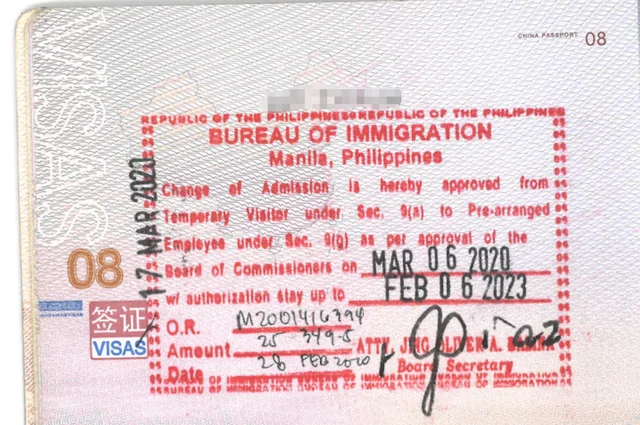
Tourist visa conversion is the process foreign nationals use when they enter the Philippines as visitors and later need lawful authorization to work. For Work Visa Philippines, this is one of the most practical topics because many foreign professionals arrive first on a temporary visitor visa and only later secure a Philippine employer, which then triggers the conversion process to a proper work visa.
The key point is that a tourist visa by itself does not allow employment in the Philippines. If the foreign national will take a regular job with a Philippine company, the usual route is conversion from 9(a) temporary visitor status to a 9(g) pre-arranged employment visa, supported by an Alien Employment Permit from DOLE and, in some cases, a Provisional Work Permit while the visa is pending.
What Tourist Visa Conversion Means
Tourist visa conversion refers to changing a foreign national’s immigration status from temporary visitor to a status that permits work, most often the 9(g) pre-arranged employment visa. The process is not automatic and is not simply a matter of extending stay; it requires a qualifying employer, labor authorization, and Bureau of Immigration approval.
In practical terms, the foreign national must first have a real employment arrangement. The employer then helps secure the labor permit and files the immigration petition so the person can move from visitor status to lawful worker status inside the Philippines.
Why Conversion Is Needed
A tourist visa is designed for temporary visits, not employment. That is why foreign nationals who want to work in the Philippines must not rely on visitor status alone.
Conversion is needed because the Philippines regulates foreign employment through both labor and immigration rules. If a person starts working while still on tourist status, that can create compliance problems, including immigration violations and labor-law exposure for both the worker and the employer.
When A Foreign National Can Convert
In many cases, a foreign national already in the Philippines can convert tourist status to work status without leaving the country. The usual requirement is that the person maintains a valid authorized stay while the employer prepares the work authorization documents.
This is useful for people who are already in the Philippines, interview locally, or receive an offer after arrival. The important condition is that the person must remain in lawful status during processing and should not begin employment until the proper authorization is in place.
The Main Work Route After Tourist Status
For ordinary employment with a Philippine-based employer, the usual path is:
- The employer secures the Alien Employment Permit from DOLE.
- The foreign national maintains a valid tourist status.
- The employer files the 9(g) visa conversion petition with the Bureau of Immigration.
- If work must start before final approval is granted, the foreign national applies for a Provisional Work Permit.
- Once approved, the 9(g) visa is implemented, and the ACR I-Card is issued.
This sequence matters because the AEP is typically the first labor-side approval, while the 9(g) is the immigration-side approval that follows.
Role Of The Alien Employment Permit
The Alien Employment Permit is a critical part of tourist visa conversion when the foreign national will work for a Philippine employer. DOLE requires foreign nationals seeking employment in the Philippines, and even certain non-resident foreign nationals already working in the country, to secure an AEP.
The employer usually applies for the AEP at the DOLE regional office that has jurisdiction over the workplace. The permit is tied to the position and the employer, so it is not a general work authorization for the foreign national.
Role Of The 9G Visa
The 9G visa is the actual work visa that replaces the visitor status once the conversion is approved. It is the standard pre-arranged employment visa for foreign nationals employed by Philippine companies.
This visa is tied to the sponsoring employer and the approved position. It allows the foreign national to live and work in the Philippines for the duration approved by immigration, provided the employment relationship remains in place.
The Employer’s Responsibility
The conversion process is employer-driven in almost all ordinary employment cases. The Philippine employer must issue the employment contract, support the AEP filing, and file or support the visa conversion petition with BI.
The employer’s documents usually include company registration records, business permits, financial capacity documents, and a clear description of the position. Immigration and labor authorities want to see that the role is real and that the foreign worker is being hired for legitimate business reasons.
Step 1: Secure A Real Job Offer
The process starts with an actual employment offer from a Philippine company. The foreign national cannot convert tourist status to a work visa without a sponsor, because the work visa is based on a pre-arranged employment relationship.
The job offer should specify the title, duties, salary, and duration of employment. A well-prepared contract makes the later AEP and visa filing much smoother because the information will match across all documents.
Step 2: Prepare The Employment Contract
After the offer is accepted, the employer prepares a notarized employment contract. The contract should clearly identify the job role, compensation, responsibilities, and term of employment.
This contract is important because it becomes one of the main documents used in the AEP and visa conversion filing. If the contract is vague or inconsistent, the agencies may ask for corrections or additional documents.
Step 3: File The AEP Application
The next step is the AEP filing with DOLE. The employer files the application with the appropriate DOLE Regional Office, and the supporting documents usually include the contract, passport copy, company papers, business permit, and evidence of labor-market testing where required.
For non-exempt positions, DOLE may require publication of the vacancy and proof that no qualified Filipino was hired. This is part of the labor-market test that helps determine whether the foreign national may fill the role.
Step 4: Maintain Valid Tourist Status
While the AEP and visa conversion are being processed, the foreign national must keep a lawful stay status. That means the visitor visa should remain valid through the filing and processing period.
This is a very important part of tourist visa conversion because a valid work petition does not erase an expired stay. If the foreign national overextends or loses lawful status, the conversion process becomes more complicated.
Step 5: File The Visa Conversion Petition
Once the AEP is approved, the employer or applicant files the visa conversion petition with the Bureau of Immigration. This is the step that changes the person’s status from 9(a) temporary visitor to 9(g) pre-arranged employee.
The filing is usually made at the BI Main Office in Manila, the BI office nearest the applicant’s residence, or through available electronic services when applicable. The petition package generally includes the AEP, passport copies, employment contract, request letter, and other BI-required materials.
Step 6: Biometrics And BI Review
As part of the immigration process, the foreign national may need to attend biometrics capture, hearings, or other BI review steps. This is part of the normal conversion path and should be planned for in advance.
The Bureau of Immigration reviews the petition and supporting documents before approval. If the application is complete and the case is clear, the process moves toward implementation of the 9(g) visa and issuance of the ACR I-Card.
Step 7: Use A Provisional Work Permit If Needed
If the foreign national must start work before the 9(g) visa is finally approved, a Provisional Work Permit may be available. The BI issues a PWP during the pendency of the pre-arranged employment visa application.
This is a practical solution for employers who need the employee to begin work quickly. The PWP is temporary, though, so it is not a substitute for the full work visa.
Step 8: Implement The 9G Visa And ACR I-Card
After approval, the visa is implemented in the passport, and the ACR I-Card is issued. This finalizes the conversion from tourist status to lawful work status.
The ACR I-Card is important because it serves as the foreign national’s official registration card in the Philippines. Once issued, the worker is officially documented as a resident foreign employee under the approved visa status.
Documents Commonly Needed
The exact checklist varies by case, but tourist visa conversion to work status usually requires:
- A valid passport.
- Proof of current lawful stay.
- A notarized employment contract.
- Employer corporate documents.
- DOLE AEP approval.
- BI visa conversion forms or petition forms.
- Passport-sized photographs.
- Official receipts and fee payments.
- Supporting documents for dependents, if any.
Some cases may also call for police clearances, NBI clearances, or authenticated civil documents for family members.
Special Considerations For Foreign Representative Offices
A foreign representative office may have different practical needs than a standard Philippine operating company. Even so, the general rule remains the same: if a foreign national will work in the Philippines, the individual must have the proper labor and immigration authority.
For a representative office, the employer must still support the AEP and the visa conversion if the foreign worker will be employed under a Philippine-based arrangement. The specifics of the company’s registration and the scope of its permitted activities should match the foreign national’s role.
Common Mistakes
A common mistake is assuming that being inside the Philippines on a tourist visa is enough to start work once a job offer is received. That is not correct.
Other mistakes include:
- Filing for the visa before securing the AEP.
- Letting the tourist status expire during processing.
- Starting work before the 9(g) or PWP is approved.
- Submitting inconsistent contract and company details.
- Treating the 9G as transferable to another employer.
Avoiding these problems helps prevent delays, refusals, and compliance issues.
Key Takeaways
Tourist visa conversion is a lawful and practical way for foreign nationals to move from visitor status to work authorization in the Philippines. In most regular employment cases, the path is AEP first, then 9(g) visa conversion, with a Provisional Work Permit available if work must begin while the case is pending.
For employers and foreign workers, the key is to keep the process properly sequenced and compliant. Work Visa Philippines can help make that transition smoother so the foreign national can work legally and the employer can hire with confidence.
Why You Need Expert Assistance
For Work Visa Philippines, tourist visa conversion is one of the most important pathways for foreign nationals who arrive as visitors and later receive a job offer. It is common, practical, and fully lawful when handled correctly.
The process matters because it connects immigration status to actual employment. When the employer, AEP, visa petition, and stay status are all aligned, the foreign national can move from visitor to worker without unnecessary disruption. Contact our team today for an initial consultation:
- Contact Us Here
- Fill Out the Form Below
- Call us at +63 (02) 8540-9623