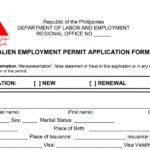
Successfully hiring foreign staff in the Philippines requires employers to navigate a structured sponsorship process involving the Department of Labor and Employment (DOLE) for work permits and the Bureau of Immigration (BI) for visa implementation. Philippine law mandates that employers serve as primary petitioners, demonstrating that no qualified Filipino worker is available while ensuring full compliance with immigration, labor, and tax regulations throughout the employment relationship.
The typical pathway involves securing an Alien Employment Permit (AEP) followed by a 9(g) Pre-Arranged Employment Visa, with total processing spanning 6-12 weeks and costs ranging from PHP 25,000 to PHP 50,000 per foreign hire.
Legal Foundation for Employer Sponsorship
The Philippine legal framework places full responsibility for hiring foreign staff on sponsoring employers, ensuring controlled entry of foreign labor that prioritizes local employment opportunities. Under Article 40 of the Labor Code and DOLE Department Order No. 248, employers must petition government agencies on behalf of foreign nationals, as individuals cannot independently apply for work authorization. This employer-centric system protects domestic workers while allowing essential skills importation through verified corporate sponsors.
Core legal principles governing sponsorship include:
- Employer Petition Requirement: Only Philippine-registered entities can sponsor foreign employees; individuals cannot self-petition for work visas.
- Labor Market Testing: Mandatory demonstration that no qualified Filipino candidate exists for the position through published job postings.
- Skills Transfer Mandate: Foreign employees must train local counterparts through understudy programs within specified timeframes.
- Employer Liability: Sponsoring companies bear responsibility for compliance violations, facing fines up to PHP 500,000 and potential blacklisting.
Understanding these obligations enables the expansion of a compliant workforce without regulatory disruption.
Employer Eligibility and Registration Requirements
Companies intending to engage in hiring foreign staff must satisfy specific registration and operational criteria before initiating sponsorship applications. The Bureau of Immigration and DOLE verify corporate legitimacy, financial standing, and genuine business need as prerequisites to petition approval.
Sponsoring employers must demonstrate:
- Legal Business Registration: Active Securities and Exchange Commission (SEC) Certificate of Registration for corporations or Department of Trade and Industry (DTI) registration for sole proprietorships.
- Operational Status: Valid Mayor’s/Business Permit, Bureau of Internal Revenue (BIR) registration, and proof of ongoing business activities.
- Minimum Capitalization: Generally, USD 200,000 paid-up capital for corporate sponsors, though variations apply based on industry and visa type.
- Good Standing: No pending labor cases, immigration violations, or regulatory sanctions against the company.
- Position Justification: Clear demonstration that the role requires specialized skills unavailable among Filipino applicants.
Companies lacking Philippine registration may utilize Employer of Record (EOR) services, where the EOR’s local entity serves as the official sponsor while the client company retains operational control.
Comprehensive Employer Documentation Checklist
Successful sponsorship for hiring foreign staff depends on complete, accurate documentation establishing corporate legitimacy, employment parameters, and labor market compliance.
Required employer documents include:
- Formal petition letter addressed to DOLE (for AEP) and BI Commissioner (for 9(g)), signed by authorized company representatives.
- Notarized employment contract specifying position, duties, salary (meeting minimum wage standards), benefits, duration, and termination conditions.
- SEC/DTI Certificate of Registration and latest Articles of Incorporation/Partnership.
- Current General Information Sheet (GIS) reflecting corporate structure and officers.
- Valid Mayor’s/Business Permit and BIR Certificate of Registration.
- Latest Annual Income Tax Return (ITR) and Audited Financial Statements demonstrating operational capacity.
- Notarized certification of current workforce composition (foreign vs. Filipino employee ratios).
- Proof of 30-day job vacancy publication on PhilJobNet and a newspaper of general circulation, documenting no qualified local applicants.
- Understudy Training Program (UTP) plan identifying Filipino trainees, curriculum, duration, and designated evaluator.
Foreign Employee Personal Requirements
Foreign nationals contribute identity, qualification, and clearance documents, complementing employer submissions for hiring foreign staff compliance.
Employee-submitted items encompass:
- Valid passport with a minimum of six months remaining validity beyond the intended employment period.
- Comprehensive curriculum vitae detailing professional experience, education, and specialized qualifications.
- Certified copies of educational credentials, professional licenses, and relevant certifications (apostilled if issued abroad).
- Four (4) passport-sized photographs meeting BI specifications (2×2 inches, white background).
- Medical examination report (BI Form 11) from an accredited physician, including chest X-ray and laboratory tests.
- Police clearance certificate from the country of residence (fingerprint-based, apostilled).
- National Bureau of Investigation (NBI) Clearance if the applicant has a prior Philippine stay exceeding 30 days.
- Completed visa application forms as prescribed by BI.
Step-by-Step Sponsorship Process
The complete pathway for hiring foreign staff progresses through DOLE permit acquisition, followed by BI visa implementation, typically spanning 6-12 weeks for prepared applications.
Phase 1: Alien Employment Permit (AEP) from DOLE
- Publish job vacancy on PhilJobNet portal and newspaper of general circulation for 30 days, documenting no qualified Filipino applicants.
- Compile a complete employer and employee documentation package.
- Submit an AEP application at the appropriate DOLE Regional Office based on the principal place of business.
- Pay the filing fee (PHP 9,000 per year of validity) upon document acceptance.
- Await DOLE evaluation (15 working days from payment per 2025 guidelines).
- Receive an AEP card/approval upon successful verification.
Phase 2: 9(g) Work Visa from BIR
- Prepare BI petition including AEP, employer certifications, and employee documents.
- Submit the application at the BI Main Office (Intramuros, Manila) or authorized regional offices.
- Receive Order of Payment Slip (OPS) indicating applicable fees.
- Pay visa fees (PHP 10,130-24,210 based on validity and company status) at authorized banks.
- Attend scheduled hearing; present original documents for verification.
- Complete biometrics capture (digital photo, fingerprints, signature) for ACR I-Card.
- Collect approved 9(g) visa stamp and ACR I-Card (1-2 weeks post-approval).
Complete Cost Structure for Employer Sponsorship
Hiring foreign staff involves substantial investment across permit fees, visa charges, and ancillary processing costs, typically totaling PHP 25,000-50,000 per employee initially, with annual renewal obligations.
Detailed fee breakdown:
| Cost Component | Amount | Frequency |
| AEP Filing Fee (DOLE) | PHP 9,000/year | Per validity period |
| 9(g) Visa Fee (BI) | PHP 10,130-24,210 | 1-3 year validity |
| ACR I-Card | USD 50-150 | Matches visa duration |
| Medical/Police Clearances | PHP 5,000-10,000 | One-time |
| Document Authentication | PHP 3,000-7,000 | One-time |
| Total Initial Investment | PHP 25,000-50,000 | Per employee |
| Annual Renewal (estimate) | PHP 15,000-25,000 | Ongoing |
The Top 1,000 corporations and PEZA-registered firms qualify for reduced BI fee schedules.
Post-Hiring Compliance Obligations
Sponsorship responsibilities extend beyond initial approval when hiring foreign staff, requiring ongoing monitoring, renewals, and regulatory reporting throughout employment.
Continuing employer obligations include:
- Permit/Visa Renewals: File AEP renewal 60 days before expiry; 9(g) extension 30 days prior, maintaining synchronized validity.
- Annual BI Reporting: Ensure foreign employees complete January-March reporting with the ACR I-Card at BI.
- Change Notifications: Report employment termination, role changes, or status modifications to DOLE and BI within 15 days.
- Tax Compliance: Register employees with BIR for Tax Identification Number (TIN); withhold and remit income taxes monthly.
- Record Retention: Maintain complete documentation (contracts, permits, tax filings) for a minimum of three years for audit purposes.
- Understudy Completion: Verify skills transfer program fulfillment within mandated timeframes.
Non-compliance triggers fines (PHP 10,000-500,000), permit revocation, deportation orders, and potential employer blacklisting.
Common Sponsorship Pitfalls and Mitigation
Employers frequently encounter preventable errors when hiring foreign staff, causing delays, rejections, or compliance violations that disrupt workforce planning.
Critical pitfalls and solutions:
- Incomplete Labor Market Test: Ensure full 30-day PhilJobNet posting with documented evaluation of local applicants before AEP submission.
- Mismatched Documentation: Verify contract details (position, salary, duration) align precisely across all filings.
- Late Renewals: Implement calendar tracking 90 days before permit/visa expiry to prevent authorization gaps.
- Unreported Changes: Notify DOLE/BI immediately upon employment termination or role modifications.
- Ratio Violations: Monitor foreign-to-local employee proportions; maintain a compliant workforce composition.
- Missing Authentications: Apostille all foreign documents; use PSA-certified Philippine records.
Alternative Hiring Models for Foreign Talent
Direct sponsorship represents one pathway when hiring foreign staff; alternative structures offer flexibility for specific scenarios without full visa processing burdens.
Available options include:
- Employer of Record (EOR): Third-party Philippine entity serves as legal employer/sponsor, handling AEP/9(g) processing while the client company retains operational control. Ideal for companies without Philippine registration.
- Special Work Permit (SWP): Short-term authorization (maximum 6 months) for temporary projects under tourist visa status, bypassing AEP requirements.
- Provisional Work Permit (PWP): Interim work authorization during pending 9(g) processing, enabling immediate employment commencement.
- Independent Contractor: Business-to-business engagement for specialized projects, though subject to the four-fold test misclassification risks.
Key Takeaways
Successfully hiring foreign staff in the Philippines requires employers to navigate AEP sponsorship through DOLE, followed by 9(g) visa implementation at BI, with 6-12 week timelines and PHP 25,000-50,000 costs per employee. Ongoing compliance demands permit renewals, annual reporting, and tax registration throughout employment.
Work Visa Philippines provides comprehensive support for employers hiring foreign staff, including managing AEP petitions, 9(g) visa processing, compliance monitoring, and renewal coordination.
Is Assistance Available?
Yes. Work Visa Philippines delivers end-to-end support for employers hiring foreign staff, managing AEP petitions, 9(g) visa processing, compliance monitoring, and renewal coordination. Services eliminate procedural errors while accelerating timelines for seamless integration of international talent.
Contact our team of specialists for expert guidance and a free consultation:
- Contact Us Here
- Fill Out the Form Below
- Call us at +63 (02) 8540-9623