Visa processing in the Philippines is a series of steps used to secure the correct immigration status for a foreign national, whether the goal is to enter, work, invest, study, retire, or live with family in the country. For Work Visa Philippines, it is not just an administrative task; it is the foundation that keeps hiring, relocation, and business operations legally compliant from the start.
When visa processing is handled properly, the applicant gets the right status, the employer avoids delays, and the business can move forward without avoidable immigration problems. When it is handled poorly, the result is often missed deadlines, incorrect filings, or the need to correct records across multiple government offices.
What Visa Processing Entails
Visa processing refers to the full administrative and documentary path required to obtain, convert, extend, or renew a Philippine visa or related immigration authorization. It can begin overseas at a Philippine embassy or consulate, or inside the Philippines through the Bureau of Immigration, depending on the visa type and the applicant’s current location and status.
In practice, visa processing is more than filling out a form. It often includes document gathering, authentication, employer sponsorship, government filing, fee payment, agency follow-up, and post-approval compliance, such as registration or annual reporting, where applicable.
Why Visa Processing is Important
Visa processing matters because every visa category has a legal purpose, and the wrong category can make a stay or activity unlawful. A foreign national who comes to work, for example, generally cannot rely on a tourist entry alone and may need both labor authorization and the appropriate work visa.
Employers also rely on proper processing to avoid disruptions in onboarding and to keep foreign personnel aligned with Philippine labor and immigration rules. In short, visa processing protects both the applicant and the sponsor by making the stay legitimate and easier to maintain over time.
The Agencies Involved
Visa processing in the Philippines usually involves several agencies, and the exact sequence depends on the visa type. Understanding which office handles which part of the process is one of the most important parts of planning a case correctly.
The main agencies are:
- Bureau of Immigration (BI) for entry, stay, visa conversions, extensions, residence-related processing, and online services for certain transactions.
- Department of Foreign Affairs (DFA) / Philippine consular posts for overseas visa applications and consular issuance.
- Department of Labor and Employment (DOLE) for Alien Employment Permit applications when a foreign national will be employed in the Philippines.
- DTI, SEC, local government units, and investment agencies where business registration or incentive status must support the immigration case.
Because these agencies do different jobs, visa processing works best when the legal, labor, and business steps are coordinated early.
Main Visa Categories
Different visa types require different processing paths. The most common categories for foreign nationals and employers include short-term entry, work authorization, business-related visas, and residence visas.
Temporary Visitor or 9(a) Visa
The 9(a) Temporary Visitor Visa is used for short visits, tourism, meetings, or business trips that do not involve local employment. Processing may begin abroad at a consulate or, for eligible nationals, through visa-free entry followed by an in-country extension if the stay needs to continue.
9(g) Pre-Arranged Employment Visa
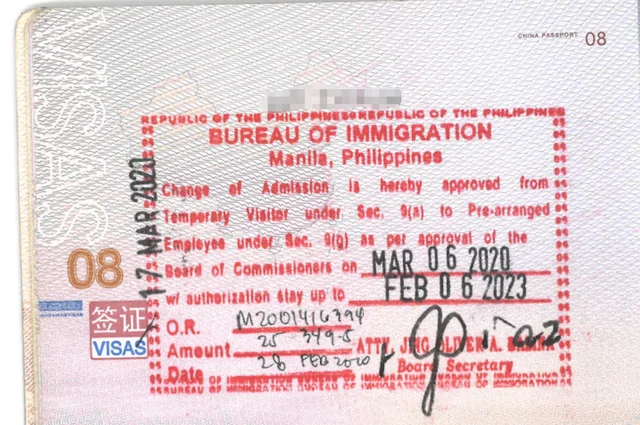
The 9(g) work visa is the standard long-term employment visa for foreign professionals in the Philippines. Processing usually requires employer sponsorship and coordination with the DOLE AEP process before the visa can be finalized or used in practice.
Special Work Permit and Provisional Work Permit
For short-term assignments or while a 9(g) is pending, a Special Work Permit or Provisional Work Permit may be used. These are temporary solutions, so processing should be planned carefully to avoid a gap between the foreign national’s arrival and lawful work authorization.
Investor and Residence Visas
Investment-linked and residence-linked visas, such as the SIRV or family-based immigrant visas, require proof of the qualifying investment or relationship, plus supporting records for identity, capacity, and legal status. These cases often involve a mix of business, immigration, and documentary review rather than a single straightforward filing.
Startup Visas
Under the Innovative Startup Act, startup visas are available for qualified foreign owners, employees, and investors of startups or startup enablers. Processing for these visas typically depends on host-agency endorsement and, where applicable, the special rules created under the law’s implementing framework.
How the Process Usually Works
Visa processing is easiest to understand when it is broken into stages. While the exact steps differ by visa type, the core flow is usually the same: assess eligibility, prepare documents, file with the correct agency, wait for review, and complete post-approval compliance.
Step 1: Eligibility check
The first step is to confirm the correct visa type based on the applicant’s actual purpose in the Philippines. This is where many cases succeed or fail, because the wrong category can create downstream problems that are harder to fix later.
Step 2: Document preparation
Next, the applicant and sponsor gather the required records, which may include passports, civil documents, police clearances, contracts, company papers, medical exams, and proof of financial capacity. For overseas documents, an apostille or legalization may be required before filing.
Step 3: Filing and follow-up
The completed application is filed with the proper office, and the process may include publication, inspection, or an interview depending on the visa type. A good service provider also follows up on clarifications or additional document requests, which is often what keeps the file moving.
Step 4: Approval and compliance
After approval, the applicant may need to complete registration steps, obtain an ACR I-Card, report to immigration at intervals, or maintain the conditions of the visa. The process does not really end at approval; post-approval compliance is part of lawful status maintenance.
Documents Needed
The actual checklist changes by visa type, but some documents appear often in visa processing files. Being organized with these records from the beginning usually saves time later.
Common documents include:
- Valid passport with sufficient remaining validity
- Completed application forms and supporting letters
- Employment contract or assignment letter for work cases
- Company registration documents for employer-sponsored or investor-related visas
- Police clearance or criminal background certificate, where required
- Medical certificate or medical exam results, where required
- Marriage or birth records for family-based or immigrant filings
Typical Timelines
Visa processing timelines vary widely depending on the visa type, document readiness, and agency workload. Short-term cases may move in days, while employment or residence cases can take weeks or months.
A general planning range is:
- Visitor-related extensions and some BI services: a few working days
- SWP or PWP filings: often days to a couple of weeks
- AEP and 9(g) cases: often several weeks because labor and immigration steps must both be completed
- Investor, immigrant, or startup-linked files: often longer because they involve additional supporting records and agency endorsement
Applicants should always build extra time into the plan because missing documents, corrections, or inter-agency clarification can extend the process.
Service Scope and Support
Professional visa processing services usually handle far more than just filling out forms. A complete service may include strategy, preparation, agency filing, follow-up, and post-approval guidance.
A well-rounded provider will typically assist with:
- Choosing the right visa category
- Preparing and reviewing supporting documents
- Coordinating DOLE, BI, or DFA filings
- Tracking the case and responding to agency requests
- Advising on compliance after approval, such as renewals or reporting obligations
For Work Visa Philippines, this integrated support is especially useful for employers who need fast, accurate processing without juggling several offices themselves.
Common Mistakes to Avoid
Visa processing problems often come from avoidable errors rather than difficult legal issues. The most common mistake is choosing the wrong visa type and then trying to fix it after arrival.
Other common mistakes include:
- Submitting incomplete or inconsistent documents.
- Forgetting that work visas may require labor authorization before final approval.
- Ignoring the need for host-agency endorsement in startup or special programs.
- Failing to plan for renewal, reporting, or ACR-related obligations after approval.
- Treating visa processing as a one-time filing instead of a continuing compliance matter.
Avoiding these mistakes saves time, cost, and frustration for both the applicant and the employer.
Key Takeaways
Visa processing in the Philippines is a detailed, agency-driven process that requires the right visa choice, complete documentation, and careful coordination across labor and immigration requirements. Whether the case involves work, investment, family residence, or startup mobility, the main goal is the same: make sure the applicant has the correct legal status and can maintain it without avoidable delays.
Reach Out for Expert Help
For Work Visa Philippines, visa processing is the service that connects legal strategy with execution. The right process can determine whether a foreign professional starts on time, whether a founder can move to the Philippines legally, and whether an investor or spouse can obtain the proper long-term status.
Our team helps foreign nationals and employers manage visa processing from start to finish so the filing is accurate, compliant, and aligned with the real purpose of the stay:
- Contact Us Here
- Fill Out the Form Below
- Call us at +63 (02) 8540-9623