To work legally in the Philippines, a foreign national must hold more than a tourist or business visa. Work in the Philippines requires both a valid work visa and, in most cases, a work permit, obtained through Philippine authorities before or while you are in the country. Tourist, e-visa, or visa‑free entry options under Executive Order 408 do not give you the right to take up employment, even if you can enter the Philippines without a visa for short visits.
Visitor Visas vs. Work Visas
Most of the policy framework on evisa.gov.ph is about temporary visits for business, pleasure, medical treatment, conferences, film work, journalism, sports, or other non‑employment purposes. These categories explicitly require that the visit:
- Does not create an employer-employee relationship in the Philippines
- Does not involve receiving compensation from a Philippine entity
Visa‑free entry (usually up to 30 days) and 9(A) Temporary Visitor Visas (tourism or business), which do not allow you to work, even if you attend meetings, training, or events.
If you will be employed, paid, or performing services for a Philippine company, you need a proper work visa and usually a work permit.
Core Work Visa You Usually Need to Work
9(G) Pre‑Arranged Employment Visa
For most employees, the answer is the 9(G) Pre‑Arranged Employment Visa.
- It is the standard, long‑term work visa for foreign nationals taking up employment in a Philippine‑based business.
- It is employer‑sponsored: a local company must petition for you.
- It is typically valid for one to three years, renewable as long as your employment continues.
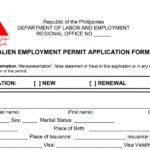
- It requires a prior Alien Employment Permit (AEP) from the Department of Labor and Employment (DOLE).
This is the primary route for teachers, engineers, BPO professionals, managers, and foreign owners who are actively managing their Philippine corporation.
Short‑Term Work: When You’re in the Philippines Temporarily
If you are only working in the Philippines for a short period and not taking up long‑term employment, there are two main options.
Special Work Permit (SWP)
If you ask “What visa do you need to work for a few months?”, in many cases the answer is: keep your 9(A) visitor status, but add an SWP.
- The Special Work Permit (SWP) is for short‑term work (up to 6 months) while holding a tourist/temporary visitor visa.
- Typical users: consultants, trainers, project‑based specialists, performers, or foreign staff on short assignments.
- It does not convert your visa to a work visa and does not grant long‑term residence.
- It is issued by the Bureau of Immigration (BI) and is usually valid for 3 months, extendable to 6.
You still cannot work in the Philippines on a plain tourist or e‑Visa; the SWP is the minimum lawful add‑on for paid, short‑term work.
Provisional Work Permit (PWP)
If your long‑term work visa (usually 9(G)) is still being processed but you need to start work, the relevant answer to “What visa do you need to work right now?” is often a Provisional Work Permit (PWP).
- The PWP is a temporary work authorization while your 9(G) (or similar) visa is pending.
- It is normally issued for foreign nationals already in the Philippines in visitor status with a pending work visa application.
- It allows you to begin working legally before the BI finishes adjudicating your main work visa.
Special Cases: Other Visas That Can Let You Work
Depending on your situation, other visa types also answer the question “What visa do you need to work?” if your work is tied to investment, treaty trade, or special zones.
47(A)(2) Special Non‑Immigrant Visa (Including PEZA / BOI)
If you are employed by a PEZA or BOI‑registered enterprise, regional headquarters, or certain large projects, the appropriate work visa may be a 47(A)(2) special non‑immigrant visa rather than a 9(G).
- Designed for executives, managers, and technical staff in special economic zones and incentive‑registered firms.
- Employer‑specific and usually linked to your role in the registered enterprise.
- May have different tax and immigration incentives than a standard 9(G).
9(D) Treaty Trader/Investor Visa
If you are a national of a country with an appropriate treaty (for example, the United States), and you are coming primarily to direct or develop substantial trade or investment, you might ask “what visa do I need to work in my own trading or investment business?” The answer is often the 9(D) Treaty Trader’s or Investor’s Visa.
- Suitable for owners / senior staff directing treaty‑based trade or investment.
- Also allows you to work in the business you are directing, but is more specific than a general 9(G).
Investor and Resident Visas That Allow Work
Certain investor or resident visas can also allow you to work in your own businesses, subject to conditions:
- SIRV (Special Investor’s Resident Visa) – for qualifying investments in Philippine enterprises.
- Some special resident visas (e.g., under economic zones or retirement programs) may allow limited work or management of your own business, depending on implementing rules.
What About the e‑Visa and Visa‑Free Entry?
The Philippine e‑Visa and visa‑free entry under EO 408 exist to facilitate temporary tourism and business visits, not employment.
- e‑Visas issued by embassies (e.g., single or multiple‑entry 9(A) business/tourist visas) are for temporary visits only.
- Nationals of many countries (including the UK, EU members, the US, Australia, and many others) can enter visa‑free for 30 days, provided they hold a return or onward ticket and a passport valid at least six months beyond their stay.
- Some nationalities (e.g., certain Indian passport holders under the June 2025 policy) can get limited visa‑free tourism (e.g., 14 days), but those stays are non‑extendible and non‑convertible and do not permit work.
In all of these cases, if you plan to work—not just attend meetings, trainings, or conferences without pay—you must upgrade to a lawful work visa and, if applicable, work permits.
Work Permits: AEP and How It Fits Into “What Visa Do You Need to Work?”
For almost all employment‑based answers, there is an additional layer: the Alien Employment Permit (AEP).
- Issued by DOLE, the AEP confirms that the foreigner is allowed to work in a specific role for a specific employer.
- It is a prerequisite for most work visas, especially the 9(G).
- Typical validity: up to three years, renewable, usually matching the employment contract.
- Certain categories (diplomats, some resident visa holders, foreign gov’t officials, etc.) can be exempt.
Sequence in practice:
- Employer applies for and secures AEP.
- With the AEP, employers and employees apply for the 9(G) or 47(A)(2) or relevant work visa at the BI.
- The BI issues a visa and an ACR I‑Card, finalizing your work‑authorized stay.
Matching Your Situation to the Right Visa
To answer “What visa do you need to work?” more concretely:
- You are taking a full‑time job (1+ year) with a Philippine company
→ 9(G) Employment Visa + AEP. - You are consulting or performing for a short project (≤ 6 months)
→ SWP on top of a 9(A) visitor visa. - You will start working, but your 9(G) is still in process
→ PWP, then transition to 9(G) once approved. - You are an executive/specialist for a PEZA or BOI‑registered enterprise
→ 9(G) or 47(A)(2) special non‑immigrant visa, as determined with your employer. - You are a treaty trader or investor directing major trade/investment
→ 9(D) Treaty Trader/Investor Visa. - You are an investor seeking long‑term residence mainly to manage investments
→ SIRV or other investor/resident visas, sometimes in combination with work authorization.
In every scenario involving actual employment or compensation from a Philippine source, a tourist visa, business visitor status, or visa‑free entry is not enough and can lead to deportation or blacklisting if misused.
Key Takeaways
- The 9(G) Pre‑Arranged Employment Visa plus AEP is the main answer to for employees.
- SWP and PWP cover short‑term or bridging needs but do not replace a true work visa for long‑term roles.
- Special categories (47(A)(2), 9(D), SIRV, and similar) apply where work is tied to economic zones, treaties, or investment.
- Visitor, e‑Visas, and visa‑free entry under the EO 408 regime do not authorize employment, even if you are attending business meetings.
Need Help Figuring Out What Visa You Need to Work?
If you are unsure which visa and permits apply to your situation, Work Visa Philippines can assess your case and map out the correct pathway, whether that is a 9(G), SWP, 47(A)(2), or investor route. Our team assists with AEPs, BI filings, renewals, and compliance so you can focus on your role while staying fully legal:
- Contact Us Here
- Fill Out the Form Below
- Call us at +63 (02) 8540-9623