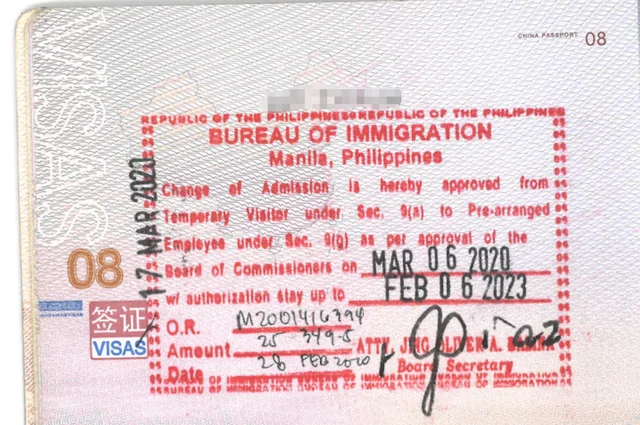
If you are exploring whether to invest in the Philippines, you are looking at a market that combines a large domestic consumer base, a young and English‑speaking workforce, and a regulatory environment that now allows 100% foreign ownership in many sectors. Choosing to invest in the Philippines is not only a business decision; it is also an immigration decision, because the way you invest often shapes how long you can stay and in what capacity you can live and work in the country.
Foreign investors are drawn to the Philippines because of its growth potential, strategic location in Southeast Asia, and recent reforms that have widened foreign‑ownership rules in key industries such as energy, telecommunications, railways, public utilities, and certain retail and service sectors. At the same time, investing correctly means understanding foreign ownership limits, capital requirements, and the visa or residence options that match your role as an investor, manager, or expat.
Why the Philippines Is Attractive for Foreign Investors
The Philippines is attractive to foreign investors because it offers a fast‑growing economy, a large internal market, and a growing middle class that drives consumption and services. Recent data show that foreign direct investment (FDI) inflows into the country have been volatile but remain significant, reflecting confidence in sectors such as manufacturing, real estate, and services.
The government has also modernized its investment rules over the past years, reducing some old restrictions and shifting many sectors closer to 100% foreign ownership, especially where activities are export‑oriented or technology-driven and benefit from global value chains. This makes the Philippines more competitive versus other ASEAN economies and gives foreign investors more flexibility in structuring their entry.
Key Sectors for Foreign Investment
Not every sector is open to the same level of foreign participation, so investors must match their plans to the sectors that fit their capital, risk profile, and visa objectives.
Some of the most attractive and frequently open sectors include:
- Business Process Outsourcing (BPO) and IT services: The Philippines is a global hub for call centers, software development, and digital services, supported by strong English skills and a young workforce.
- Manufacturing and export‑oriented industries: Export-focused factories and production facilities often benefit from full or near‑full foreign ownership and various incentives.
- Real estate and shared‑space concepts: While foreigners cannot own land outright, they can fully own condominium units and lease land for mixed-use or commercial projects, which can tie into visa pathways such as long-stay or special resident visas.
- Renewable energy and infrastructure: Recent liberalization in public utility and energy-related industries has opened new opportunities for foreign investors who meet sector-specific licensing and technical standards.
- Education, healthcare, and professional services: Many service industries now welcome foreign capital, especially where they are export-oriented or tied to international standards.
These sectors show that investing in the Philippines can mean anything from buying shares in a listed company to building a business that employs local workers and qualifies for investment-linked visas.
Ownership and Foreign Investment Rules
The core of any plan to invest in the Philippines is understanding the foreign investment rules, which still follow constitutional limits, the Foreign Investments Act, and the Foreign Investment Negative List (FINL). These rules divide industries into those that are fully open, those that are 60-40% Filipino majority, and those that are reserved for Filipinos only.
The key point is this: allowing a foreign investor to own a sector does not automatically mean that every sub-activity within that sector is open. Some niches remain reserved, and some require special licenses or nationality-based qualifications. For example, certain media, land ownership, and public interest activities still carry restrictions even when the headline sector appears liberalized.
For foreign investors, this means that the first step is not to choose a business idea, but to check whether the exact activity and ownership structure are allowed for foreign equity under current law.
Capital, Incentives, and Registration
Investing in the Philippines usually requires putting in capital, registering the business, and complying with tax and regulatory rules. The exact capital floor depends on the type of enterprise: many export-oriented businesses can operate under very low paid-up capital thresholds, while domestic‑market enterprises with more than 40% foreign ownership generally require at least USD 200,000 in paid0up capital, sometimes reduced to USD 100,000 if the business uses advanced technology or employs a certain number of Filipino workers.
Beyond capital, successful investors also look at incentives. Many regions, economic zones, and priority-industry registrants can access tax holidays, duty-free or reduced tariff treatment for equipment and inputs, and other support from bodies like the Board of Investments (BOI) and special economic zone operators.
To start, investors typically:
- Choose the right business structure (e.g., domestic corporation, branch office, joint venture).
- Register with the Securities and Exchange Commission (SEC) or the Department of Trade and Industry (DTI), as applicable.
- Register with the Bureau of Internal Revenue (BIR), local government, and, later, social‑security agencies such as SSS, PhilHealth, and Pag‑IBIG once they hire employees.
These steps matter for both business health and for aligning the company with immigration-supportive visa routes, such as work-linked 9(g) visas or investment‑linked special resident visas.
Visa Implications for Foreign Investors
When you decide to invest in the Philippines, the question immediately becomes: how will you stay and manage your investment? The right answer is not just a business structure, but a matching immigration status.
Common visa pathways for foreign investors include:
- 9(g) Pre-Arranged Employment Visa: For foreign managers or executives who will be employed by the Philippine company they invest in, this is the standard route, supported by an Alien Employment Permit (AEP).
- Special Investor’s Resident Visa (SIRV): For investors who commit qualifying capital to national priority or priority sector projects, this visa can provide long-term or indefinite residence tied to the investment.
- Special or long-stay visas linked to property or retirement: Some investors use condos or real estate not only as assets but also as part of a long‑stay plan, often combined with investor or retirement routes.
The key is that investing in a company does not automatically grant the right to live and work in the Philippines; the investor still needs the correct visa if they intend to supervise, manage, or work hands-on inside the country.
Practical Steps to Start Investing
For a foreigner planning to invest in the Philippines, the safest path is to treat the process as a three-step sequence: check the rules, choose the structure, and align the visa.
A practical workflow looks like this:
- Confirm sector and ownership rules. Check whether the chosen activity is fully open, partially reserved, or fully Filipino-reserved, and whether it fits under the latest FINL and investment-act amendments.
- Set the capital and structure. Decide whether the business will be export-oriented, domestic market, or a joint venture; determine the capital floor; and pick the entity form (e.g., corporation, branch, JV) that fits your plan.
- Register the company and secure permits. Complete SEC/DTI registration, BIR registration, local business permits, and any sector‑specific licenses.
- Plan the visa pathway. Decide whether the foreign investor or manager will need a 9(g) work visa, an SIRV, or another long‑stay visa, and begin the immigration process early enough to avoid delays.
Doing these steps in order helps avoid the classic mistakes: under-capitalizing, under-reporting, or assuming that a business‑visitor visa is enough to manage a local operation.
Wrapping Up
Investing in the Philippines offers access to a growing economy, a young workforce, and a legal framework that is increasingly open to foreign capital in many sectors. At the same time, entering the market correctly means checking ownership limits, structuring the right legal entity, and aligning the business with the correct immigration status for any foreign investor or manager who will be in the country.
Reach Out For Assistance
For Work Visa Philippines, helping foreign investors is not just about company formation; it is about matching capital, structure, and visa pathways into one coherent plan. The same business can support a 9(g) work visa for an active manager, a special investor visa for a passive‑capital investor, or a mix of expat and local co-founder roles, but only if the visa and business planning start together, not separately.
Our team helps foreign investors map out a complete plan for how to invest in the Philippines while staying compliant on the immigration side. Contact us today:
- Contact Us Here
- Fill Out the Form Below
- Call us at +63 (02) 8540-9623