The types of visas available in the Philippines are organized by purpose: short visits, work and business, study, family residence, retirement, and investment. For Work Visa Philippines, understanding these categories is essential because every visa type has its own rules, documentary requirements, and impact on how long a foreign national can stay or work in the country.
How Philippine Visas Are Grouped
Philippine visas are broadly grouped into immigrant visas, non-immigrant visas, and special visas, with each group covering specific purposes such as family residence, temporary visits, employment, study, retirement, or investment. Within each group, more detailed categories (like 9(a), 9(g), 13A, or SIRV) are used to match the visa to the foreign national’s actual purpose in the country.
The most important point is that the visa type must match the real activity. A visitor or tourist visa is not a substitute for a work visa; an investor visa is not the same as a general residence permit; and each visa type has its own entry, stay, and documentation rules.
Temporary Visitor Visas (9(a))
Temporary visitor visas are the most common visas used for short stays, tourism, and business visits. The 9(a) visa can be issued for tourism, leisure, business meetings, or other non-employment purposes and may be extended in the Philippines if longer stays are needed.
Foreign nationals from many countries can enter visa-free for short stays (often up to 30 days), but if they plan to stay longer or if they are not eligible for visa-free entry, they may need to obtain a 9(a) visa from a Philippine consulate before travel. This visa is useful for exploratory trips, initial meetings, or visits that do not involve local employment.
Non-Immigrant Visas for Work and Business
Non-immigrant visas are temporary visas for specific purposes such as work, business, study, or special assignments. They are designed for foreign nationals who do not intend to immigrate permanently but need legal status to carry out a defined activity in the Philippines.
9(g) Pre-Arranged Employment Visa
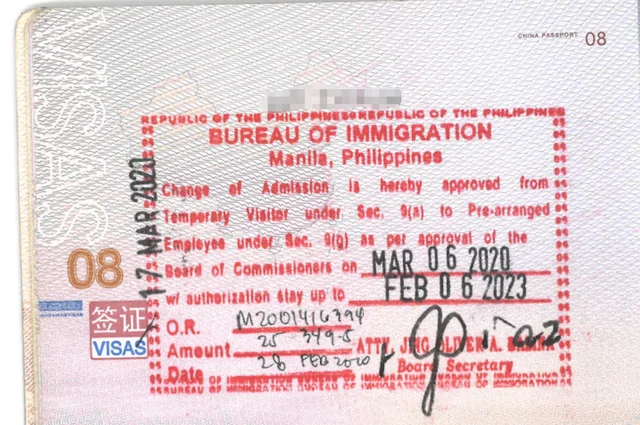
The 9(g) pre-arranged employment visa is the main long-term work visa for foreign nationals employed by Philippine-based companies. It is granted to foreign nationals who have been tapped to work for a Philippine employer and who have skills or qualifications that are not easily found in the local labor market.
Processing usually involves an employer petition, coordination with the DOLE Alien Employment Permit process, and Bureau of Immigration approval. The 9(g) visa can initially be valid for one to three years and may be extended, with some commentary noting that validity can reach up to 10 years in appropriate cases.
9(d) Treaty Trader or Treaty Investor Visa
The 9(d) treaty trader or treaty investor visa is available to citizens of certain countries (such as the United States, Germany, and Japan) who invest or work in qualifying enterprises in the Philippines. The visa requires a minimum investment and business volume, and is tied to treaty-based commitments between the Philippines and those countries.
This visa type is most relevant to foreign businesses and investors covered by applicable treaties and is often used in structured business plans involving a specific treaty country.
9(f) Student Visa
The 9(f) student visa is granted to foreign nationals who enroll in a recognized Philippine higher education institution that is qualified to admit foreign students. Applicants must first secure a notice of acceptance from the school, then follow the student visa process.
This visa type is used for longer-term study and is distinct from short-term training or seminar visits, which may still use visitor status if no formal degree program is involved.
Other Non-Immigrant Categories
Other non-immigrant categories include visas for foreign government officials (9(e)), seafarers (9(c)), and special non-immigrant visas for certain pre-arranged employment under specific laws or programs. These are more specialized and typically apply to well-defined roles or sectors.
Immigrant Visas for Long-Term Residence
Immigrant visas are intended for foreign nationals who plan to reside in the Philippines on a more permanent basis. They are often based on family ties, return of former citizens, or special categories such as quota or marriage-based visas.
These visas matter because they provide longer-term stability and often reduce the need for frequent visa extensions or repeated consular filings.
13A Immigrant Visa by Marriage
The 13A immigrant visa by marriage is issued to a foreign national who is legally married to a Philippine citizen and meets the eligibility rules. It is commonly called a marriage visa and allows the foreign spouse to reside in the Philippines, often starting in a probationary status before becoming a permanent visa.
Applicants must prove the validity of the marriage and meet documentation requirements such as police clearances, medical exams, and financial capacity. For foreign nationals married to Filipinos, the 13A visa is often the most appropriate long-term residence route.
Quota Visa (13)
The quota immigrant visa (13) is a limited-issue visa granted to foreign nationals with professional, economic, or other qualifications that are considered beneficial to the country. It is limited to a small number per nationality per year, making it a selective route.
Applicants must demonstrate that they meet the quota visa criteria, including financial capacity and sometimes extraordinary skills or professional background. This visa is relevant but less common due to the quota limit and qualification bar.
PRV and Other Immigrant Routes
Immigrant categories also include permanent resident visas (PRV), visas for returning former natural-born Filipino citizens, and other family-linked or special residency routes. These visas give long-term residence rights, often with multiple-entry privileges, and are used in cases where the applicant’s status is tied to family or former citizenship rather than employment alone.
Special Resident and Investor Visas
Special visas are designed for specific policy goals such as retirement, investment, or special categories of employment or residence. They often provide long-term or indefinite stay rights in exchange for meeting certain financial or economic conditions.
Special Resident Retiree’s Visa (SRRV)
The Special Resident Retiree’s Visa (SRRV) is a retirement visa that allows foreign nationals to live permanently in the Philippines with multiple-entry privileges, subject to satisfying deposit or investment requirements managed by the Philippine Retirement Authority.
Applicants must meet minimum deposit or investment thresholds and pass medical and background checks. For retirees, this is one of the main long-term stay options because it is designed specifically for retirement-based residents.
Special Investor’s Resident Visa (SIRV)
The Special Investor’s Resident Visa (SIRV) is granted to foreign nationals who invest a minimum amount (commonly cited as at least USD 75,000) in qualified economic activities in the Philippines. This visa allows an indefinite stay in the country as long as the investment requirements are fulfilled.
For foreign investors, the SIRV is a key option that ties immigration status directly to investment activity and is often used alongside corporate or project-level planning.
Special Visas for Employment and Business
The Bureau of Immigration’s list of visas also includes special visas for employment and business-related purposes under specific laws and executive orders. These special visas are distinct from general work or investor visas and usually have targeted policy goals.
Examples include:
- Special Visa for Employment Generation (SVEG), which is linked to job creation by foreign investors.
- Special non-immigrant visas under specific economic or regional headquarters schemes.
- Other special visas for offshore banking units, economic zone enterprises, or specific programs.
These visas are less general-purpose and typically require specialized advice and planning because their eligibility rules are tied to specific laws or incentive programs.
Types of Visas by Purpose
Another useful way to understand the types of visas in the Philippines is to group them by purpose rather than legal labels. This helps employers, investors, and families quickly identify which route is likely to apply to their situation.
Broad purpose-based categories include:
- Tourism and short visits: 9(a) visitor visas and visa-free entry for eligible nationals.
- Work and professional services: 9(g) pre-arranged employment visas, special work permits, and related non-immigrant visas.
- Business and investment: treaty trader visas, SIRV, and certain special visas for economic activities.
- Study: 9(f) student visas for institutional programs.
- Family residence: 13A marriage visas and other family-based immigrant visas.
- Retirement: SRRV and similar long-stay retirement paths.
Next Steps
The Philippines recognizes a wide range of types of visas, each designed for a specific purpose—from short tourism stays and temporary work assignments to long-term family residence, retirement, and investment. The key is to select the visa that accurately matches the foreign national’s purpose and then follow the correct processing path for that category.
Get Expert Assistance
Work Visa Philippines helps foreign nationals, employers, and investors understand which visa type applies to their situation and how to handle the full process—from eligibility review and document preparation to filing, follow-up, and post-approval compliance.
Matching the correct visa type to the person’s real plans is the first step to a successful immigration strategy. The second step is making sure that visa processing, labor permits, and corporate structure all align so that the stay is both lawful and sustainable.
Contact us today for an initial consultation:
- Contact Us Here
- Fill Out the Form Below
- Call us at +63 (02) 8540-9623