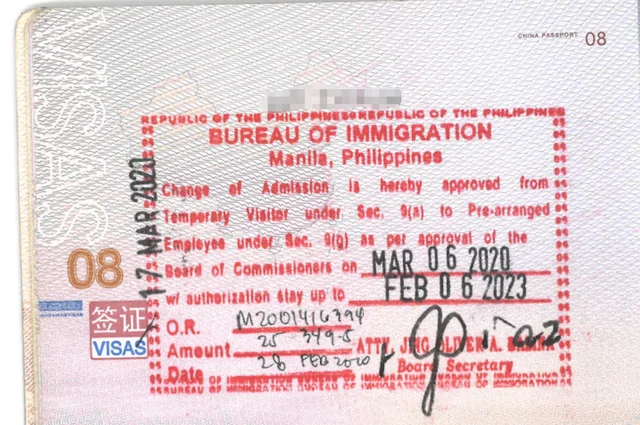
The PWP or Provisional Work Permit is a temporary authorization issued by the Bureau of Immigration to let certain foreign nationals start working in the Philippines while their longer-term work authorization is still pending. The PWP often bridges the gap between arrival and final approval of a 9(g) work visa or a pending Alien Employment Permit-based employment process.
The permit is practical, time-sensitive, and employer-driven. It is not a substitute for a full work visa, but it allows work to begin lawfully during the waiting period when the paperwork for the main employment route is still under review.
What the PWP Is
A Provisional Work Permit is a temporary work authorization granted by the Bureau of Immigration. The BI states that it is issued to a foreign national during the pendency of an application for a pre-arranged employment visa.
In simple terms, the PWP exists so a foreign national can start working before the final employment visa has been issued. This makes it especially useful in situations where the employer has already selected the foreign worker, but the full visa process is still ongoing.
When the PWP Is Used
The PWP is typically used when a foreign national has already started the employment process but the 9(g) visa is still pending. It is also used when the foreign national has commenced employment while the AEP application or 9(g) employment visa application is still under review.
This means the PWP is not a general work permit for any foreign visitor. It is specifically a bridging authorization for foreign nationals whose employer-sponsored work status is in process.
Who Can Apply
The PWP is generally relevant to foreign nationals who are the subject of a pending employment visa application, usually the 9(g) work visa. In the Bureau of Immigration rules, the petitioner company submits the application on behalf of the foreign worker.
The applicant must already have a concrete employment arrangement and must be able to show that the employment process is underway. For employers, the key point is that the PWP is tied to the job and the sponsoring company, not to the foreign national alone.
Relationship to the 9(g) Visa and AEP
The PWP is closely connected to both the 9(g) visa and the AEP process. Under the BI rules, foreign nationals who have started employment while their AEP or 9(g) employment visa is pending must secure a PWP.
That means the PWP is often used in tandem with the work visa and labor permit process, not independently. The foreign national still needs the main permit or visa later; the PWP only covers the interim period.
Validity of the PWP
The standard validity period of the PWP is three months or until the 9(g) working visa is issued, whichever comes first. This makes it a short-term bridge rather than a long-term work authorization.
If the employment visa remains pending after the initial PWP period, the permit may be extended based on the applicable immigration practice and current rules. Employers should not assume the PWP lasts for the full work project; it must be monitored closely because it is temporary and conditional.
Documentary Requirements
The PWP application is filed by the petitioner company and requires several supporting documents. These documents show the employment relationship, the lawful basis for the work, and the foreign national’s current immigration status.
Typical requirements include:
- Letter-request from the petitioner company with an undertaking to withhold and remit the applicant’s BIR taxes and a statement that the documents submitted were legally obtained from the relevant agencies
- Consolidated General Application Form, duly accomplished and notarized
- Photocopy of the applicant’s passport showing the bio-page and authorized stay of at least 20 days
- Proof that the applicant has secured a Taxpayer Identification Number
- Photocopy of the official receipt for the AEP application or a photocopy of the AEP, if already issued
- SEC registration, bylaws, and articles of incorporation for corporations or partnerships, or DTI registration for single proprietorships
- Photocopy of the employment contract specifying the exact compensation to be earned by the applicant
These requirements make it clear that the PWP is not a simple filing; it requires a proper employer record and a clear employment contract.t
Filing Process
The Bureau of Immigration describes a practical filing sequence for the PWP. The applicant or employer secures the CGAF, submits the documents for pre-screening, receives the Order of Payment Slip, pays the fees, submits the official receipt, and then receives the approved PWP.
This process is usually handled at the BI Main Office, although some immigration offices may process the transaction depending on current BI procedures. For employers, the fastest way to avoid delay is to submit a complete and consistent packet from the beginning.
Fees and Costs
The PWP has a published fee structure at the Bureau of Immigration. The BI lists an application fee, certification fee, legal research fee, service fee, PWP fee, and express-related fees.
The totals cited by BI include a combined amount of PHP 4,040.00 for the standard transaction. Because fees can change without prior notice, employers should always confirm the latest published schedule before filing.
Why Employers Use the PWP
Employers use the PWP because they cannot always wait for the full 9(g) process before starting a foreign employee’s work. This is especially useful in urgent assignments where the company needs the worker to begin training, operations, or project support while the final visa is still pending.
The PWP helps reduce downtime and avoids having the foreign national sit idle after arrival. For companies, that can be critical when the role is tied to launch dates, client deadlines, or business continuity.
Common Mistakes to Avoid
The most common mistake is assuming the PWP is automatic once an employment visa is filed. It is not automatic; it must be applied for and approved through the proper BI process.
Other common mistakes include:
- Starting work before the PWP is issued.
- Submitting an incomplete AEP or visa record.
- Using an employment contract that does not clearly specify compensation.
- Forgetting the TIN or company registration documents.
- Treating the PWP as a substitute for the final 9(g) visa.
These issues can delay approval or create compliance problems for both the employer and the foreign worker.
How the PWP Differs From Other Work Options
It is easy to confuse the PWP with other temporary work authorizations, but it serves a distinct purpose. A Special Work Permit is generally used for short-term work assignments, while the PWP is used when a longer-term employment visa is pending.
The PWP is therefore a bridge mechanism, while the SWP is a separate short-term authorization category. If the foreign national is going to remain in the Philippines for an extended employment relationship, the PWP is usually only the first step.
Final Thoughts
The PWP is a temporary but valuable tool for foreign nationals who need to start working in the Philippines while their 9(g) employment visa or AEP-based process is still pending. It has a short validity period, a defined list of documentary requirements, and a filing process that must be handled carefully through the Bureau of Immigration.
Reach Out To Experts
For employers and foreign professionals, the safest approach is to treat the PWP as a bridge, not as a final status. Work Visa Philippines helps companies and foreign workers secure the correct permit sequence so employment can begin lawfully and without avoidable delays.
Contact our team of experts today for professional guidance:
- Contact Us Here
- Fill Out the Form Below
- Call us at +63 (02) 8540-9623